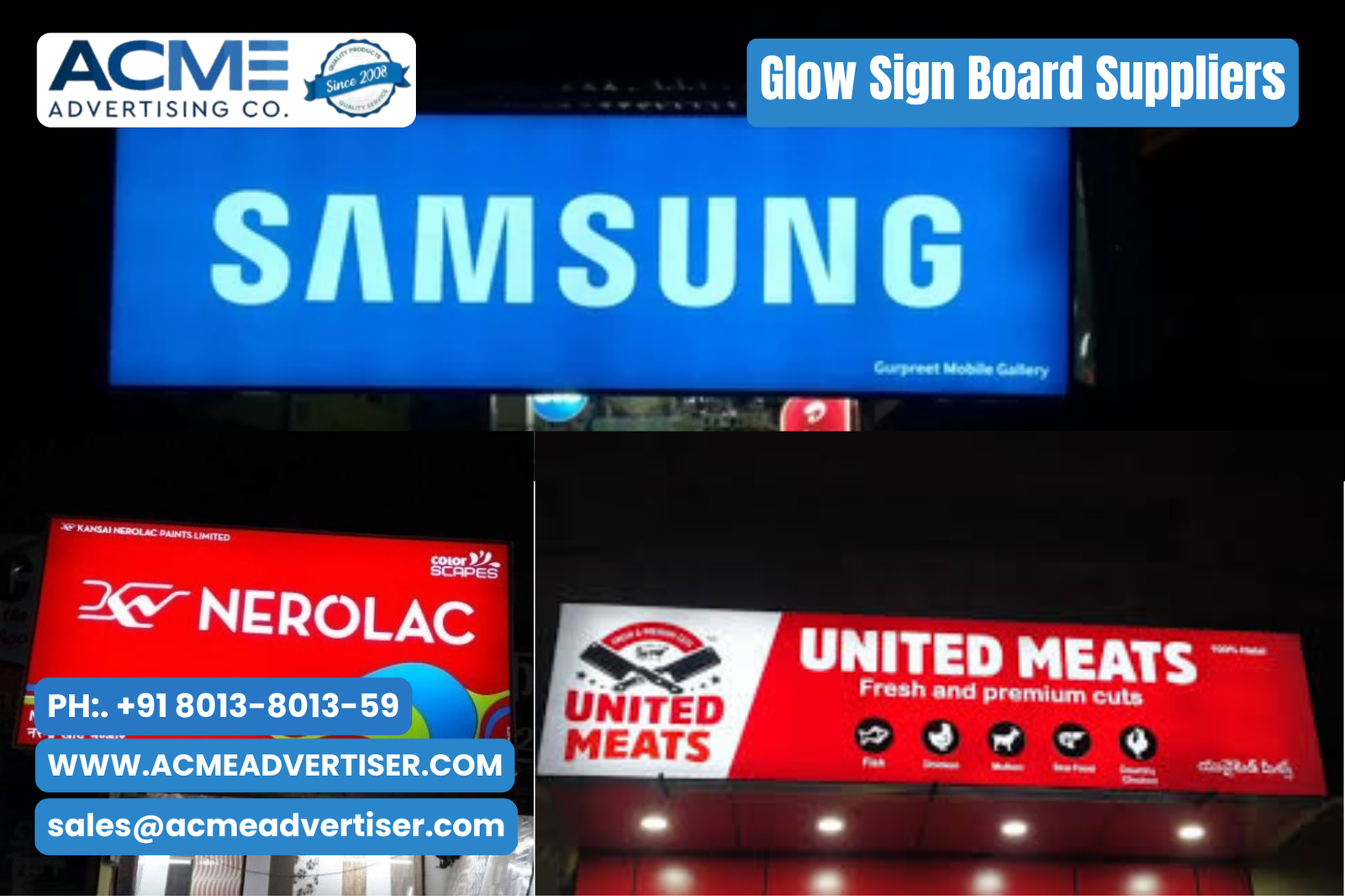
Glow Sign Board Suppliers: Lighting Up Brands That Refuse to Go Unnoticed

When Visibility Meets Illumination, Your Brand Starts Working Overtime

In a marketplace where attention spans are short and competition is always active, brands need visibility that doesn’t switch off. That’s exactly where glow sign board suppliers come into play—delivering illuminated branding solutions that keep your business visible day and night.

From bustling streets to retail storefronts, glow signboards are a cornerstone of Retail media advertising, helping brands create a powerful presence that sticks in people’s minds. And when executed with the right strategy, they don’t just glow—they grow your business.
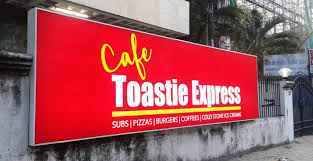
A glow sign board isn’t just a display—it’s a continuous brand communicator. Whether it’s late evening shoppers, early morning commuters, or passersby during peak hours, illuminated signage ensures your brand remains visible when others fade into the background.

The Silent Salesperson That Works 24/7

A glow sign board isn’t just a display—it’s a continuous brand communicator. Whether it’s late evening shoppers, early morning commuters, or passersby during peak hours, illuminated signage ensures your brand remains visible when others fade into the background.

This is why businesses across industries rely on glow sign board suppliers to maintain a strong, consistent presence in high-footfall areas.

Why Glow Sign Boards Still Dominate Retail Media

Constant Visibility That Never Sleeps: Glow sign board suppliers provide solutions that ensure your brand is always “on,” capturing attention even in low-light conditions.

High Recall Through Repetition: When people pass your signage daily, familiarity builds. Familiarity leads to trust, and trust drives action.

Strategic Placement for Maximum Impact: Glow sign boards are placed where decisions happen—outside stores, in commercial hubs, and along busy streets.

Brand Identity Reinforcement: From logos to colors, every element is displayed with clarity and consistency.

How Glow Sign Board Suppliers Support Business Growth
Business GoalHow Glow Sign Boards Help
Brand AwarenessContinuous exposure in public spaces
Footfall IncreaseAttracts walk-in customers
Local DominanceStrong presence in specific areas
Recall ValueRepetition strengthens memory
Customer TrustProfessional visual identity
Types of Glow Sign Boards Offered by Suppliers
TypeUse Case
LED Glow BoardsRetail stores, showrooms
Acrylic Glow SignsPremium brand displays
Flex Glow BoardsCost-effective outdoor use
Backlit PanelsHigh-visibility signage
Channel Letter SignsBrand-focused lettering

These formats are widely delivered by glow sign board suppliers to match different business needs and environments.
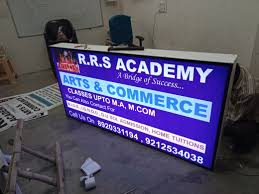
When businesses search for glow sign board suppliers, cost is always a key factor.
Cost Insights: What Influences Investment

When businesses search for glow sign board suppliers, cost is always a key factor. Pricing typically depends on:

  • Size and design complexity
  • Material quality (acrylic, metal, flex)
  • Lighting technology (LED, backlit)
  • Installation location
  • Customization level
  • Maintenance requirements

A basic glow sign board may require a modest investment, while premium signage with advanced lighting and large formats involves higher costs. However, the long-term visibility and brand recall often justify the spend.

Booking Process Made Simple
StageProcess Overview
Requirement DiscussionUnderstand brand needs
Design PlanningCreate visual concepts
FabricationProduction using quality materials
InstallationOn-site setup
ActivationBrand goes live
MaintenanceOngoing support

This streamlined approach ensures that working with glow sign board suppliers remains hassle-free.

Effectiveness of Glow Sign Boards in Retail Advertising
MetricImpact
VisibilityHigh during day and night
EngagementStrong due to illumination
RecallLong-lasting impression
FootfallIncreased walk-ins
ROIConsistent long-term returns

Glow sign boards continue to deliver results because they combine visibility + consistency + simplicity.
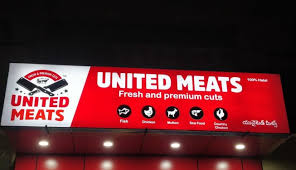
These glow sign board suppliers ensure every board reflects brand identity clearly while maintaining long-term performance in Retail conditions.
Glow Sign Board Suppliers Company Solutions

A reliable company offering glow signage focuses on durable materials, consistent lighting, and professional installation. These glow sign board suppliers ensure every board reflects brand identity clearly while maintaining long-term performance in Retail conditions.

Glow Sign Board Suppliers Companies Network Reach

Leading companies expand brand reach through strategic placements across markets. By working with experienced glow sign board suppliers, businesses gain access to high-visibility zones that strengthen local presence and brand recall.

Glow Sign Board Suppliers Agency Execution Strategy

An experienced agency ensures proper planning, creative alignment, and smooth execution. These glow sign board suppliers integrate branding with location intelligence, ensuring your signage works as a high-impact Retail asset.

Glow Sign Board Suppliers Agencies Campaign Management

Professional agencies handle end-to-end campaigns—from design to installation. Partnering with such glow sign board suppliers ensures consistency, compliance, and optimized brand visibility across multiple locations.

Glow Sign Board Suppliers, Manufacturers, Production Quality

Top manufacturers focus on precision, durability, and lighting efficiency. These glow sign board suppliers use advanced fabrication techniques to deliver signage that performs reliably in all weather conditions.

Glow Sign Board Distribution Strength

Trusted suppliers ensure timely delivery and installation across cities. Working with efficient glow sign board suppliers guarantees smooth deployment and consistent branding across locations.

How Acme Advertising Co. Powers Your Brand Visibility

Here’s where strategy meets execution.
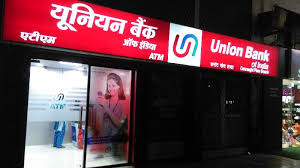
With expertise in Retail and electronic media, Acme Advertising Co. ensures your brand doesn’t just appear—it dominates.

Acme Advertising Co. transforms glow sign boards into performance-driven brand assets.

Creative That Stands Out: Designs that grab attention instantly and communicate clearly.

Strategic Placement That Converts: Locations selected based on audience movement and visibility potential.

Electronic Media Integration: Digital enhancements and lighting innovations that amplify engagement.

End-to-End Execution: From planning to installation, everything is handled seamlessly.

Consistency Across Campaigns: Uniform branding across multiple locations for stronger recall.

With expertise in Retail and electronic media, Acme Advertising Co. ensures your brand doesn’t just appear—it dominates.

Why Businesses Choose Glow Sign Board Suppliers
  • Continuous brand visibility
  • Strong local presence
  • Cost-effective long-term advertising
  • High recall value
  • Easy customization
  • Reliable performance

When aligned with the right strategy, glow sign board suppliers become a key driver of business growth.

Frequently Asked Questions
How do glow sign board suppliers help increase brand visibility?

They provide illuminated signage that ensures your brand remains visible at all times, attracting attention and improving recall.

Are glow sign boards suitable for all types of businesses?

Yes, they work effectively for retail, healthcare, education, hospitality, and service-based businesses.

What materials are used by glow sign board suppliers?

Common materials include acrylic, flex, metal, and LED lighting components for durability and clarity.

How long do glow sign boards last?

With proper maintenance, they can last several years while maintaining brightness and quality.

Do glow sign board suppliers offer customization?

Yes, designs can be tailored to match brand colors, logos, and messaging.

Is glow sign board advertising cost-effective?

Yes, it provides continuous visibility, making it a valuable long-term investment.

Can glow sign boards be installed in any location?

They can be installed in most commercial areas, subject to local regulations.

How can I start with glow sign board suppliers?

Contact a professional agency to plan, design, and execute your signage strategy.

Ready to Light Up Your Brand?

Your audience is already out there—walking, noticing, deciding.
With the right glow sign board suppliers, your brand becomes impossible to miss.

Connect with Acme Advertising Co.

🌐 Website: www.acmeadvertiser.com
📞 Phone: +91 8013 8013 59
📧 Email: sales@acmeadvertiser.com

🔗 LinkedIn
📸 Instagram
📘 Facebook

Grow Your Brand with Acme Advertising Co.

Acme Advertising Co. can help you plan, place, and manage high-impact campaigns.
Our Services: OOH Media | Transit Media | Retail Media | Electronic Media | POSM
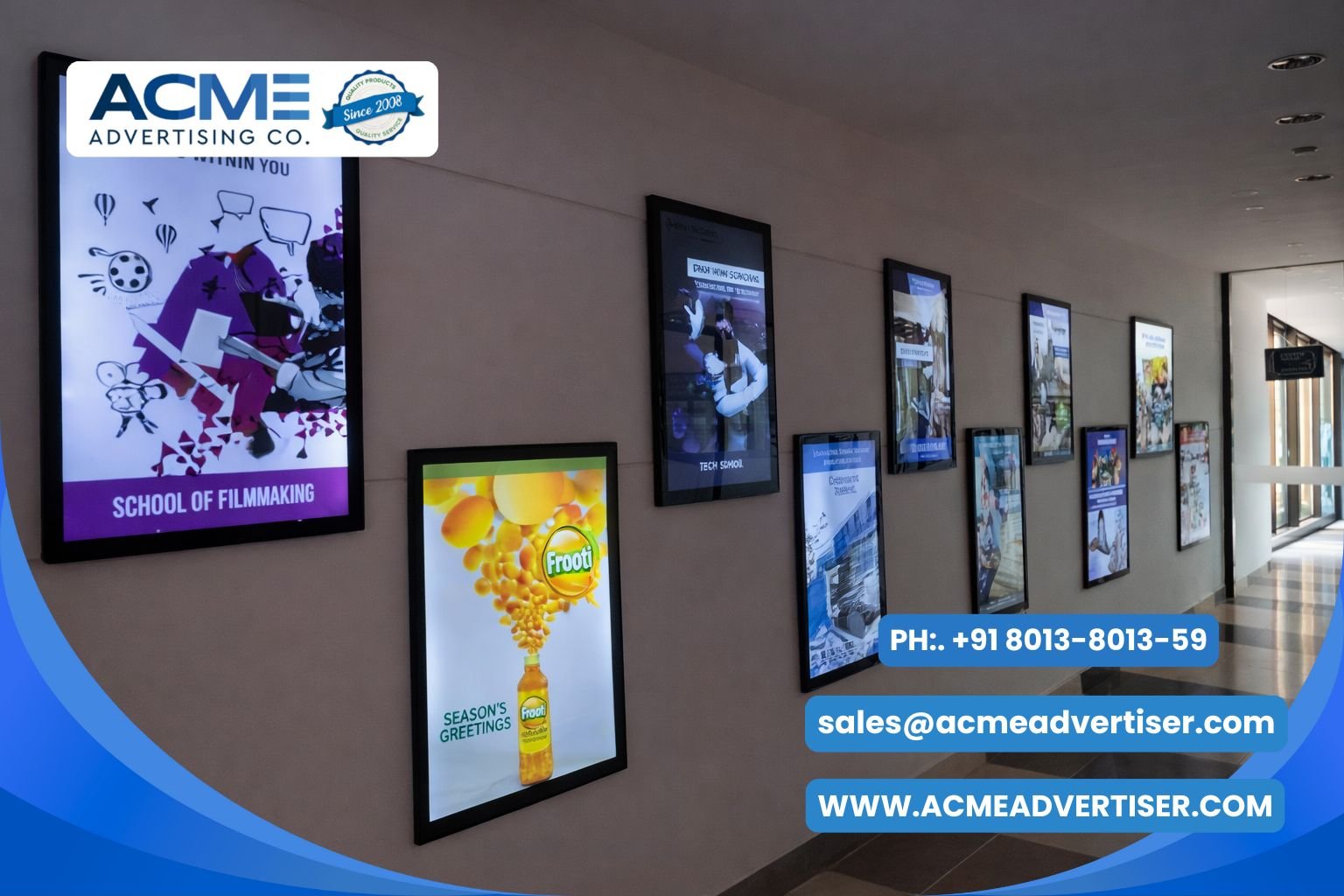
    LED Clip On Branding: Enhancing Visibility at the Point of Decision

    LED Clip On Branding: 7 Powerful Retail Visibility Benefits

    Brand visibility inside physical spaces depends on how clearly and consistently a message appears where people pause, browse, and decide. In retail and commercial environments, small-format digital solutions have become increasingly effective for guiding attention without disruption. LED clip on branding is one such format, designed to add focused visibility directly at shelves, counters, racks, and point-of-sale areas.

    Rather than competing for attention across an entire space, LED clip on advertising works close to the product or service it supports. It delivers subtle illumination, motion, and clarity exactly where decisions are made. This article explains how LED clip on advertising works, why it is effective, and how businesses benefit from its long-term use when applied thoughtfully.

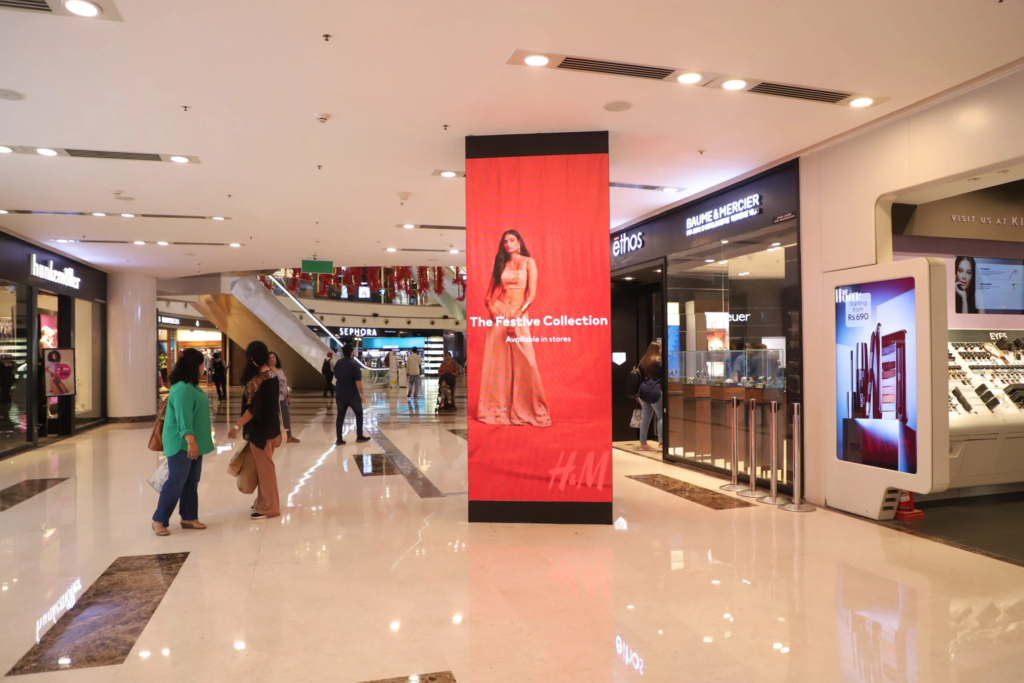
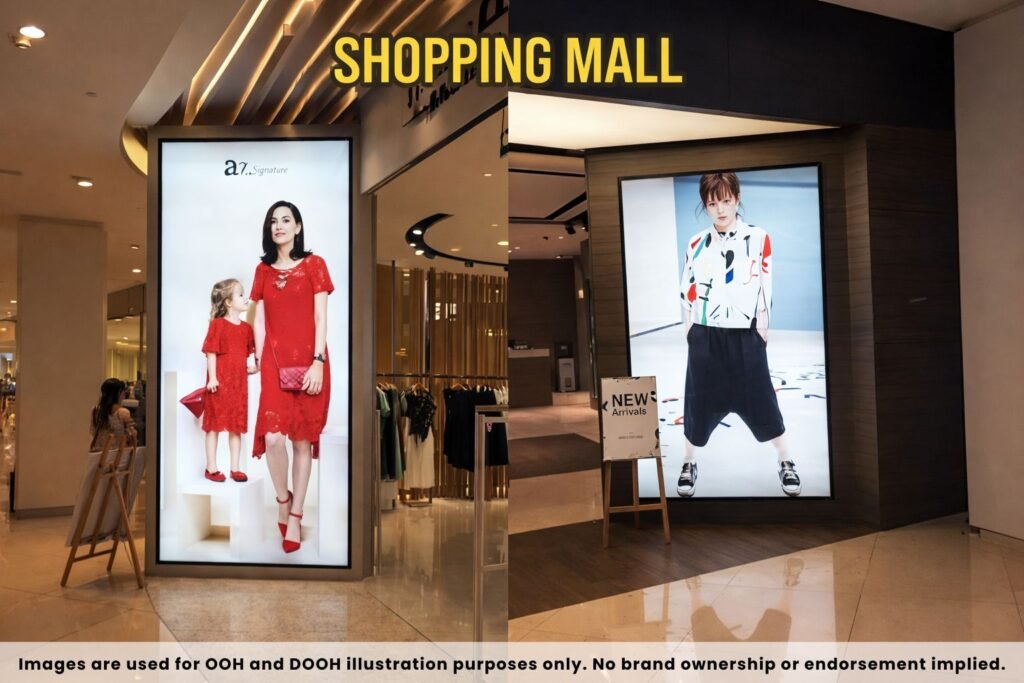
    LED Clip On Branding display inside a shopping mall showcasing fashion retail advertising with high brightness

    Table of Contents

    Understanding LED Clip On Branding

    LED clip on advertising refers to compact LED display units that attach directly to shelves, racks, counters, or fixtures. These units are designed to highlight specific products, offers, or brand messages without altering the surrounding layout.

    LED clip on branding is commonly used for:

    • Retail shelves and gondolas
    • Promotional racks and display units
    • Checkout counters and service desks
    • Product launch and feature highlights

    Because these displays sit within arm’s reach of customers, they become part of the shopping experience rather than an external advertisement.

    Why LED Clip On Branding Influences Buyer Attention

    Retail decisions often happen in seconds. Customers scan shelves quickly, comparing options before making a choice. LED clip on branding helps guide attention at this critical moment.

    It influences behavior by:

    • Drawing the eye through light and contrast
    • Highlighting key products without clutter
    • Supporting recall through repeated exposure

    When shoppers encounter the same illuminated cue across visits, familiarity builds naturally. Over time, LED clip on branding becomes a visual reference point associated with the brand.

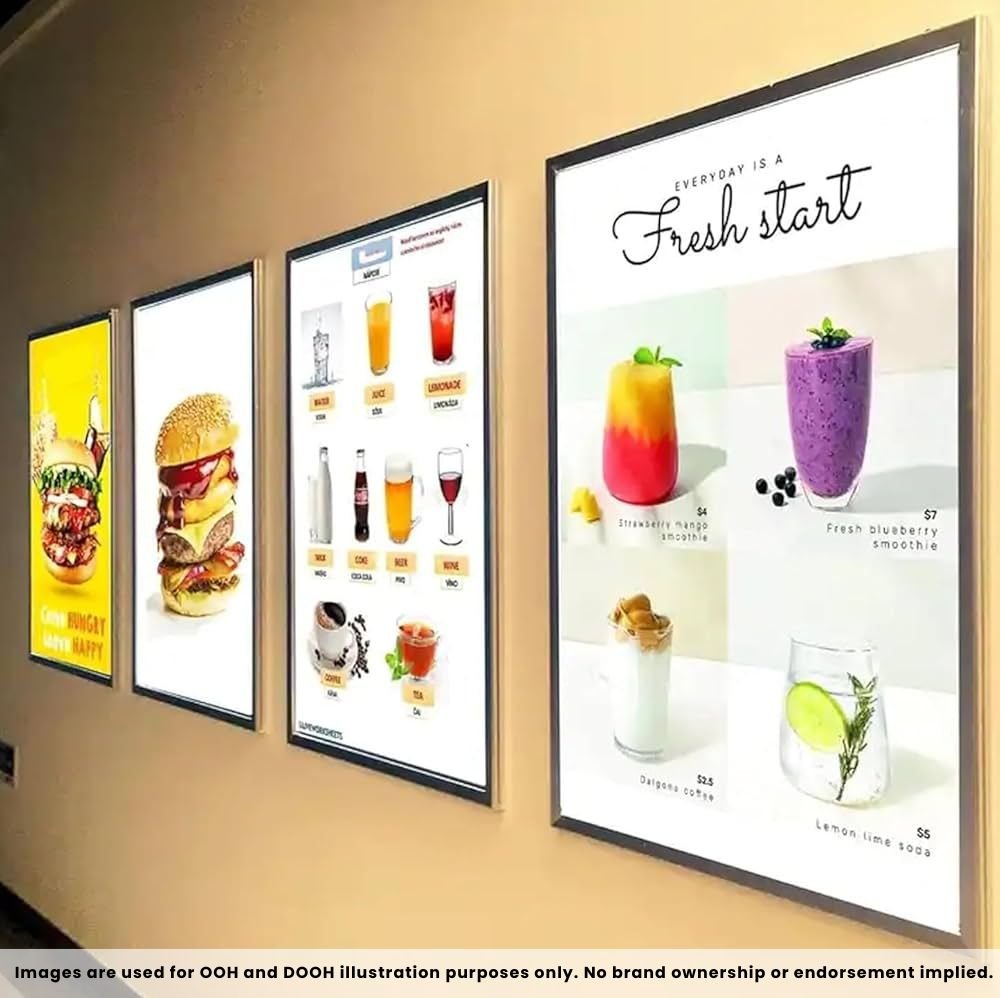
    LED Clip On Branding used for illuminated food menu displays enhancing retail visibility and customer engagement

    Visibility Without Disrupting the Environment

    One of the key strengths of LED clip on advertising is its unobtrusive nature. It does not overwhelm the space or interrupt movement.

    Effective LED clip on advertising:

    • Integrates seamlessly with existing fixtures
    • Maintains clear sightlines to products
    • Enhances visibility without dominating the display

    This balance makes it especially suitable for premium retail, pharmacies, electronics stores, and organized retail formats where visual discipline matters.

    Strategic Placement Defines Effectiveness

    The success of LED clip on advertising depends heavily on where it is placed. Its role is to support decision-making, not distract from it.

    Effective placement considers:

    • Eye-level positioning near products
    • Proximity to high-conversion zones
    • Lighting conditions and surrounding colors

    When placed correctly, LED clip on advertising feels helpful and intuitive, guiding attention exactly where it is needed most.

    LED Clip On Branding lightbox display for premium jewellery retail branding and visual merchandising

    Creative Simplicity in LED Clip On Branding

    Because LED clip on displays are viewed from close range, clarity is essential. Overloaded visuals reduce effectiveness.

    High-performing LED clip on advertising typically features:

    • One clear message or product highlight
    • Minimal text with strong contrast
    • Consistent brand colors and typography

    Creative simplicity ensures that the message is understood instantly, even during quick browsing moments.

    Supporting Brand Trust at the Shelf Level

    Physical branding influences perception. Well-executed LED clip on advertising signals professionalism and investment in detail.

    It builds trust by:

    • Appearing intentional and well-integrated
    • Maintaining consistent illumination and quality
    • Reinforcing brand presence at the point of choice

    This subtle reinforcement supports confidence, especially in categories where customers seek reassurance before purchase.

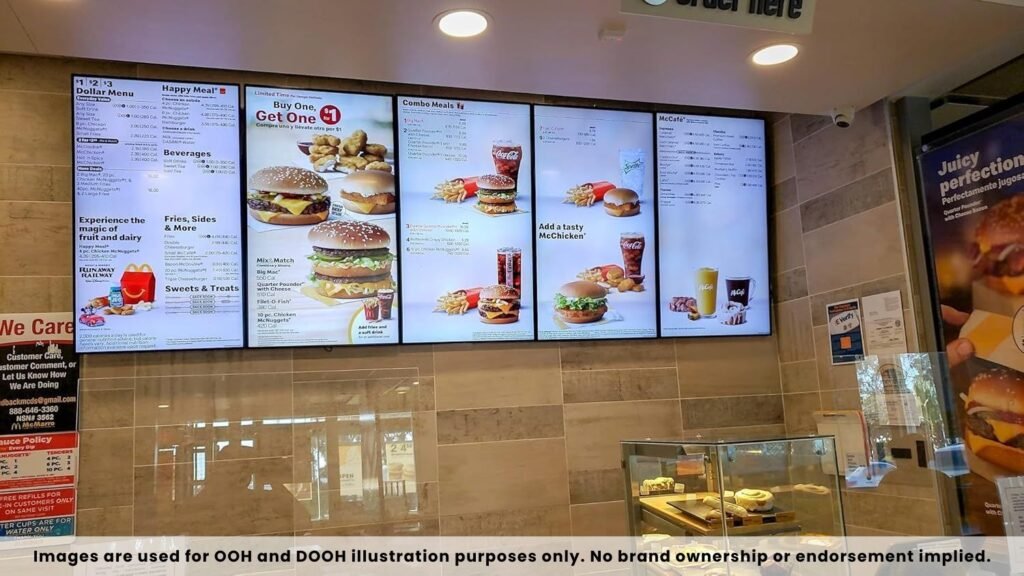
    LED Clip On Branding applied to digital menu boards inside quick service restaurants for clear brand communication

    Cost Efficiency and Long-Term Value

    LED clip on advertising offers predictable value over time. Once installed, it continues to deliver visibility without recurring media costs.

    Key benefits include:

    • Low power consumption
    • Long operational lifespan
    • Minimal maintenance requirements

    For brands running extended retail campaigns, LED clip on branding provides sustained exposure without the need for frequent replacements.

    Applications Across Retail and Commercial Spaces

    LED clip on advertising adapts easily to different environments due to its compact size and flexible mounting.

    Common applications include:

    • FMCG and packaged goods shelves
    • Electronics and appliance displays
    • Pharmacy and wellness product zones
    • Promotional end-caps and counters

    In each setting, LED clip on advertising enhances clarity while respecting the overall store design.

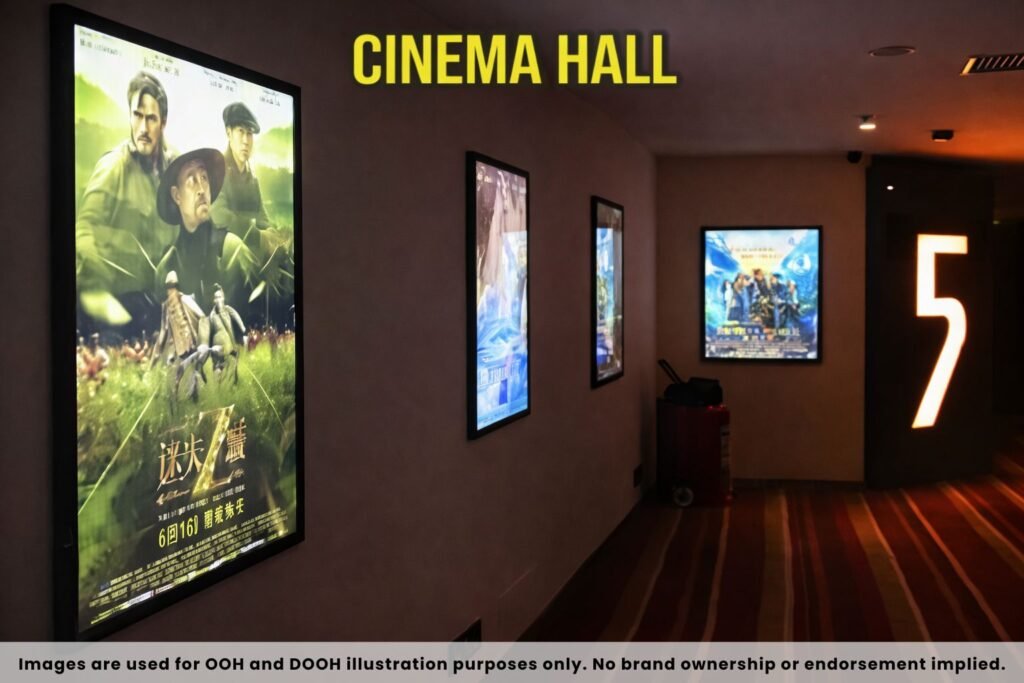
    LED Clip On Branding poster frames used in cinema halls for movie promotions and brand awareness

    Supporting the In-Store Customer Journey

    Retail branding does not stop at awareness. It continues through browsing, evaluation, and final selection.

    LED clip on advertising supports this journey by:

    • Catching attention during initial scanning
    • Reinforcing product benefits at close range
    • Supporting recall during repeat visits

    This continuity ensures the brand remains visible throughout the decision process.

    Regulated Environments and Quality Control

    Retail and commercial spaces often follow strict visual and safety guidelines. LED clip on advertising fits well within these frameworks due to its controlled size and low-risk installation.

    Regulated environments benefit from:

    • Consistent visual standards
    • Reduced clutter on shelves
    • Safer customer interaction

    Operating within these guidelines enhances brand credibility and professional presentation.

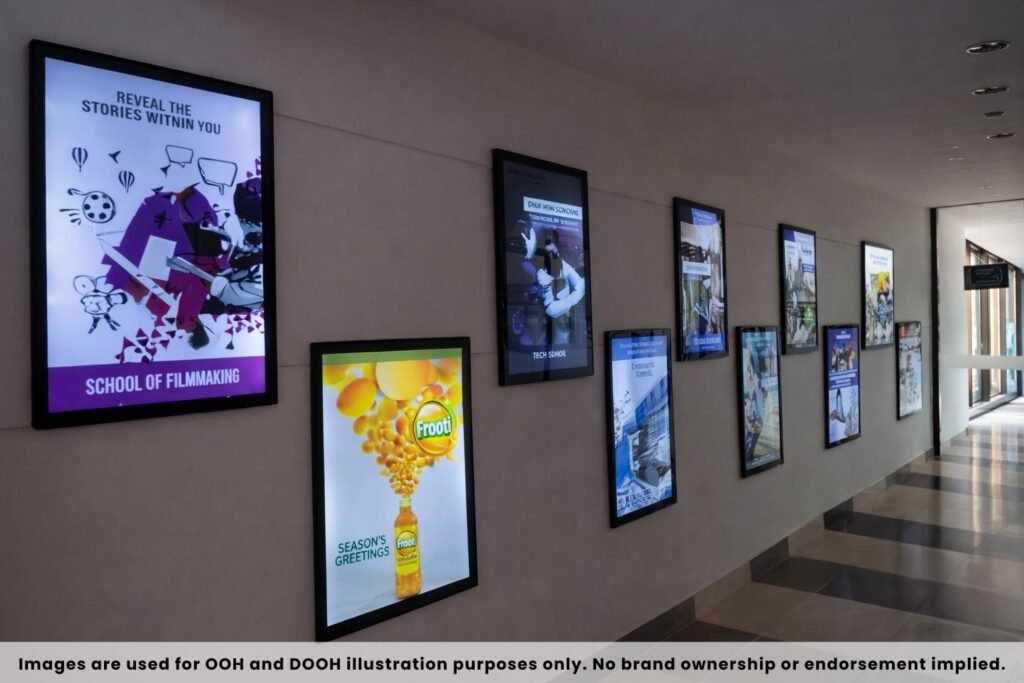
    LED Clip On Branding panels installed in indoor corridors for continuous brand visibility and messaging

    Measuring the Value of LED Clip On Branding

    The impact of LED clip on advertising is not measured by clicks. Its effectiveness appears in behavioral indicators.

    Common indicators include:

    • Improved shelf-level attention
    • Increased product interaction
    • Stronger brand recall during purchase

    Because LED clip on advertising remains visible over time, its influence accumulates gradually rather than delivering short-lived spikes.

    Long-Term Outcomes That Matter

    When used consistently, LED clip on advertising supports outcomes beyond immediate promotion.

    Key long-term outcomes include:

    • Sustained in-store brand awareness
    • Improved product recognition
    • Stronger shelf presence against competitors

    These outcomes explain why LED clip on advertising continues to be adopted by brands focused on steady retail performance.

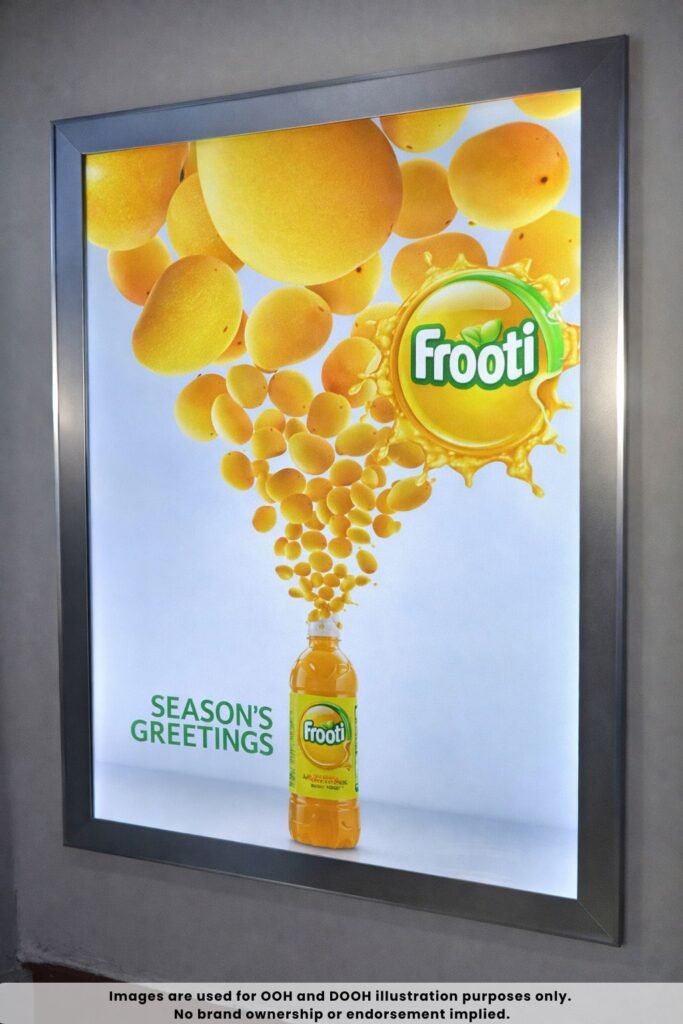
    LED Clip On Branding lightbox frame highlighting beverage advertising with vibrant illumination

    Final Perspective on LED Clip On advertising

    LED clip on advertising works best when it blends into the environment while enhancing clarity. It does not rely on size or noise. Instead, it delivers focused visibility exactly where decisions are made.

    By prioritizing placement logic, creative simplicity, and consistency, brands can use LED clip on branding to strengthen in-store presence without disrupting the customer experience.

    Professional LED Clip On advertising Execution

    Successful LED clip on advertising requires careful planning, quality production, and disciplined installation. Acme Advertising Co. provides professional retail branding solutions, supporting businesses with LED clip on advertising design, production, and on-site execution across commercial environments.

    Their approach focuses on clarity, durability, and long-term brand presence rather than short-term visual noise. Contact us today to explore how our LED clip on branding services can help your brand. 

    Expand your network with us, let’s connect on LinkedIn

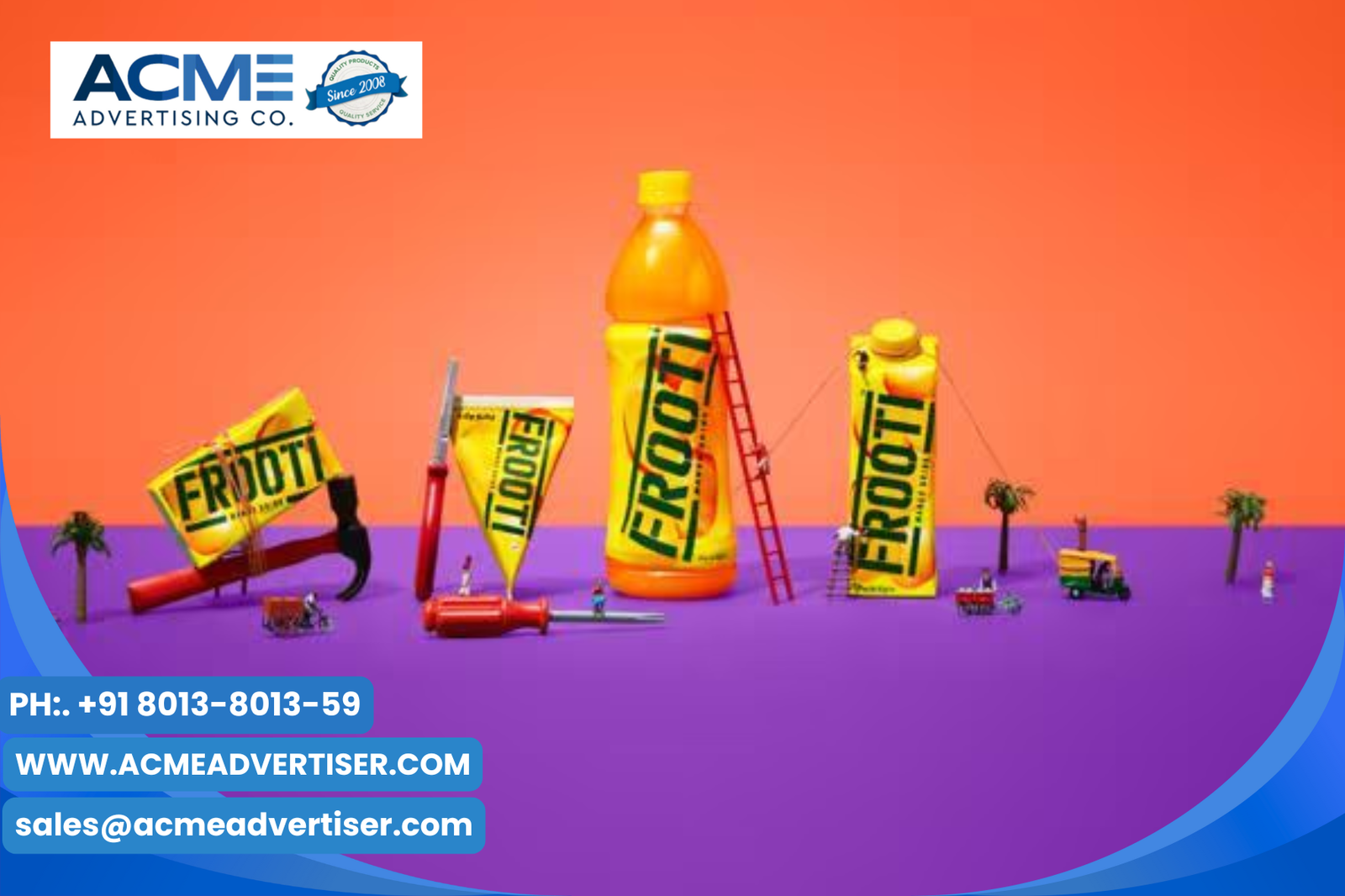
    Marketing Strategy of Frooti: How Frooti Turns Summer Into a High-Impact Brand Experience Across India

    When a Season Becomes a Strategy

     Marketing Strategy of Frooti operates with a 360-degree market presence

    In India, summer isn’t just a climate—it’s a consumption moment. And few brands understand this better than Frooti, the flagship mango drink from Parle Agro. Over the years, Frooti has mastered the art of transforming peak summer months into a high-visibility brand takeover, using a powerful mix of outdoor, transit, and Retail advertising to dominate consumer attention.

    Rather than relying on fragmented communication, Marketing Strategy of Frooti operates with a 360-degree market presence, ensuring the brand is seen, remembered, and purchased—often within the same day. The result is not just awareness, but habit formation.

    This article breaks down how Frooti executes this strategy at scale and what modern brands can learn from its consistent, high-impact media approach.


    A Brand That Knows the Power of Being Seen First

    Frooti’s marketing philosophy is simple but execution-heavy:
    Be impossible to ignore when demand is at its peak.

    From highways to high streets, from moving buses to retail billing counters, the brand ensures its presence feels everywhere, without feeling cluttered. The visual language stays tight. The messaging stays light. And the color stays unmistakably yellow.


    Outdoor Advertising: Owning the Urban Visual Landscape

    Turning Cities Into Brand Canvases

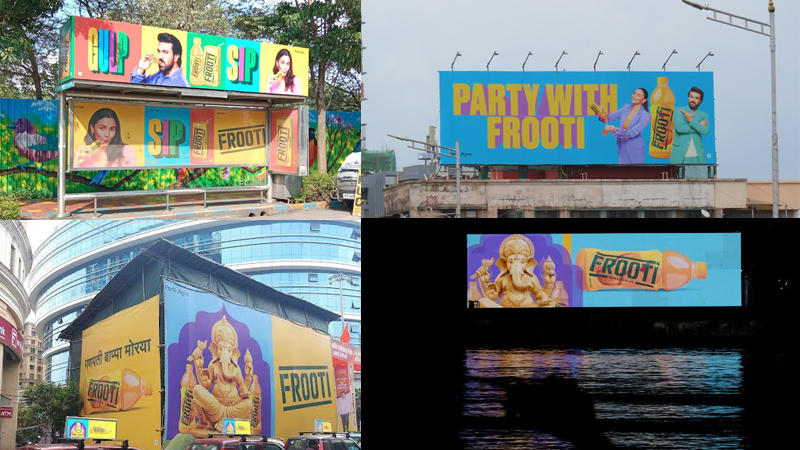
    Frooti’s Outdoor (OOH) strategy is built on scale, repetition, and instant recognition. During summer months, the brand rolls out large-format outdoor campaigns across 100+ cities, creating a sense of visual saturation that reinforces memory.

    High-Impact Billboards and Unipoles

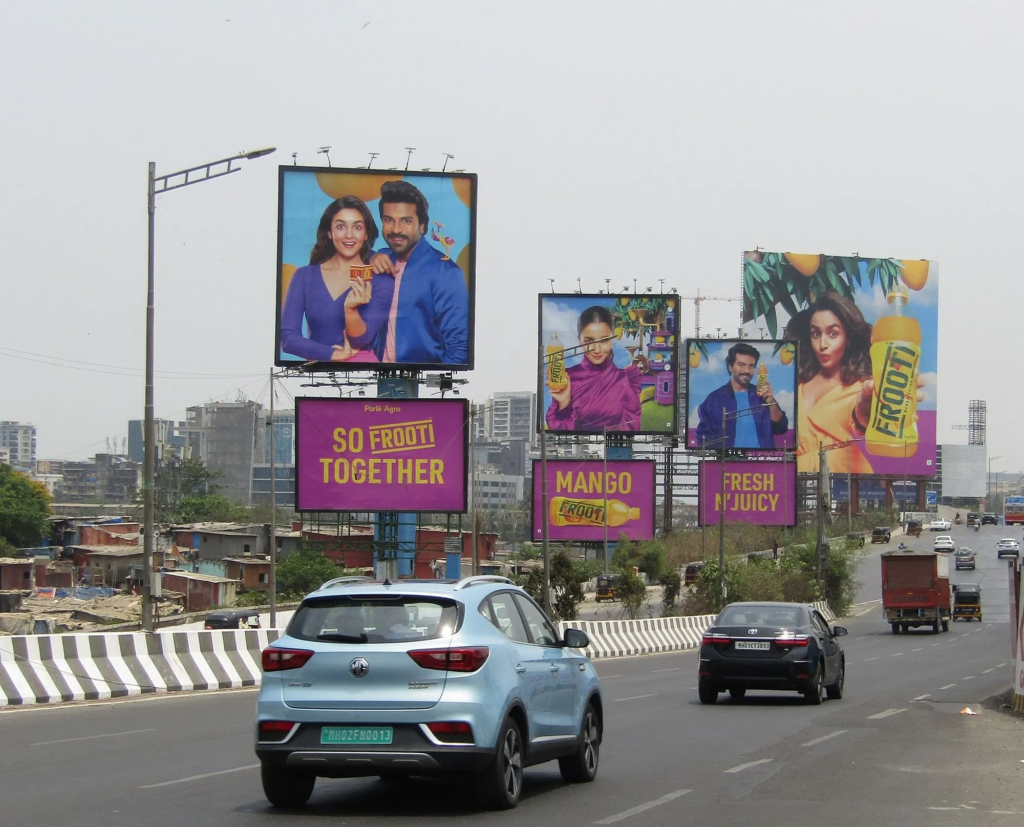
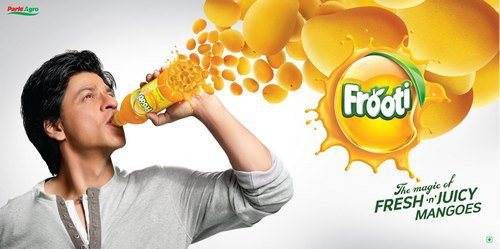
    Large billboards and unipoles are placed in high-traffic arterial roads, junctions, and city entry points, ensuring maximum impressions. The creative approach remains minimalist—strong product visuals, expressive brand ambassadors, and bold color blocking that cuts through visual noise.

    Large billboards and unipoles are placed in high-traffic arterial roads, junctions, and city entry points, ensuring maximum impressions

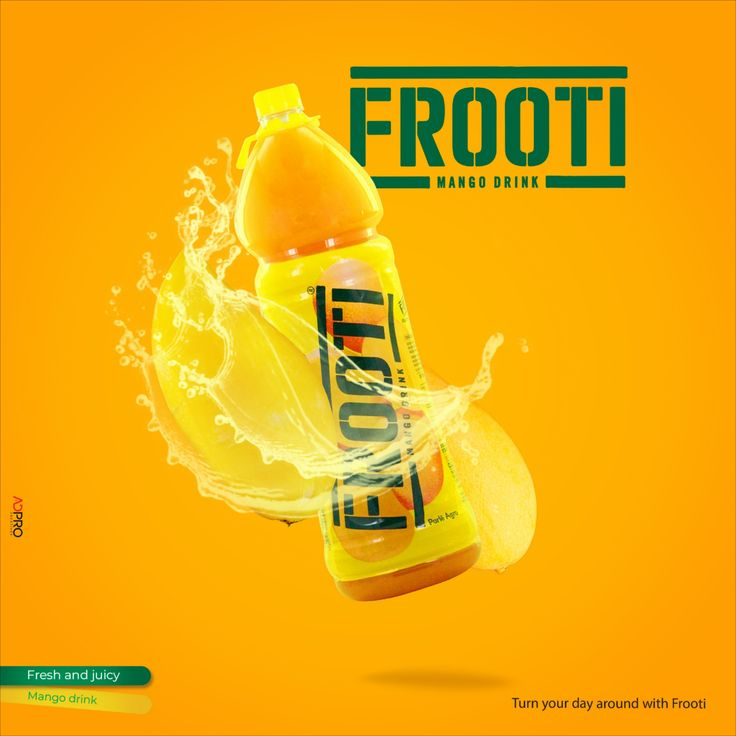
    The consistent use of brand yellow works as a psychological shortcut. Even without reading the copy, consumers instantly know who’s talking.

    Digital OOH for Motion and Momentum

    In premium locations, Digital OOH screens allow Frooti to add movement to its storytelling. Motion-based creatives, animated pours, and playful transitions help the brand stand out in high-footfall environments such as malls, commercial districts, and entertainment hubs.

    This blend of static scale and digital motion keeps the brand visually fresh while maintaining consistency.

    Regional Reach With Local Sensibility

    Marketing Strategy of Frooti: Frooti’s outdoor presence isn’t limited to metros. Tier-1 and Tier-2 cities receive equally strong visibility, ensuring the brand connects with consumers across geographies. Residential clusters, suburban markets, and emerging commercial zones all become part of the media map.

    This widespread deployment ensures that no matter where the consumer travels, the brand stays familiar.


    Transit Media: Meeting Consumers Where Life Happens

    Advertising That Moves With the Audience

    Transit media plays a critical role in Frooti’s strategy because summer also means movement—school commutes, office travel, vacations, and daily errands. The brand leverages this momentum to stay in constant view.

    Train and Bus Wraps as Moving Billboards

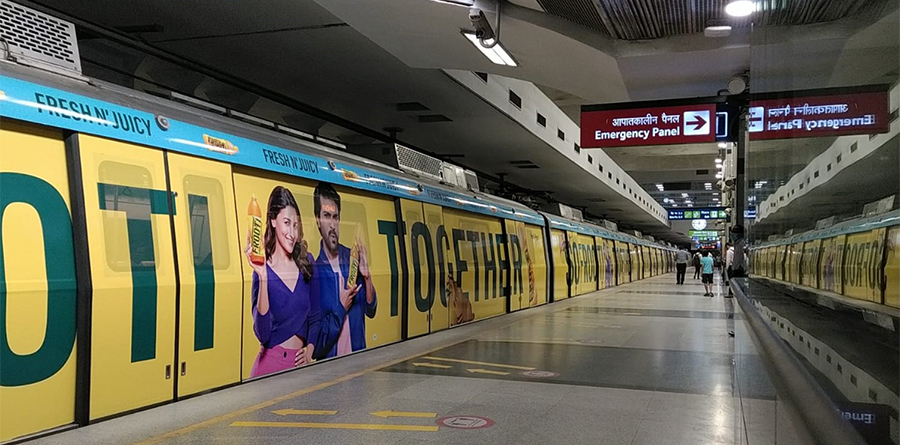
    By wrapping buses and trains in bold brand creatives, Frooti transforms public transport into mobile brand assets. These moving visuals generate repeated exposure across routes, neighborhoods, and time slots, delivering both reach and frequency.

    Bus Queue Shelters With High Recall

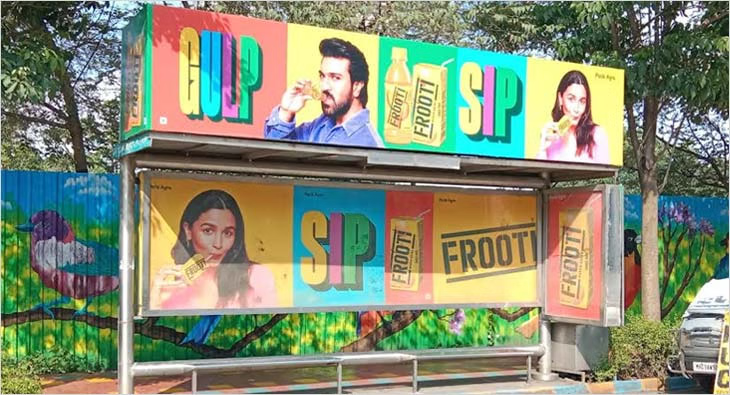
    Bus Queue Shelters may be smaller in size, but they deliver strong impact through high dwell time. Placed near educational institutions, markets, and commercial areas, these formats reinforce brand recall during waiting moments—when attention is naturally available.

    Metro Stations and Transit Hubs

    Metro stations and transit hubs offer a captive audience. Strategic branding in these spaces allows Frooti to connect with daily commuters through repetition and proximity. The brand becomes part of the commuter’s routine, subtly reinforcing preference.


    Retail Advertising: Winning the Moment of Truth

    From Visibility to Conversion

    Marketing Strategy of Frooti: Frooti understands that awareness alone doesn’t drive sales. The final decision happens at the store. That’s why retail advertising is treated as a core pillar, not an afterthought.

    Dominance in Traditional Retail

    Posters, coolers, and signage ensure the product stands out even in crowded retail environments.

    In Kirana stores and local outlets, Frooti’s branding is highly visible. Posters, coolers, and signage ensure the product stands out even in crowded retail environments. The consistency of color and design helps the pack become easy to spot—even from a distance.

    Modern Trade Activations

    In larger retail formats, branded shelves, end-cap displays, and strategically placed units help the brand command attention. These placements ensure the product is seen early in the shopper journey, not as an afterthought.

    Point-of-Purchase Materials

    Danglers, posters, and compact display units near billing counters work as impulse triggers. These formats are especially effective for smaller packs designed for quick consumption moments.

    On-Ground Promotions That Feel Rewarding

    Seasonal promotions and value-driven schemes add an extra layer of engagement. These activations aren’t just about discounts—they create interaction and excitement, especially among younger consumers.


    The Strategic Glue Holding It All Together

    A Color That Became an Asset

    Marketing Strategy of Frooti: Frooti’s yellow isn’t just a design choice—it’s a branding tool. Used consistently across Outdoor, Transit, and Retail, it ensures instant recognition and reinforces memory through repetition.

    Seasonal Timing With Precision

    Campaigns are tightly aligned with peak summer months, ensuring that media investment coincides with high demand. This timing maximizes ROI and keeps the brand culturally relevant.

    Marketing Strategy of Frooti: Frooti’s yellow isn’t just a design choice—it’s a branding tool. Used consistently across Outdoor, Transit, and Retail, it ensures instant recognition and reinforces memory through repetition.

    Youth-Focused, Energy-Driven Positioning

    The communication tone stays playful, fresh, and energetic, aligning naturally with younger audiences. The brand doesn’t over-explain. It lets visuals and mood do the talking.

    Strong Media Partnerships

    Execution at this scale requires precision planning and reliable partners. Data-driven placement, location strategy, and operational efficiency ensure the brand message lands exactly where it should.


    What Brands Can Learn From Frooti’s Approach

    Marketing Strategy of Frooti: Frooti’s success isn’t accidental. It’s the result of consistent visibility, smart media selection, and disciplined execution. The brand shows that when Outdoor, Transit, and Retail work together, they don’t just build awareness—they build momentum.

    For brands looking to create a similar impact, the key takeaway is clear:
    Visibility works best when it’s coordinated, contextual, and continuous.


    Bringing High-Impact Media Strategies to Life With Acme Advertising Co.

    At Acme Advertising Co., we help brands activate powerful media ecosystems inspired by real-world success stories like Frooti’s. Our approach focuses on making your brand visible where it matters most—on roads, in transit, inside retail spaces, and across high-footfall environments.

    Our Services: OOH Media|Transit Media|Retail Media|Electronic Media|POSM

    Each campaign is planned with location intelligence, audience behavior, and execution clarity—so your brand doesn’t just show up, it stands out.


    Final Thought: Visibility That Builds Memory

    Frooti’s journey proves that when a brand commits to visibility with purpose, consistency, and creativity, it earns more than attention—it earns trust and recall. In a market as dynamic as India, that’s a competitive advantage that compounds year after year.

    If your brand is ready to create presence that people remember long after summer ends, the right media strategy makes all the difference.

    💼 Connect with Acme Advertising Co.

    📞 +91 8013-8013-59
    🌐 www.acmeadvertiser.com

    🔗 LinkedIn: https://www.linkedin.com/company/acme-advertising-co/?viewAsMember=true
    📸 Instagram: https://www.instagram.com/acme_advertising_company/

    Your brand doesn’t need to shout. It just needs to be seen—strategically.

      Case Study H&M Builds Global Fashion Visibility Through Smart Outdoor, Retail, and Experiential Media

      Case study H&M: A Fashion Brand That Lives Where People Move

      Case study H&M: A Fashion Brand That Lives Where People Move

      H&M (Hennes & Mauritz) is not just a global fashion retailer—it is a brand that understands how visibility, experience, and convenience work together to influence modern consumers. Founded in 1947 by Erling Persson in Sweden, H&M has grown into one of the world’s most recognised fashion brands by staying accessible, trend-relevant, and deeply connected to how people shop, travel, and interact with brands.

      Rather than relying on one advertising channel, H&M adopts a multi-touchpoint brand presence—using outdoor advertising, transit media, in-store technology, and experiential activations to stay visible across everyday consumer journeys. This case study explores how H&M uses these channels together to create impact, and what brands can learn from its approach.


      case study H&M Brand Philosophy: Visibility With Purpose

      At its core, H&M’s marketing strategy reflects three consistent principles:

      • Be present where people already are
      • Blend physical experiences with digital convenience
      • Make branding feel immersive, not intrusive

      H&M does not treat advertising as a separate activity from retail. Instead, its media presence flows naturally into how customers discover, explore, and purchase products—whether on the street, in transit, or inside a store.


      OOH Media: Making Fashion Part of the Cityscape

      Large-Scale Billboards & High-Impact Visibility

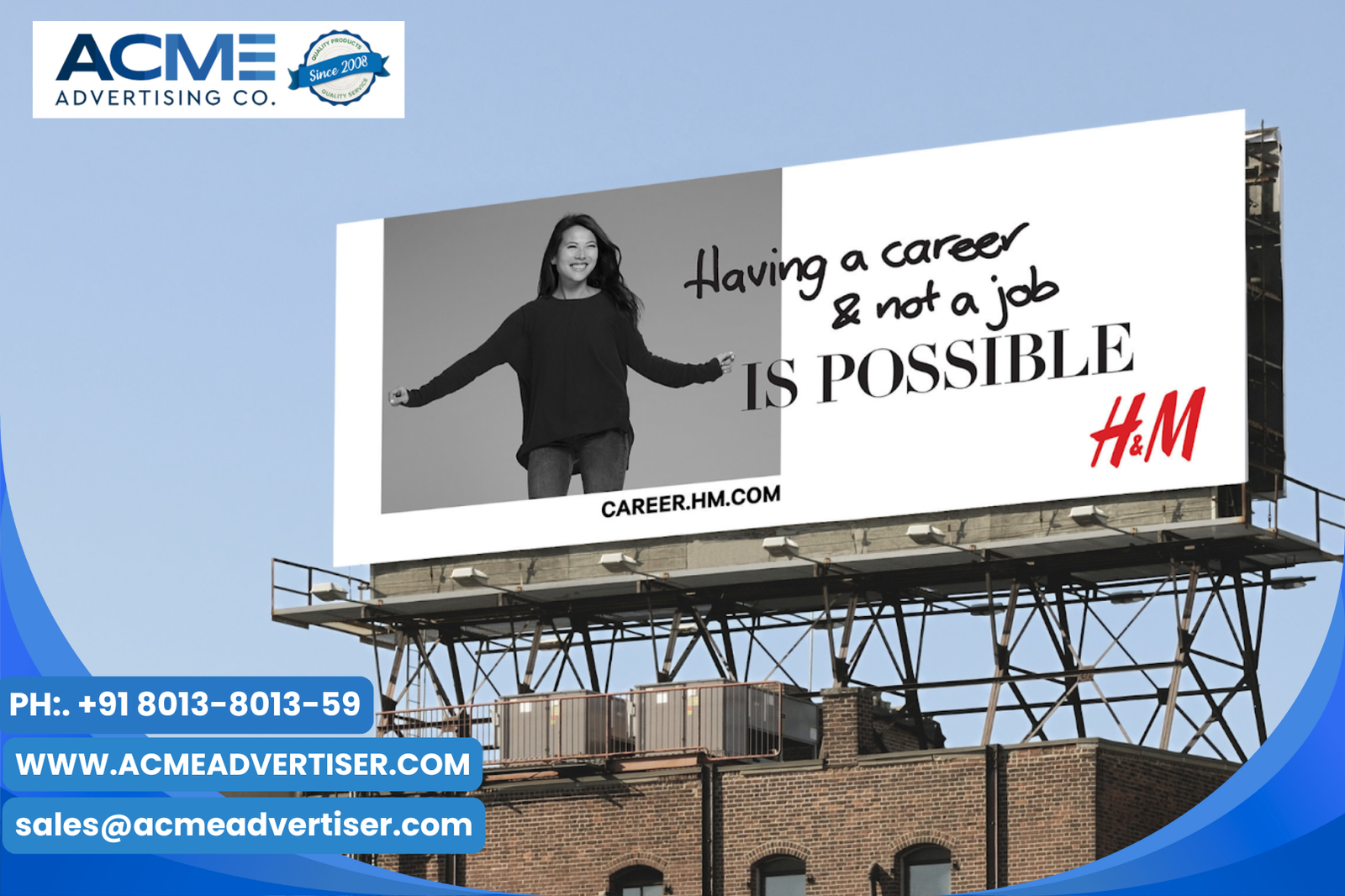
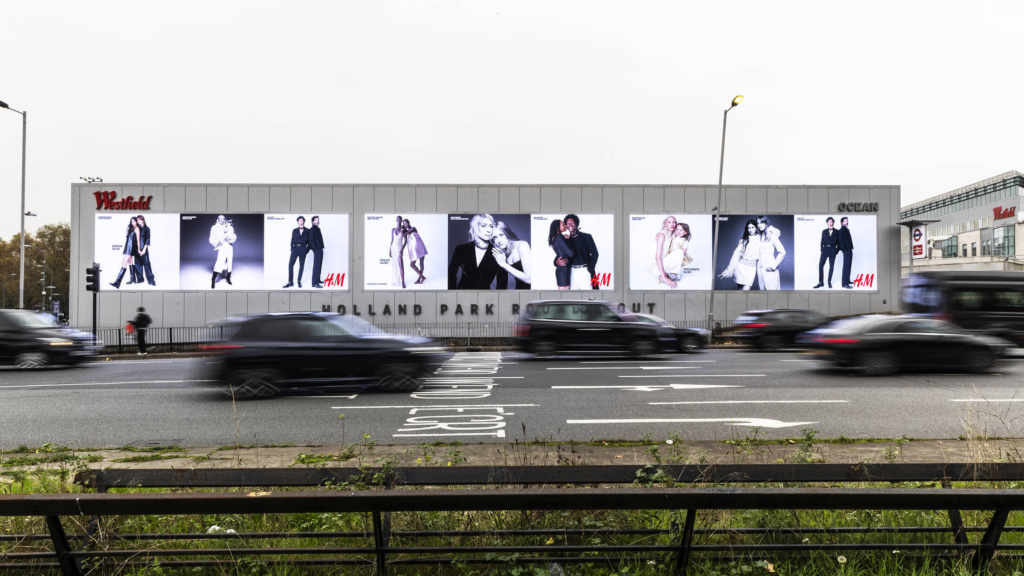
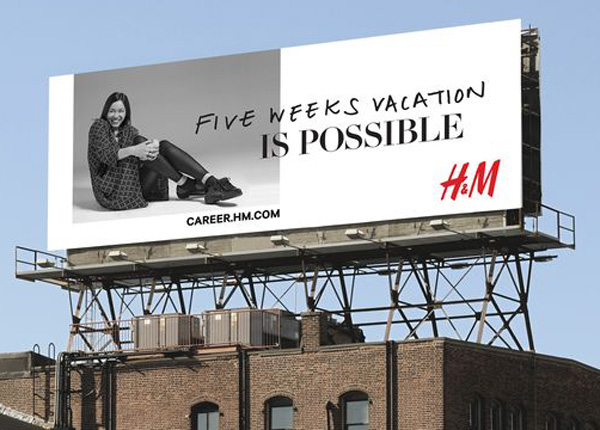
      H&M uses large-format outdoor billboards to create instant brand recognition in high-footfall areas. These billboards often focus on:

      • Seasonal collections
      • Sustainability initiatives
      • Limited-time campaigns

      Rather than overcrowding creatives with information, H&M keeps messaging visually strong and fashion-led, allowing the brand aesthetic to speak for itself.

      Digital Out-of-Home (DOOH): Dynamic and Flexible

      Digital Out-of-Home (DOOH): Dynamic and Flexible

      H&M integrates digital outdoor screens (DOOH) into its campaigns, enabling:

      • Time-specific messaging
      • Campaign refresh without reprinting
      • Better alignment with digital launches

      DOOH allows H&M to stay current and responsive while maintaining consistent visual identity across cities.

      [acme_services state=”mumbai” limit=”15″ start=”55″]

      Transit Media: Fashion That Moves With the Audience

      Metro Pillars, Stations & Transit Zones

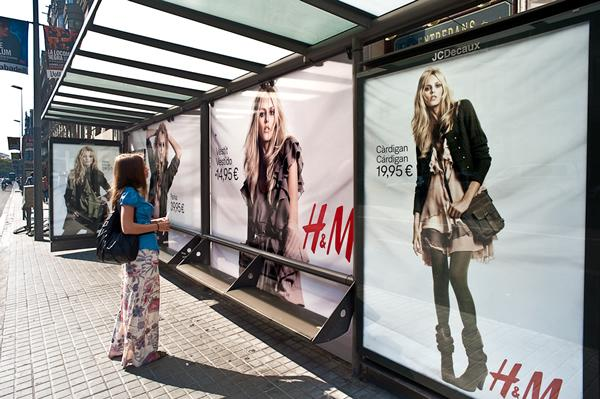
      H&M actively uses transit advertising formats such as metro pillars, station branding, and transit corridors. These placements offer:

      • Repeated exposure to daily commuters
      • High dwell time
      • Strong recall through repetition

      Transit environments naturally support fashion discovery, as commuters are often browsing, waiting, or visually engaged during travel.

      Why Transit Media Works for H&M

      Transit advertising fits perfectly with H&M’s mass-appeal positioning. It ensures the brand stays visible across:

      • Office commuters
      • Students
      • Urban shoppers

      This approach reinforces the idea that H&M is part of everyday life, not just an occasional shopping destination.


      Experiential Outdoor Activations: Creating Memorable Brand Moments

      Transit advertising fits perfectly with H&M’s mass-appeal positioning. It ensures the brand stays visible across:

      Beyond static media, H&M uses experiential outdoor activations to create emotional engagement. One notable example from the document includes giant advent calendar installations enhanced with scent, transforming outdoor spaces into immersive brand experiences.

      These activations achieve:

      • Higher social sharing
      • Emotional brand association
      • Strong recall beyond the campaign period

      Experiential media allows H&M to move from “seen” to “remembered.”


      In-Store Advertising: Where Branding Meets Decision-Making

      A Retail Space Designed for Engagement

      H&M treats its stores as a media channel, not just a sales floor. In-store advertising supports:

      • Product discovery
      • Brand storytelling
      • Smooth decision-making

      Rather than overwhelming customers, H&M uses clean, guided visuals to help shoppers navigate collections easily.


      Technology-Enabled In-Store Experience

      Smart Mirrors & Tech-Enabled Fitting Rooms

      H&M integrates smart mirrors and tech-enabled fitting rooms, allowing customers to:

      H&M integrates smart mirrors and tech-enabled fitting rooms, allowing customers to:

      • View styling suggestions
      • Explore product details digitally
      • Enhance convenience inside the store

      This bridges the gap between online browsing and offline shopping.


      Data-Driven Customisation: Making Retail Smarter

      case study H&M: H&M uses data-driven customisation within stores to improve relevance. This includes:

      • Region-specific product emphasis
      • Season-aligned visual merchandising
      • Better inventory presentation

      By aligning data with retail media, H&M ensures customers see what is most relevant to them—reducing friction and improving satisfaction.


      How H&M’s Channels Work Together

      ChannelPrimary RoleImpact
      Outdoor (OOH)Mass visibility & brand recallHigh awareness
      DOOHDynamic messagingTimely relevance
      Transit MediaDaily repetitionStrong recall
      ExperientialEmotional engagementMemorability
      In-Store MediaConversion supportPurchase confidence
      TechnologyConvenience & personalisationBetter experience

      This integrated structure ensures H&M stays present from awareness to action.


      case study H&M: Key Learnings From H&M’s Strategy

      1. Visibility Must Feel Natural

      H&M succeeds because its advertising fits seamlessly into consumer environments—streets, metros, and stores—without feeling forced.

      2. Experience Matters as Much as Exposure

      Experiential elements elevate simple visibility into memorable brand moments.

      3. Retail Media Is Not Optional

      In-store branding and technology play a critical role in guiding final purchase decisions.

      4. Integration Drives Impact

      Outdoor, transit, retail, and digital channels work best when planned together—not in isolation.


      How Acme Advertising Co. Helps Brands Grow Like H&M

      How Acme Advertising Co. Helps Brands Grow Like H&M

      Acme Advertising Co. supports brands aiming for H&M-level visibility and engagement by delivering:

      • Strategic outdoor media placements in high-footfall zones
      • Transit advertising across metro, bus, and mobility networks
      • Retail media and POSM solutions that influence purchase decisions
      • Smart campaign planning focused on reach, recall, and real impact

      By placing brands where attention naturally exists, Acme ensures campaigns are not just visible—but effective.


      Visibility That Converts Into Brand Equity

      case study H&M: H&M’s success shows that modern branding is not about choosing between digital or physical—it’s about connecting both worlds intelligently. By combining outdoor advertising, transit visibility, experiential activations, and technology-enabled retail media, H&M creates a brand presence that feels consistent, accessible, and engaging.

      For brands looking to scale awareness, trust, and footfall, this approach offers a clear roadmap.


      Want Your Brand to Shine Like H&M?

      Let Acme Advertising Co. help your brand shine across cities, roads, and high-traffic locations.

      📍 Our Services:

      OOH Media | Transit Media | Retail Media | Electronic Media | POSM
      📞 Call: +91 8013-8013-59
      🌐 Website: www.acmeadvertiser.com 📧 Email: sales@acmeadvertiser.com
      🔗 LinkedIn: Acme Advertising Co.I Follow Us on Instagram

      Your brand deserves visibility that moves people — let’s make it happen.Ready to Build High-Impact Campaigns?

        Zara case study: The Quiet Revolution That Changed How the World Shops

        When a Small Store in Spain Rewrote Global Fashion Rules

        In 1975, on a modest street in A Coruña, Spain, a single clothing store opened with no ambition of becoming loud, flashy, or famous. It didn’t launch with celebrity endorsements. It didn’t flood newspapers with ads. It didn’t chase trends—it listened to them.

        That store was Zara.

        Zara case study: The Quiet Revolution That Changed How the World Shops

        Founded by Amancio Ortega and Rosalía Mera, Zara began as an experiment in responsiveness. The idea was deceptively simple: shorten the distance between what people want and what they can buy. That philosophy would quietly evolve into what the world later called fast fashion, though internally, Zara always treated it as fast listening.

        Today, as the flagship brand of Inditex, Zara operates across continents while remaining anchored to the same belief: relevance beats reach, and speed beats noise.

        This article explores how Zara case study biography and marketing philosophy shaped one of the most influential retail models in history—and how brands today can apply the same principles with the support of a strategic auto advertising agency in india.


        The Origin Story That Still Shapes the Brand

        Zara’s early years were defined by constraint. Limited capital meant limited excess. Every decision had to serve demand. When the original store name “Zorba” conflicted with a nearby business, the founders renamed it Zara case study—short, sharp, and easy to remember. That simplicity became part of the brand’s DNA.

        During the 1980s, Amancio Ortega re-engineered the entire fashion supply chain. Design, manufacturing, distribution, and retail were no longer separate silos. They became a single, vertically integrated system. This allowed Zara to move designs from concept to store shelves in as little as two to three weeks.

        The result was not just faster production, but smarter production.


        Speed as a Strategy, Not a Gimmick

        Zara’s speed is often misunderstood as volume. In reality, it is precision.

        Zara’s speed is often misunderstood as volume. In reality, it is precision.

        Instead of predicting trends months in advance, Zara case study observes real consumer behavior in real time. Store managers relay feedback directly to design teams in Spain. Data from sales, returns, and in-store reactions informs what gets produced next.

        This operational rhythm allows Zara to release new collections multiple times a week. Customers don’t just shop at Zara—they check in. On average, Zara customers visit stores far more frequently than traditional apparel retailers, driven by the promise of something new every time.

        This model creates natural urgency without artificial pressure. Scarcity becomes organic. Demand feels earned.


        Stores That Function Like Living Media

        Zara doesn’t treat stores as distribution points. Stores are communication channels.

        Every Zara case study location sits in a premium, high-traffic urban environment. From Oxford Street to Fifth Avenue, the brand invests in physical visibility rather than paid media. The storefront, the window display, the interior layout—all serve as the brand’s primary marketing language.

        Inventory is deliberately limited. When a product sells out, it rarely returns. This reinforces decisiveness in purchasing behavior and keeps inventory risk low. It also turns customers into brand participants rather than passive buyers.

        This philosophy mirrors how a modern auto advertising agency in india designs high-impact physical visibility—placing brands where attention already exists, rather than interrupting it.


        Marketing by Listening, Not Broadcasting

        Instead of broadcasting messages, Zara allows customers to discover the brand through:

        One of Zara’s most distinctive choices is its minimal spend on traditional advertising. With less than one percent of revenue allocated to ads, Zara redirected investment into infrastructure, logistics, and store experience.

        Instead of broadcasting messages, Zara allows customers to discover the brand through:

        • Physical presence in aspirational locations
        • Consistent visual identity
        • Fast adaptation to cultural and regional preferences

        The message is subtle but powerful: relevance is more persuasive than repetition.


        Digital Without Noise

        Zara case study entered e-commerce in 2010 and later integrated RFID technology to track inventory in real time. This wasn’t about chasing trends—it was about maintaining operational clarity at scale.

        On social platforms, Zara avoids promotional clutter. Its content feels editorial, art-driven, and fashion-forward. The brand doesn’t sell outfits—it curates moods. Influencer collaborations remain selective, aligned more with aesthetic credibility than follower counts.

        This restraint reinforces trust. Customers feel invited, not targeted.

        Sustainability as a Long-Term Signal

        Sustainability as a Long-Term Signal

        With the launch of the Join Life initiative, Zara case study embedded sustainability into its supply chain and materials strategy. Rather than using sustainability as a headline, Zara uses it as an operational baseline—gradually shifting toward more responsible fabrics and processes.

        This approach reflects a deeper understanding of brand equity: long-term trust compounds faster than short-term applause.


        A Snapshot of Zara’s Strategic Framework

        Strategic AreaCore Approach
        ProductionVertically integrated
        InventorySmall, frequent batches
        MarketingStore-first visibility
        SpeedWeeks, not seasons
        FeedbackReal-time, store-led
        DigitalIntegrated, not isolated

        Zara’s success is not accidental. It is engineered through consistency, restraint, and responsiveness.


        Translating Zara’s Philosophy Into Modern Brand Growth

        Not every brand is a global fashion retailer. But every brand can adopt Zara’s mindset.

        Not every brand is a global fashion retailer. But every brand can adopt Zara’s mindset.

        At its core, Zara case study teaches three lessons:

        • Be present where decisions are made
        • Respond faster than expectations
        • Let experience speak louder than claims

        This is where Acme Advertising Co. steps in—not to replicate Zara, but to apply its principles across industries using grounded, real-world media execution.


        How Acme Advertising Co. Applies Zara-Inspired Thinking

        Acme Advertising Co. operates on a simple belief: brands grow when visibility, timing, and context align.

        As an experienced auto advertising agency in india, Acme focuses on physical media ecosystems that work together rather than compete for attention. This includes outdoor media, transit visibility, retail environments, and integrated on-ground touchpoints.

        The objective isn’t saturation—it’s relevance.


        [acme_services state=”Haryana” limit=”50″ start=”0″]

        Physical Presence That Feels Intentional

        Much like Zara’s store strategy, Acme Advertising Co. prioritizes where a brand appears as much as how often it appears. High-traffic corridors, commuter routes, retail clusters, and urban landmarks are selected based on behavior, not just impressions.

        This ensures brands don’t shout into the void. They show up when audiences are already receptive.

        A disciplined auto advertising agency in india understands that visibility works best when it feels natural, not forced.


        Speed, Adaptability, and Feedback Loops

        Speed, Adaptability, and Feedback Loops

        Zara’s edge lies in rapid feedback. Acme mirrors this by continuously monitoring campaign performance and adapting execution on the ground. Creative formats, placements, and messaging are refined based on response patterns—not assumptions.

        This creates campaigns that evolve instead of expiring.


        E-E-A-T in Practice, Not Just Theory

        Acme Advertising Co. aligns with E-E-A-T principles naturally:

        • Experience through executed campaigns
        • Expertise through planning and media strategy
        • Authoritativeness via consistent delivery
        • Trust built through transparency and realism

        Growth That Feels Organic, Not Engineered

        Zara case study never chased attention. It earned it.

        Zara case study never chased attention. It earned it.

        Acme Advertising Co. applies the same philosophy—helping brands grow through presence, consistency, and relevance across physical and digital touchpoints.

        When campaigns feel useful instead of intrusive, audiences respond with trust.

        Let Acme Advertising Co. help your brand shine across cities, roads, and high-traffic locations.

        📍 Our Services:

        OOH Media | Transit Media | Retail Media | Electronic Media | POSM

        📞 +91 8013-8013-59
        🌐www.acmeadvertiser.com📧 sales@acmeadvertiser.com
        🔗 LinkedIn: Acme Advertising Co.IFollow Us on Instagram

        Your brand deserves visibility that moves people — let’s make it happen.


        Frequently Asked Questions

        How does physical visibility support long-term brand growth?
        Consistent real-world presence builds familiarity, which translates into trust and recall.

        Why is speed important in modern marketing execution?
        Faster response allows brands to stay relevant as consumer behavior evolves.

        Can smaller brands apply strategies inspired by Zara?
        Yes, when principles are adapted thoughtfully rather than copied.

        How does Acme Advertising Co. ensure relevance in campaigns?
        Through data-backed planning and continuous performance feedback.

        What role does creativity play in outdoor advertising?
        Creativity captures attention, but clarity sustains it.

        Is physical media still effective in a digital-first world?
        Physical media complements digital by anchoring brand credibility.

        How does an auto advertising agency in india support diverse industries?
        By tailoring visibility strategies to location, audience, and context.

        What makes Acme Advertising Co. a strategic partner?
        A focus on execution, realism, and long-term brand value.

          Sunboard Vinyl for Retail Branding: Building Visibility Where Decisions Are Made

          Sunboard Vinyl: 9 Powerful Benefits for Retail Branding

          Retail branding succeeds or fails at the point of interaction. Inside stores, showrooms, and commercial spaces, customers make quick decisions based on what they see, understand, and remember. Sunboard vinyl has become a widely adopted solution in retail branding because it balances visual clarity, durability, and cost efficiency without overwhelming the environment.

          Retail spaces demand materials that look professional, remain consistent over time, and support repeated exposure. Sunboard meets these requirements by offering a clean surface for messaging, strong print quality, and flexible application across formats. This article explains how sunboard supports retail branding, why it works in real-world environments, and how businesses benefit from its long-term value.

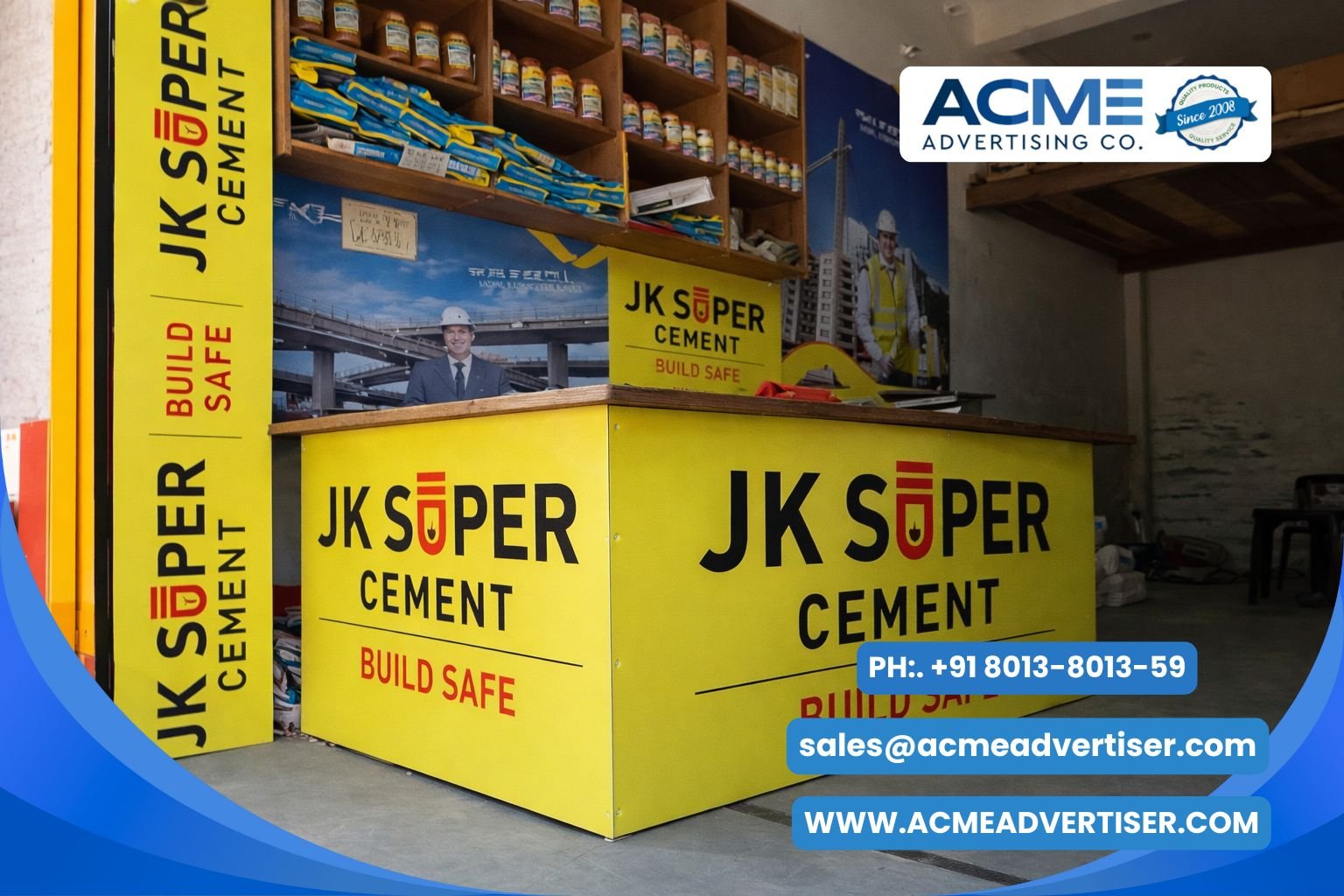
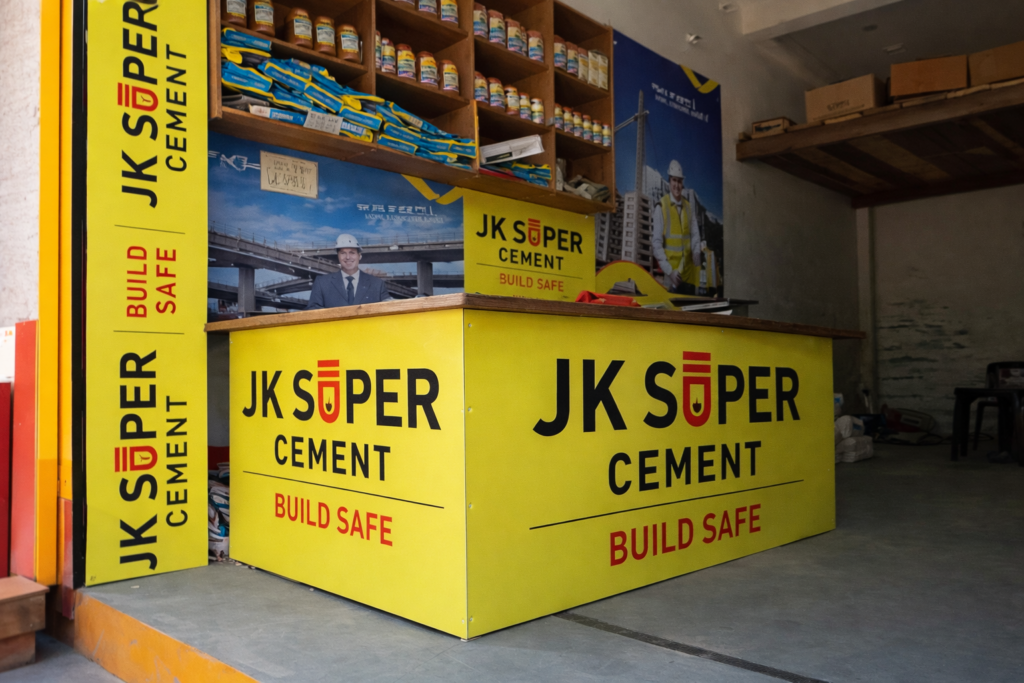
          Sunboard vinyl retail store counter branding using printed panels to highlight cement brand identity and messaging.

          Disclaimer: The images featured are used for educational and informational purposes to demonstrate OOH and DOOH advertising concepts. No ownership or endorsement of any brand is implied.

          Table of Contents

          Understanding Sunboard Vinyl in Retail Environments

          Sunboard vinyl is a combination of a rigid PVC foam board and printed vinyl mounted on its surface. In retail branding, this combination offers structure and visual impact without excessive weight or complexity.

          Sunboard is commonly used for:

          • In-store branding panels
          • Promotional signages
          • Product highlight boards
          • Directional and informational displays

          Because retail environments involve constant movement, lighting variations, and close viewing distances, materials must maintain clarity at all times. Sunboard performs reliably in these conditions.

          Why Retail Branding Needs Material Consistency

          Retail branding is not about one-time impressions. It is about reinforcing familiarity across repeated visits. Materials that fade, warp, or appear temporary can reduce brand trust.

          Sunboard vinyl supports consistency by offering:

          • Smooth, non-reflective surfaces
          • Stable structure across long durations
          • Uniform appearance across multiple outlets

          This consistency helps brands maintain a professional image across stores, counters, and display zones. Over time, this reliability becomes a silent contributor to brand credibility.

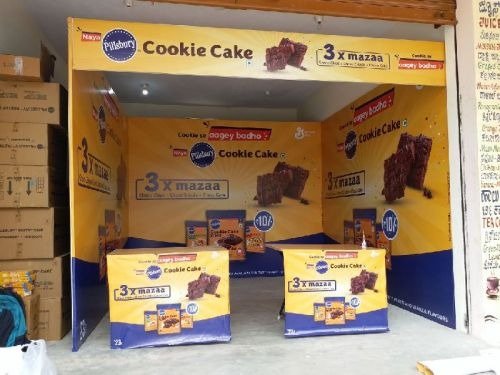
          Indoor retail promotion booth with branded panels and product displays for packaged food marketing.

          Disclaimer: The images featured are used for educational and informational purposes to demonstrate OOH and DOOH advertising concepts. No ownership or endorsement of any brand is implied.

          Visual Clarity and Message Retention

          Retail messages are often consumed at close range. Customers scan displays quickly while navigating shelves, counters, and aisles.

          Sunboard vinyl works well because:

          • Print details remain sharp at short distances
          • Colors reproduce accurately without distortion
          • Text remains legible under indoor lighting

          This clarity improves message retention. When customers understand a message instantly, they are more likely to remember the brand or product later. Sunboard vinyl supports this behavior without demanding attention aggressively.

          Strategic Uses of Sunboard Vinyl in Retail Branding

          Retail branding requires versatility. The same material often needs to serve different purposes within a single store.

          Common strategic applications include:

          • Wall-mounted brand story panels
          • Countertop promotional boards
          • Window-facing informational displays
          • Category or section identifiers

          Because sunboard can be cut into custom sizes and shapes, it adapts easily to store layouts. This flexibility allows brands to maintain visual harmony across different touchpoints.

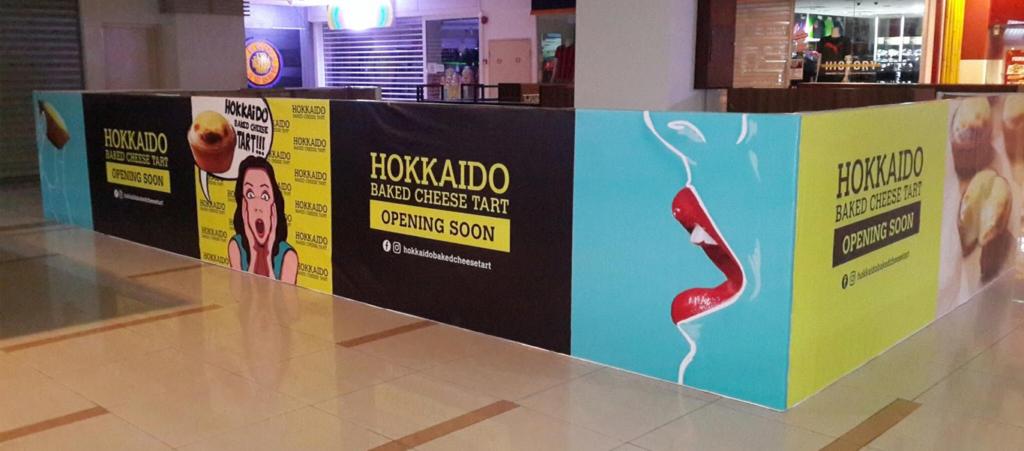
          Retail barricade branding with printed panels promoting a food outlet opening soon inside a shopping mall

          Disclaimer: The images featured are used for educational and informational purposes to demonstrate OOH and DOOH advertising concepts. No ownership or endorsement of any brand is implied.

          Durability in High-Traffic Retail Spaces

          Retail spaces experience frequent footfall, cleaning routines, and environmental exposure from lighting and air circulation. Materials that degrade quickly increase replacement costs.

          Sunboard vinyl offers durability through:

          • Resistance to moisture and minor impacts
          • Stable edges that do not chip easily
          • Vinyl surfaces that retain color over time

          This durability makes sunboard suitable for long-term branding rather than short promotional cycles. Businesses benefit from reduced maintenance and consistent presentation.

          Cost Efficiency Without Visual Compromise

          Retail branding budgets often need to balance scale and quality. Materials must look premium while remaining cost-effective across multiple locations.

          Sunboard achieves this balance by:

          • Reducing frequent reprinting needs
          • Supporting bulk production efficiently
          • Offering long usable life per installation

          For retail brands expanding across outlets, Sunboard vinyl provides a predictable cost structure without sacrificing appearance.

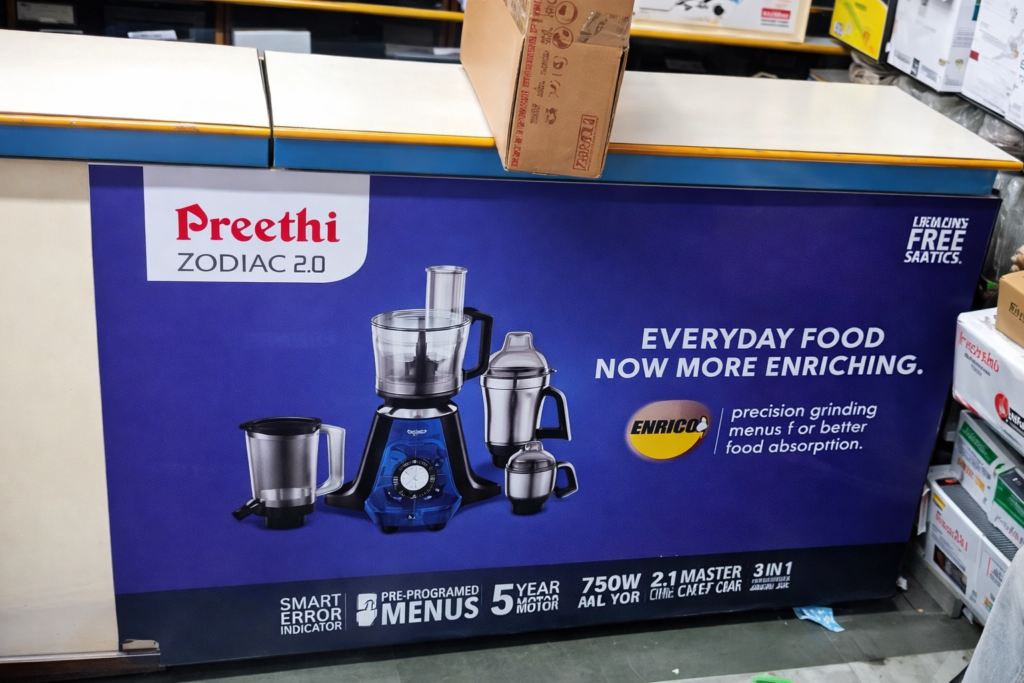
          Retail counter branding panel showcasing kitchen appliances and product features inside a store.

          Disclaimer: The images featured are used for educational and informational purposes to demonstrate OOH and DOOH advertising concepts. No ownership or endorsement of any brand is implied.

          Creative Simplicity Works Best

          Retail environments are already visually active. Overdesigned signage can distract rather than inform.

          Sunboard performs best when creatives follow simplicity:

          • One clear message per panel
          • Strong visuals with minimal text
          • Consistent brand colors and typography

          Simple designs improve readability and recall. When used correctly, sunboard supports branding without competing with products on display.

          Supporting Brand Trust Through Physical Presence

          Physical branding materials influence how customers perceive legitimacy. Solid, well-finished displays create a sense of permanence.

          Sunboard contributes to trust by:

          • Appearing structured and intentional
          • Avoiding temporary or flimsy impressions
          • Maintaining shape and finish over time

          This physical presence reassures customers that the brand is established and reliable—an important factor in retail decision-making.

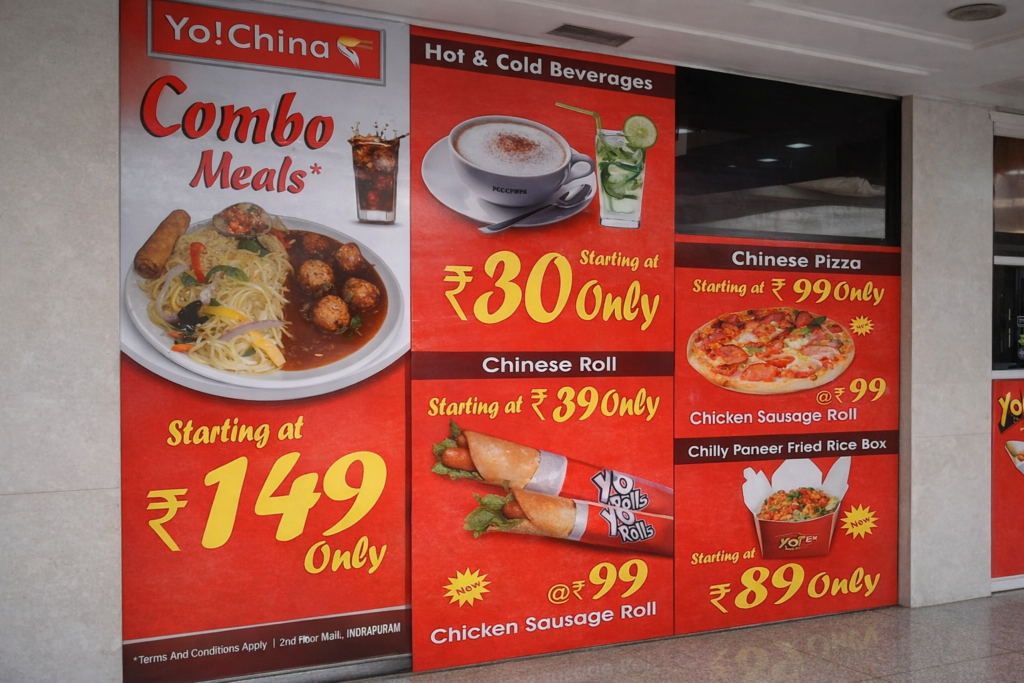
          Indoor restaurant wall branding featuring food visuals, pricing, and combo meal promotions.

          Disclaimer: The images featured are used for educational and informational purposes to demonstrate OOH and DOOH advertising concepts. No ownership or endorsement of any brand is implied.

          Easy Installation and Replacement

          Retail branding often evolves with seasons, offers, or product updates. Materials should be easy to install and replace without disruption.

          Sunboard allows:

          • Quick wall or stand mounting
          • Simple removal without heavy damage
          • Efficient replacement cycles

          This ease of handling helps retail teams update messaging while maintaining consistent visual standards.

          Long-Term Branding Value in Retail

          Retail branding works through repetition. Customers may not act immediately, but repeated exposure shapes preferences over time.

          Sunboard vinyl supports long-term branding by:

          • Staying visually consistent across visits
          • Reinforcing brand cues subconsciously
          • Supporting recall even after store exit

          These effects accumulate gradually, making sunboard a strategic branding asset rather than a short-term tool.

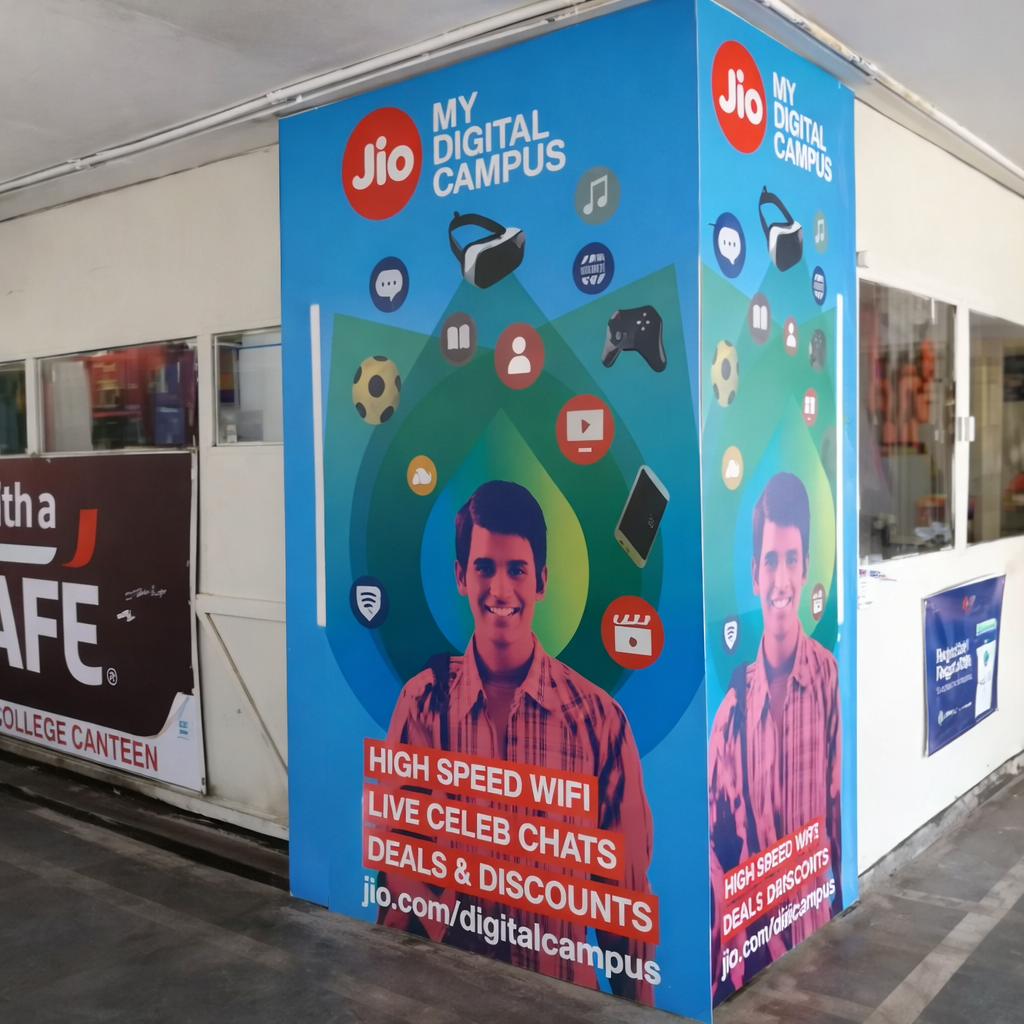
          Indoor pillar wrap branding displaying digital service promotion graphics in a commercial space

          Disclaimer: The images featured are used for educational and informational purposes to demonstrate OOH and DOOH advertising concepts. No ownership or endorsement of any brand is implied.

          Choosing the Right Partner for Retail Branding Execution

          While sunboard vinyl is a reliable material, execution quality determines results. Accurate printing, proper mounting, and thoughtful placement are essential.

          Acme Advertising Co. provides professional retail branding solutions using sunboard, supporting businesses with design coordination, production quality, and on-site execution. Their approach focuses on clarity, consistency, and long-term brand presence rather than temporary visibility. Contact us today to explore how our Sunboard vinyl services can help your brand.

          Expand your network with us, let’s connect on LinkedIn

          Counterfeit Materials in Advertising

          Low-quality boards and led panels

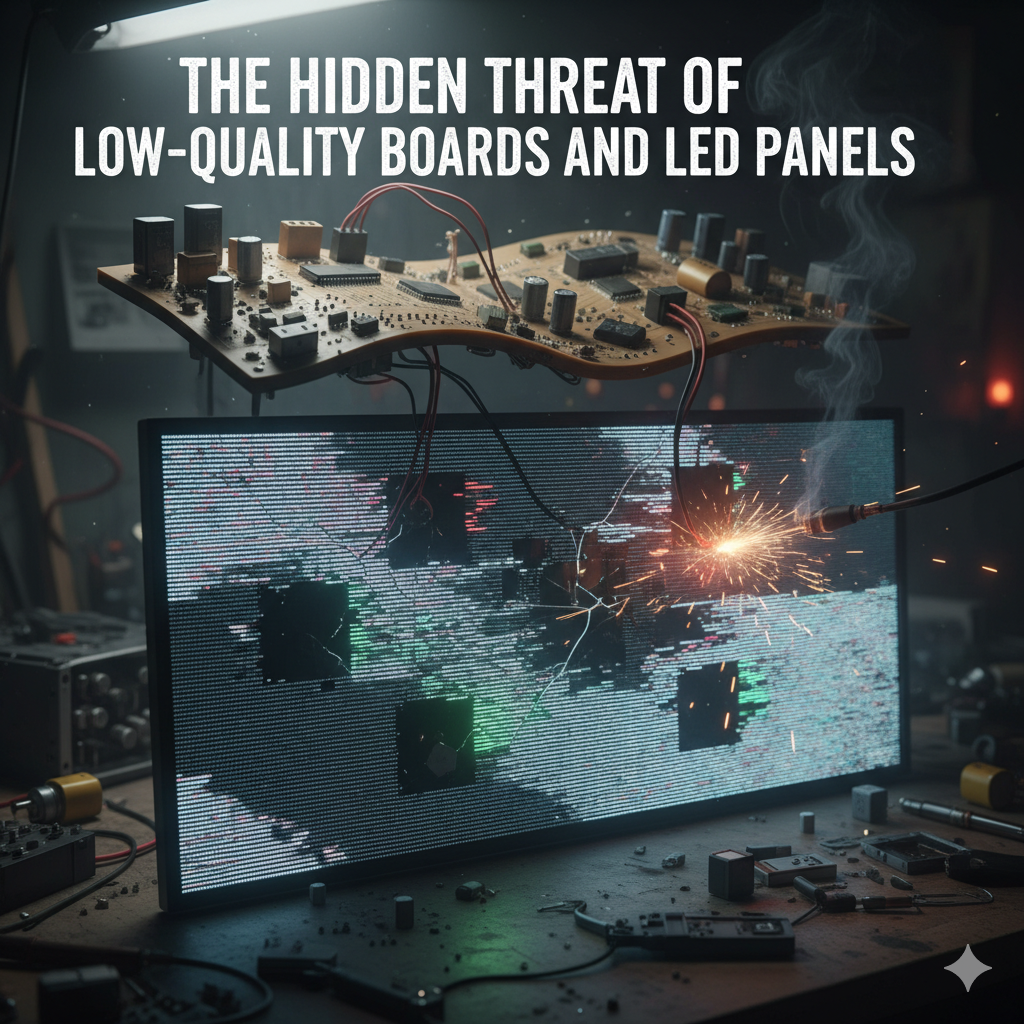
          The Hidden Threat of Low-Quality Boards and LED Panels

          Low-quality boards and led panels

          Table of Contents

          1. Introduction: The Rise of Counterfeit Materials in Advertising
          2. Why This Issue Matters for Brands and Agencies
          3. How Counterfeit Advertising Materials Enter the Market
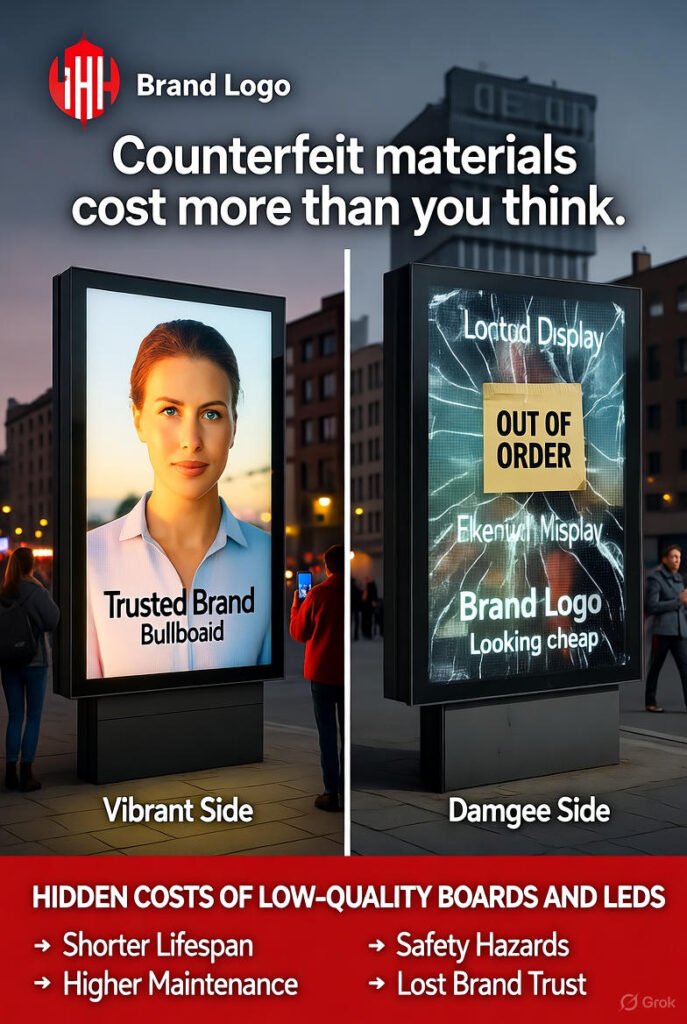
          4. The Hidden Costs of Low-Quality Boards and LEDs
          5. Real-World Scenarios: What Goes Wrong When Quality Is Compromised
          6. The Importance of Material Authenticity in Brand Visibility
          7. How to Identify Fake or Inferior Advertising Materials
          8. The Role of Ethical Agencies in Quality Assurance
          9. The Benefits of Using Certified Materials and Verified Vendors
          10. How Acme Advertising Co. Ensures Quality and Trust
          11. Industry Insights: Shifting Toward Verified Advertising Standards
          12. The Future: Transparency and Sustainability in Advertising Production
          13. Conclusion: Building a Future Where Every Billboard Reflects Integrity

          Low-quality boards and led panels: The Rise of Counterfeit Materials in Advertising

          In today’s fast-paced advertising world, where visuals decide a brand’s first impression, quality materials are everything. From roadside billboards to mall LEDs, from mobile vans to metro panels — every surface a brand occupies speaks about its professionalism.

          However, the growing market demand for outdoor and retail branding has created a parallel issue — the rise of counterfeit and low-quality materials.

          These are boards, LEDs, and signage materials that look genuine at first glance but fail in performance, durability, and visibility. Vendors trying to save costs or increase margins often deliver substandard products while charging brands for premium quality.

          The result? Faded hoardings, flickering LEDs, and damaged brand credibility.

          Why This Issue Matters for Brands and Agencies

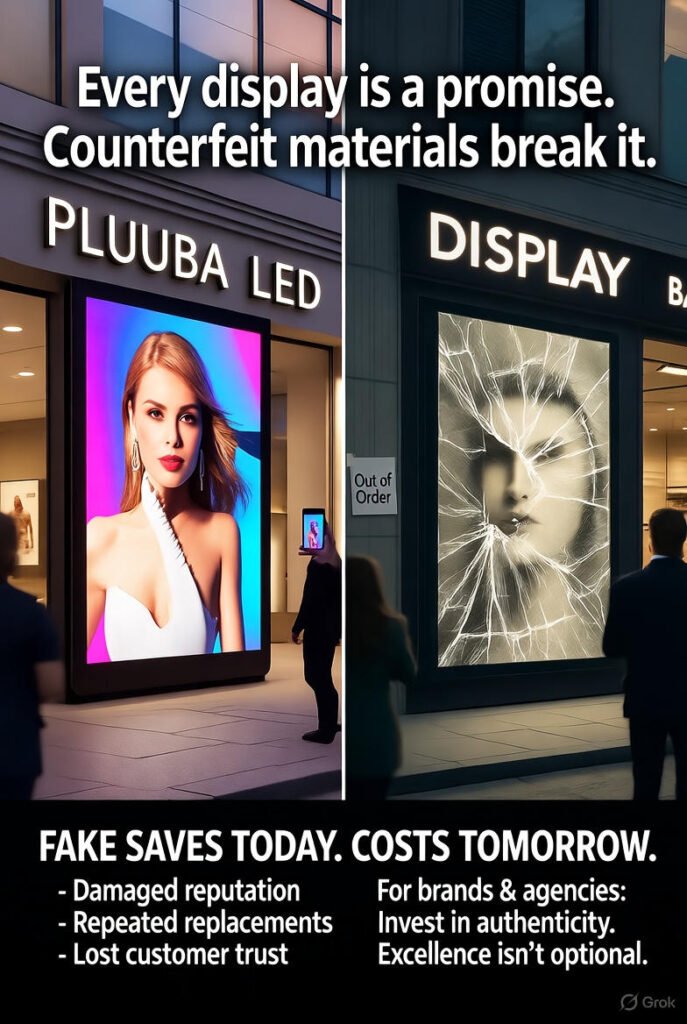
          For advertisers, every display is a promise — a visual commitment to the audience that the brand stands for excellence. But when that promise is delivered using counterfeit materials, the entire brand experience collapses.

          This problem goes beyond just visual quality — it affects:

          • Brand image: Poor displays reflect negatively on the company’s reputation.
          • Financial investment: Low-quality materials deteriorate faster, leading to repeated replacements and higher maintenance costs.
          • Customer perception: When ads look dull, broken, or unevenly lit, the audience assumes the brand doesn’t value its presentation.

          In short, fake or low-grade materials cost more than they save.


          How Counterfeit Advertising Materials Enter the Market

          Counterfeit or inferior materials make their way into projects through a few common practices:

          a. Vendor Substitution

          A vendor promises branded LED panels or high-grade flex but installs cheaper, non-certified alternatives.

          b. Material Mixing

          Half the inventory may be genuine, while the rest is replaced with low-cost substitutes to reduce expenses unnoticed.

          c. Mislabeling

          Some materials come with fake brand labels, making it hard for clients to distinguish between original and counterfeit stock.

          d. Lack of Verification

          In many cases, agencies or clients skip quality inspection, allowing vendors to deliver unchecked materials.

          This silent infiltration creates a cycle where brands lose money and impact — while counterfeiters profit.


          The Hidden Costs of Low-Quality Boards and LEDs

          Counterfeit materials don’t just harm visuals — they lead to hidden long-term costs.

          a. Shorter Lifespan

          Fake or low-quality LEDs burn out within months, while genuine panels last years.
          Cheap flex materials tear easily or fade quickly under sunlight.

          b. Higher Maintenance

          Frequent repairs, replacements, and repainting eat into marketing budgets.

          c. Energy Inefficiency

          Inferior LED panels consume more power for less brightness, increasing operational costs.

          d. Safety Hazards

          Poorly manufactured materials pose electrical and fire risks, especially in high-traffic areas.

          e. Lost Brand Trust

          A single poorly executed campaign can make audiences question the authenticity of the brand itself.

          When counterfeit materials become part of your media plan, your ROI suffers silently.


          Real-World Scenarios: What Goes Wrong When Quality Is Compromised

          Let’s visualize this through examples:

          • A retail brand launches a high-budget festive campaign with glowing LED hoardings — but within two weeks, half the boards stop working. The reason? Low-cost, uncertified LED strips.
          • A mobile van branding campaign uses cheap vinyl wraps. After a few days in the sun, the prints fade, and edges peel off — damaging the brand’s professional look.
          • A luxury automobile billboard starts to wrinkle and tear after rain, despite being billed as “premium flex.”

          Each of these incidents doesn’t just cause financial loss — it directly affects brand perception in the eyes of potential customers.

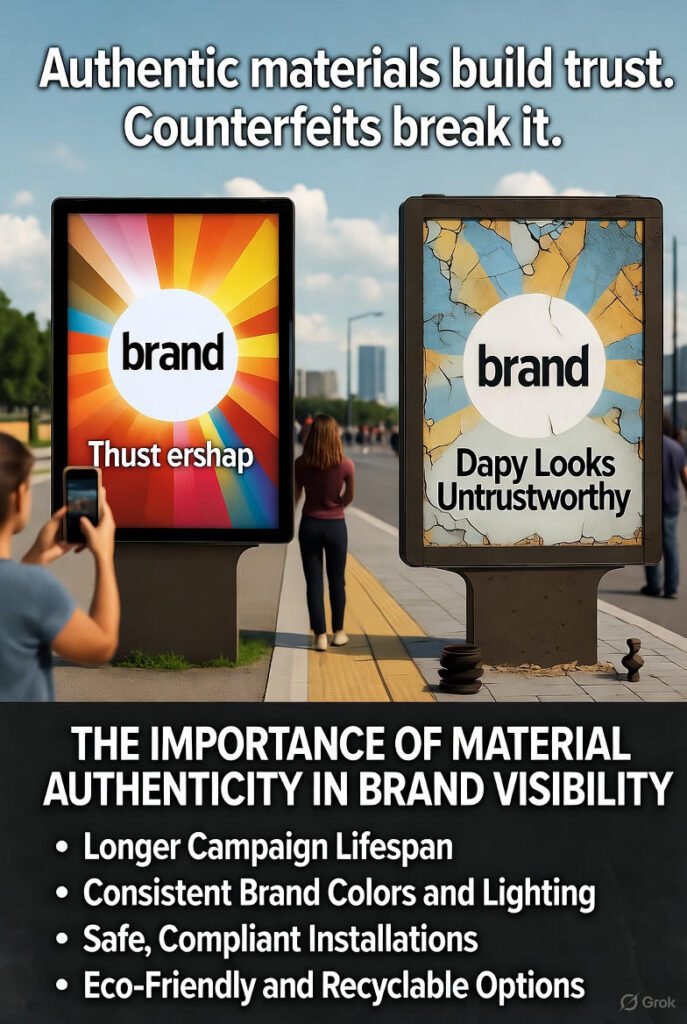
          The Importance of Material Authenticity in Brand Visibility

          Quality materials form the backbone of outdoor brand storytelling. When displays shine bright, stay intact, and endure weather conditions, they not only attract attention but also build subconscious trust.

          Authentic materials ensure:

          • Longer campaign lifespan
          • Consistent brand colors and lighting
          • Safe, compliant installations
          • Eco-friendly and recyclable options

          Every brand message deserves to be presented with integrity. Using original, certified materials reinforces that promise.


          How to Identify Fake or Inferior Advertising Materials

          Here are a few practical checks brands can apply before approving vendor deliveries:

          1. Ask for Material Invoices and Certificates — Original suppliers provide batch numbers and warranty documents.
          2. Check Branding on the Product Itself — Genuine flex sheets and LEDs usually carry manufacturer logos or serial codes.
          3. Verify Weight and Texture — Fake flex materials are thinner and more fragile than standard quality ones.
          4. Conduct Random Audits — Visit installation sites to inspect the material quality in person.
          5. Request Installation Proofs — Ensure photo or video documentation during setup, not just after completion.

          These steps help brands stay alert against material manipulation.


          The Role of Ethical Agencies in Quality Assurance

          Ethical advertising agencies play a critical role in protecting brands from counterfeit losses. A trustworthy partner ensures every board, print, and LED panel matches the promised specification.

          Agencies like Acme Advertising Co. take proactive measures to eliminate counterfeit risks:

          • Pre-verification of suppliers and vendors
          • Quality checks at manufacturing and installation stages
          • Real-time reporting with GPS-tagged proofs
          • Transparent billing linked with on-ground documentation

          This not only safeguards the client’s investment but also builds long-term credibility in the market.


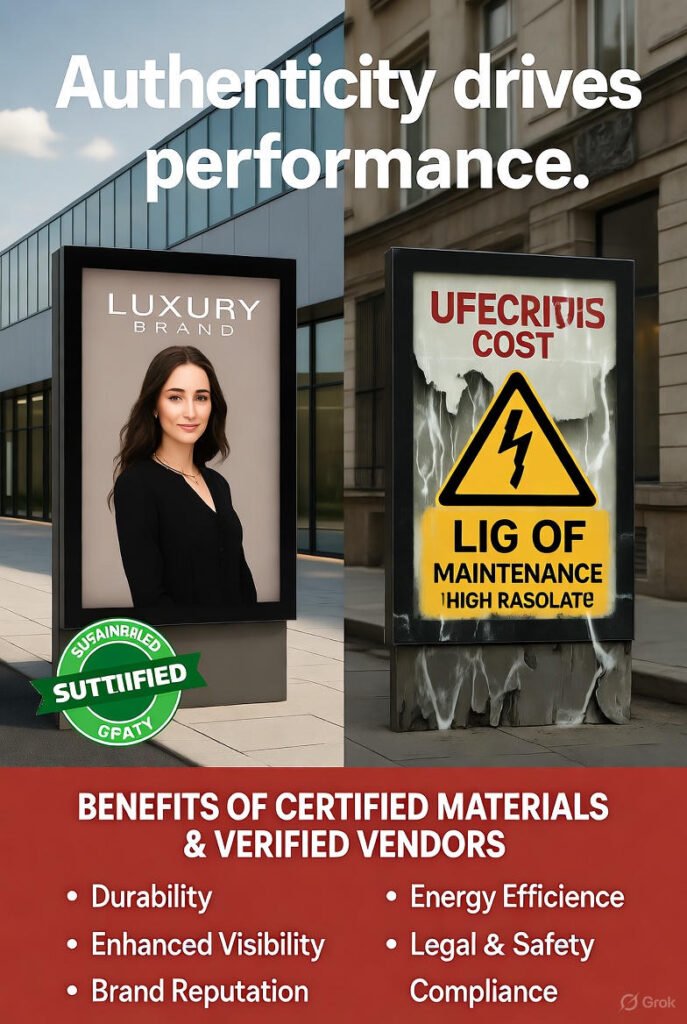
          The Benefits of Using Certified Materials and Verified Vendors

          Investing in quality materials pays off in multiple ways:

          a. Durability

          Genuine materials are weather-resistant, UV-protected, and built for longevity — reducing maintenance costs.

          b. Enhanced Visibility

          High-quality LEDs provide even brightness, vibrant colors, and improved readability.

          c. Brand Reputation

          Premium materials create a premium impression — vital for luxury and lifestyle brands.

          d. Energy Efficiency

          Certified LED products consume less energy, offering sustainability benefits alongside savings.

          e. Legal and Safety Compliance

          Approved materials meet fire safety and environmental standards, reducing liability risks

          .In short, authenticity drives both brand performance and operational peace of mind.


          How Acme Advertising Co. Ensures Quality and Trust

          As one of India’s trusted outdoor and retail advertising companies, Acme Advertising Co. sets industry benchmarks for transparency and quality assurance.

          Here’s how Acme ensures your brand gets the best:

          1. Certified Material Procurement – All flex, vinyl, LED, and print materials come from verified manufacturers only.
          2. Vendor Vetting – Every supplier undergoes background checks and quality audits before onboarding.
          3. Proof-Based Execution – Each installation includes photographic and GPS-tagged documentation.
          4. On-Ground Inspections – Dedicated quality teams verify the installation before campaign go-live.
          5. After-Campaign Reporting – Clients receive post-campaign material condition reports for full accountability.

          With these processes, Acme Advertising Co. guarantees that every square foot of your brand’s presence is genuine, durable, and visually flawless.


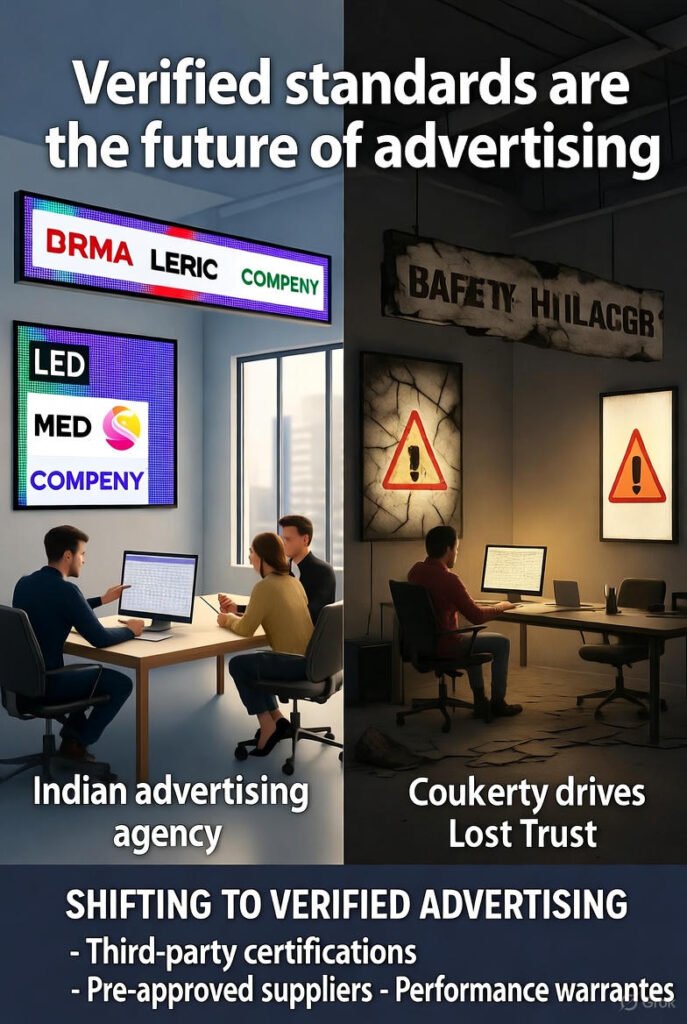
          Industry Insights: Shifting Toward Verified Advertising Standards

          The Indian advertising landscape is evolving — and the industry is taking notice of the counterfeit crisis.

          Major brands are now demanding:

          • Third-party material certifications before campaign execution
          • Pre-approved supplier lists for signage and LED vendors
          • Performance warranties on all installed assets

          This shift is creating a culture where proof and quality are inseparable from creativity.

          The future belongs to agencies that combine innovation with integrity — just like Acme Advertising Co.


          The Future: Transparency and Sustainability in Advertising Production

          Beyond counterfeit concerns, brands are also moving toward sustainable and traceable advertising materials.

          Emerging trends include:

          • Eco-friendly flex alternatives made from biodegradable polymers
          • Energy-efficient LED panels with lower carbon footprints
          • Digital proofing systems that log each material’s source and authenticity
          • Blockchain-based material verification for global campaign tracking

          The next era of advertising will not just be about visibility — it will be about accountability and environmental responsibility.


          Building a Future Where Every Billboard Reflects Integrity

          In advertising, materials speak louder than words.
          A brand may have a great concept and powerful visuals — but if the physical medium is fake or weak, the entire impact collapses.

          Counterfeit materials are not just a cost problem; they’re a trust problem.
          Every time a vendor delivers low-quality boards or LEDs, they damage the integrity of the brand, the agency, and the industry as a whole.

          By promoting authentic, certified materials and insisting on proof-based operations, brands can protect their investment and reputation.

          At Acme Advertising Co., quality is not an option — it’s a standard.
          Every campaign we execute is built on authentic materials, transparent billing, and verified execution, ensuring your brand shines bright — literally and figuratively.

          Because when your display glows flawlessly under the city lights, it’s not just an ad — it’s a reflection of your brand’s truth. 

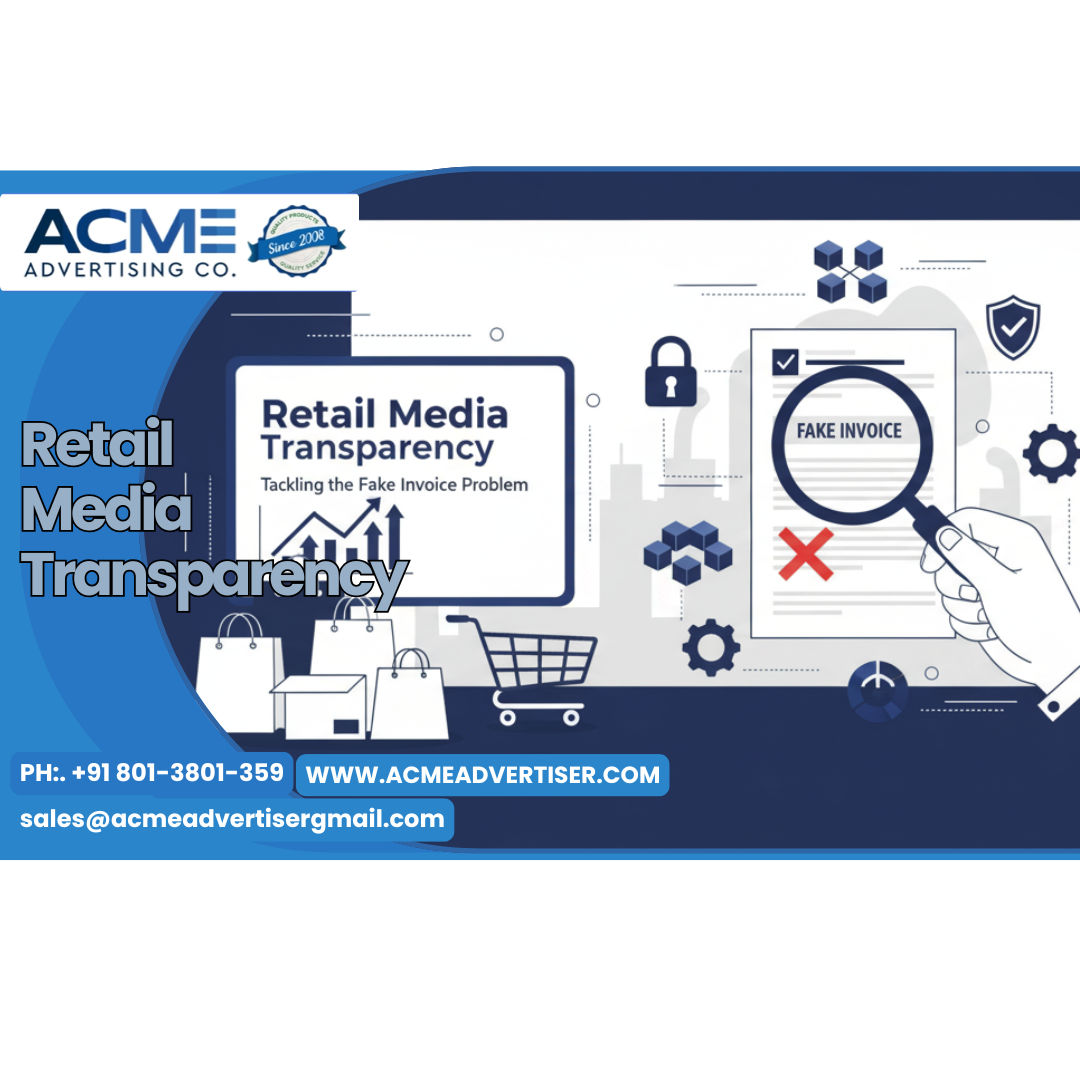
          Retail Media Transparency: Tackling the Fake Invoice Problem in Signage and Display Advertising

          Retail Media Transparency

          Table of Contents

          1. Introduction: The Growing Power of Retail Media
          2. The Hidden Challenge — Fake Invoices in Retail Advertising
          3. How Fake Billing Works in Display and Signage Campaigns
          4. Real-World Impact on Brands and Retailers
          5. Why Transparency is the Foundation of Trust in Retail Media
          6. The Role of Technology in Preventing Fraudulent Invoicing
          7. Key Indicators That Help Identify Fake Invoices
          8. Building Ethical Vendor Partnerships
          9. Benefits of Verified Retail Media Practices
          10. How Companies Like Acme Advertising Co. Ensure 100% Transparency
          11. Industry Insights: A Shift Toward Accountability
          12. The Way Forward — Building a Fair, Trusted Retail Media Ecosystem
          13. Conclusion: The Power of Ethical Advertising

          Retail Media Transparency: The Growing Power of Retail Media

          Retail Media Transparency

          Retail media has rapidly evolved from simple in-store promotions to a multi-billion-dollar advertising ecosystem. Whether it’s LED signage in supermarkets, digital screens in malls, or shelf displays at retail stores — every touchpoint influences customer decisions.


           Hidden Challenge — Fake Invoices in Retail Advertising

          In a perfect world, every advertising rupee should bring visible impact — a well-lit display, a branded standee, or a glowing digital screen.
          However, in some cases, vendors generate invoices for work that was never executed — signage that was never installed, displays that were never printed, or campaigns that were reported as “live” without proof.

          For example:

          • A vendor claims that 50 store boards were installed across city outlets but delivers only 20.
          • Billing documents are sent to brand managers with manipulated photos.
          • Some even reuse old display images to claim new installations.

          These small incidents add up — costing brands lakhs of rupees and eroding confidence in retail media operations.


          How Fake Billing Works in Display and Signage Campaigns

          Fake invoicing often follows a pattern. Understanding it helps prevent future losses.

          a. Overbilling or Ghost Installations

          The vendor bills for more locations than actually installed — e.g., charging for 100 store signage but only installing 70.

          b. Photo Manipulation

          Vendors sometimes send the same display photo from different angles or digitally edited visuals to “prove” installations.

          c. Absence of Geo-Proof

          Without GPS-tagged or time-stamped installation images, it becomes difficult to verify whether the campaign ever went live.

          d. Fake Partner Chains

          Some smaller subcontractors claim payments on behalf of main vendors but disappear after billing.


          Real-World Impact on Brands and Retailers

          The financial implications are significant, but the real damage goes deeper:

          • Wasted Marketing Budgets: Brands lose funds that could have gone toward genuine reach and engagement.
          • Eroded Trust: Retailers become skeptical of new vendors, slowing down future partnerships.
          • Reputational Risk: False reporting damages brand credibility — especially if retailers or customers discover uninstalled ads.
          • Operational Delays: Teams spend weeks verifying physical proofs instead of strategizing future campaigns.

          When transparency breaks, everyone in the chain — from advertisers to shop owners — pays the price.


          Why Transparency is the Foundation of Trust in Retail Media

          Retail media operates in a unique space where offline meets digital accountability. Unlike online ads that generate instant metrics, offline campaigns rely on field execution. That’s why trust and verification are at the heart of successful brand-retail partnerships.

          Transparent operations ensure:

          • Accountable reporting with GPS-based proofs
          • Clear documentation of display materials and locations
          • Verified completion before billing

          Brands that demand transparency not only safeguard their investment but also build long-term vendor loyalty.


          The Role of Technology in Preventing Fraudulent Invoicing

          Thanks to innovation, fake invoicing can now be detected early using modern tools and systems.
          Here’s how technology can help:

          a. GPS & Time-Stamped Proofs

          Vendors can share installation photos embedded with GPS coordinates and timestamps. This acts as a digital signature that cannot be faked easily.

          b. Cloud-Based Reporting

          Platforms like Google Drive or CRM-integrated dashboards allow clients to view live installation updates.

          c. QR Codes on Displays

          Every display can have a QR code linked to its installation proof and location, ensuring easy verification.

          d. Automated Audit Systems

          AI-driven audit platforms can detect image duplication or inconsistencies in vendor submissions.

          At Acme Advertising Co., every campaign is backed by verified image proofs, geo-tags, and real-time tracking, ensuring that brands get exactly what they pay for.


          Key Indicators That Help Identify Fake Invoices

          Here are simple signs that can help identify suspicious vendor activities early:

          • The same image is shared multiple times for different locations.
          • Invoice mentions “installation completed” without proofs.
          • No GPS coordinates or timestamps are available.
          • Vendor avoids site visits or proof requests.
          • Discrepancies between billed quantities and retailer confirmations.

          These red flags help brands take quick corrective action before the problem escalates.


          Building Ethical Vendor Partnerships

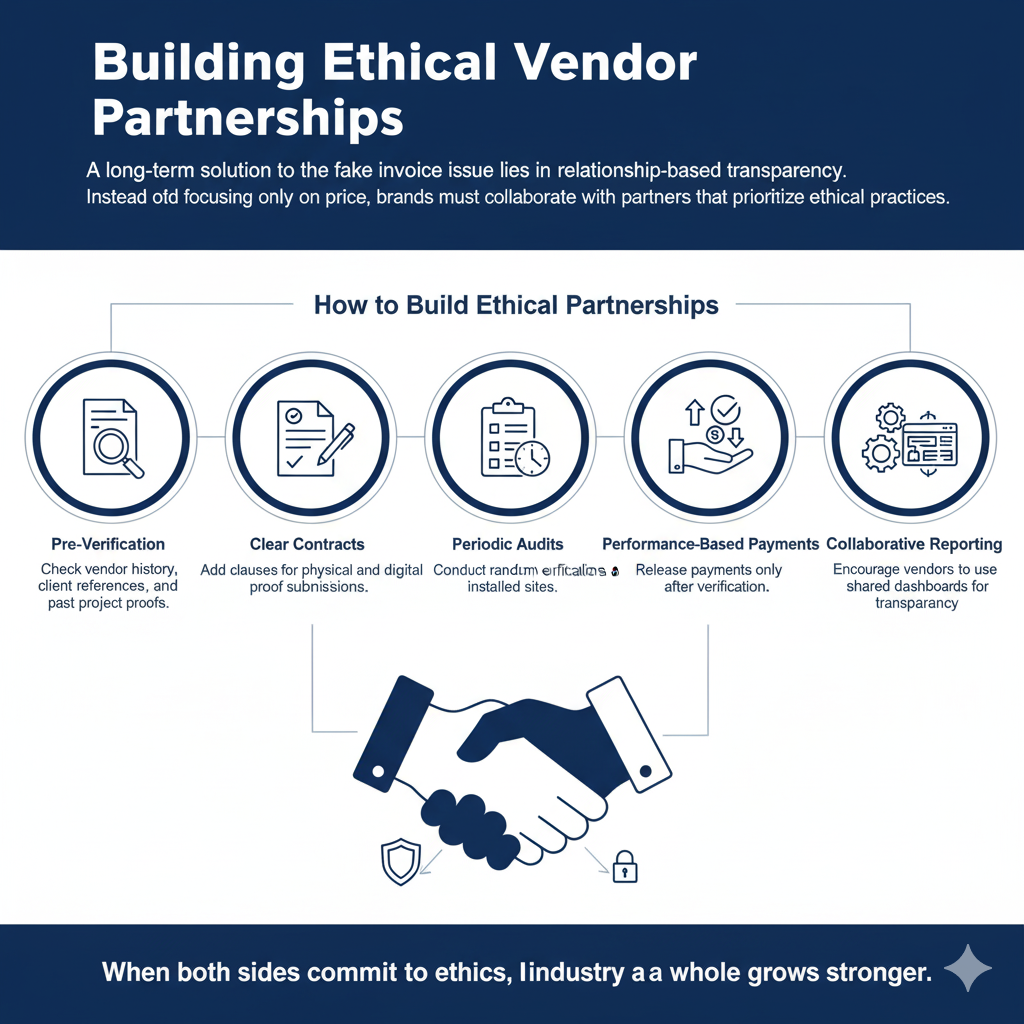
          A long-term solution to the fake invoice issue lies in relationship-based transparency.
          Instead of focusing only on price, brands must collaborate with partners that prioritize ethical practices.

          How to Build Ethical Partnerships

          1. Pre-Verification: Check vendor history, client references, and past project proofs.
          2. Clear Contracts: Add clauses for physical and digital proof submissions.
          3. Periodic Audits: Conduct random verifications of installed sites.
          4. Performance-Based Payments: Release payments only after verification.
          5. Collaborative Reporting: Encourage vendors to use shared dashboards for transparency.

          When both sides commit to ethics, the industry as a whole grows stronger.


          Benefits of Verified Retail Media Practices

          Brands that follow a verified advertising process gain multiple benefits beyond financial safety.

          a. Enhanced Brand Credibility

          Customers and retailers trust brands that invest in visible, authentic displays.

          b. Better ROI Tracking

          With proof-based reporting, it’s easier to measure campaign effectiveness.

          c. Cost Optimization

          Eliminating fake invoices saves money that can be reinvested into real impact advertising.

          d. Strengthened Vendor Relationships

          Transparent collaboration fosters long-term business partnerships.

          e. Improved Campaign Efficiency

          Less time is wasted in verification, allowing teams to focus on creativity and performance.


          How Companies Like Acme Advertising Co. Ensure 100% Transparency

          Acme Advertising Co., one of India’s trusted outdoor and retail advertising partners, has built a strong reputation for authentic execution and ethical media management.

          Here’s how Acme ensures reliability:

          • GPS-Verified Proofs of every installed retail signage
          • Live Campaign Tracking Dashboard for clients
          • High-Quality Material Audits to prevent low-grade printing
          • Vendor Screening Process for credibility checks
          • End-to-End Service Transparency, from billing to removal

          By prioritizing transparency and technology, Acme Advertising Co. not only helps brands avoid fraudulent billing but also ensures maximum visibility and real impact at every retail touchpoint.


          Industry Insights: A Shift Toward Accountability

          India’s retail advertising industry is gradually moving toward a proof-first approach.
          Leading brands now require:

          • Photo audits with time/location tags
          • Digital proof reports integrated with campaign summaries
          • Third-party verification audits before payment release

          This shift is not just about preventing fraud — it’s about transforming how retail media is valued.
          By blending trust, proof, and technology, the ecosystem is evolving into a more professional, measurable, and performance-driven landscape.


          12. The Way Forward — Building a Fair, Trusted Retail Media Ecosystem

          The fake invoice problem won’t disappear overnight — but industry collaboration can minimize it.
          Here’s how the future of ethical retail advertising looks:

          1. Standardized Reporting Formats across agencies and vendors
          2. Training Programs for retail teams on verification methods
          3. Adoption of Digital Auditing Tools
          4. Vendor Rating Systems to reward transparency
          5. Client Awareness Campaigns about ethical billing

          By combining honesty with accountability, the industry can move toward a new era — where every invoice equals verified visibility.


          The Power of Ethical Advertising

          Retail media thrives on visibility and trust. When vendors, agencies, and brands align on integrity, the results are powerful — impactful campaigns, long-term relationships, and better ROI.

          The issue of fake invoices is not just about money — it’s about preserving the credibility of the advertising ecosystem.
          As transparency and technology continue to reshape this space, ethical practices will become the new competitive advantage.

          At Acme Advertising Co., the commitment is simple — “If it’s billed, it’s verified.”
          Every signage, every board, and every display stands as a genuine reflection of a brand’s trust in us.

          So the next time you plan a retail media campaign, remember:
          Transparency isn’t just a policy — it’s the foundation of real brand impact.

          LED Clip-On Lights: The Smart Upgrade Every Dealer and Business Should Know About

          Why Modern Retailers, Exhibitors, and Dealers Are Switching to LED Clip-On Lighting Solutions


          Table of Contents

          1. Introduction: The New Era of Smart Lighting
          2. What Are LED Clip-On Lights?
          3. Why LED Clip-On Lights Outshine Traditional Lighting
          4. Key Benefits for Dealers and Businesses
          5. Real-World Use Cases — From Showrooms to Street Displays
          6. The ROI of Switching to LED Clip-On Lights
          7. How Dealers Can Boost Sales with Clip-On Lighting
          8. How Acme Advertising Helps Brands Upgrade Smartly
          9. FAQs
          10. Final Call to Action

          1. The New Era of Smart Lighting

          In today’s world of visual marketing and display aesthetics, lighting is more than illumination — it’s persuasion.
          Whether you’re setting up a retail store, branding a dealer board, or organizing an exhibition stall, the right lighting can make or break visibility.

          And in this evolving ecosystem, LED Clip-On Lights are emerging as one of the most versatile and efficient solutions for businesses and dealers alike.

          Compact, powerful, and energy-efficient — these lights not only enhance brand presentation but also help in saving operational costs, making them a preferred choice for smart advertisers and modern retailers.

          2. What Are LED Clip-On Lights?

          LED Clip-On Lights are portable, attachable lighting fixtures designed for flexible mounting — on frames, boards, racks, counters, or signages.

          Unlike bulky fluorescent or tube lights, these sleek fixtures use energy-efficient LEDs that deliver high brightness with minimal heat output.

          They are especially popular in:

          • Retail displays
          • Dealer boards and shop signages
          • Exhibition stalls
          • Product showcases
          • POSM setups (Point of Sale Materials)
          Their “clip-on” mechanism means no drilling or complex setup. Simply attach, adjust, and light up your space within minutes — making them a dealer-friendly innovation that saves time and labor.


          3. Why LED Clip-On Lights Outshine Traditional Lighting

          Traditional tube lights or halogens served their purpose once, but they can’t keep up with the modern needs of dynamic displays and eco-conscious businesses.

          Here’s why LED clip-on lights are taking over:

          ✅ Energy Efficiency

          LEDs consume up to 80% less energy than conventional bulbs. For businesses running 8–10 hours a day, that translates to significant electricity savings.

          ✅ Easy Installation

          No rewiring. No electrician needed. Clip-on lights are plug-and-play — a huge plus for dealers managing multiple outlets or frequently changing display setups.

          ✅ Portability and Flexibility

          Whether you want to illuminate a branding board, product shelf, or a temporary kiosk, these lights can move and adapt effortlessly.

          ✅ Sleek, Modern Design

          Minimal, modern, and aesthetic — perfect for enhancing the visual appeal of your space without distracting from your brand message.

          ✅ Durability and Longevity

          LEDs have an average lifespan of 25,000 to 50,000 hours, making them a cost-effective investment compared to fluorescent or halogen lights that need frequent replacement.

          ✅ Uniform, Glare-Free Lighting

          These lights provide even brightness that makes products and signages look attractive without harsh shadows or glare.


          4. Key Benefits for Dealers and Businesses

          For dealers, distributors, and marketing professionals, LED clip-on lights aren’t just lighting products — they’re business enablers.

          Let’s break down how they help different segments:

          👉 For Dealers:

          • Higher Sales Margins: Clip-on lights are in high demand; stocking them attracts retailers and exhibition vendors.
          • Easy Demonstration: Simple to show product benefits — plug in, clip, and light up instantly.
          • Reduced Return Rates: Durable design ensures customer satisfaction and minimal complaints.
          • Brand Alignment: Dealers can co-brand with signage or display solutions, enhancing their portfolio.

          👉 For Businesses & Marketers:

          • Enhanced Visual Merchandising: Products look more premium and noticeable under clean LED light.
          • Quick Event Setup: Ideal for temporary brand activations, exhibitions, or pop-up stores.
          • Consistent Brand Presentation: Uniform lighting across multiple outlets ensures professional aesthetics.
          • Energy Savings: Low power consumption translates into long-term operational cost reduction.

          Lighting isn’t just about visibility — it’s about creating a lasting brand impression, and LED clip-on lights do that brilliantly.


          5. Real-World Use Cases — From Showrooms to Street Displays

          Let’s see how LED clip-on lights are revolutionizing everyday brand visibility:

          ✨ Case Study 1: Dealer Branding Made Easier

          A home appliance brand in Jaipur used LED clip-on lights across 150 dealer boards.
          Instead of replacing entire signages, they attached clip-ons for night visibility.
          Result? Visibility improved by 60%, and installation time dropped by 40%.

          ✨ Case Study 2: Retail Store Ambience

          A cosmetics brand in Mumbai integrated clip-on LEDs into display shelves.
          The even, soft lighting increased product browsing time by 25%, resulting in higher sales.

          ✨ Case Study 3: Exhibition & Event Displays

          During an Auto Expo, a vehicle accessory brand used modular clip-on lights for its stall.
          Setup time reduced drastically, and the brand’s booth stood out with high visual clarity — attracting double the footfall compared to the previous year.

          Conclusion: Clip-on lighting isn’t just functional — it’s strategic. It makes your brand shine where it counts.


          6. The ROI of Switching to LED Clip-On Lights

          When evaluating lighting solutions, ROI matters — and LED clip-on lights deliver it consistently.

          ParameterTraditional LightingLED Clip-On Lights
          Energy UsageHighUp to 80% lower
          Installation CostRequires electricianPlug-and-play
          MaintenanceFrequent replacementsMinimal
          PortabilityFixedFully portable
          Lifespan2,000–5,000 hrs25,000–50,000 hrs
          ROI Period12–18 months3–6 months

          So for every ₹10,000 invested, businesses typically recover the cost within months through energy savings and improved display efficiency.


          How Dealers Can Boost Sales with Clip-On Lighting

          Dealers and retailers can maximize profits and client loyalty by strategically integrating clip-on lights into their product portfolio.

          Here’s how:

          1. Offer Lighting with Display Packages

          If you’re a dealer selling signage or display materials, include LED clip-on lights as an upsell item. It boosts total order value instantly.

          2. Showcase in Store Demos

          A live demonstration of how bright and easy-to-install clip-ons are can increase customer confidence.

          3. Target Exhibitors and Event Planners

          These buyers are always looking for portable lighting solutions — clip-ons fit perfectly.

          4. Bundle with Retail Renovation Projects

          When businesses revamp interiors, lighting upgrades are a natural add-on opportunity.

          Tip: Highlight the energy savings and longer lifespan during the pitch — customers love solutions that look great and save costs.


          How Acme Advertising Helps Brands Upgrade Smartly

          At Acme Advertising, we understand how vital lighting is for brand recall, visibility, and perception.

          We don’t just sell lighting solutions — we integrate them into your marketing strategy.

          Our services include:
          LED clip-on light supply & installation
          Retail and exhibition lighting solutions
          Signage illumination
          Energy-efficient display designs
          Nationwide dealer branding rollouts

          From conceptual design to final execution, Acme ensures your lighting works as an extension of your brand — efficient, stylish, and impactful.

          Because when your display shines, your brand grows.


          FAQs

          Q1. What makes LED clip-on lights different from traditional tube lights?
          Clip-on lights are portable, energy-efficient, and easy to install without wiring — ideal for flexible displays.

          Q2. How much power do LED clip-on lights consume?
          Most models operate between 5W to 20W, making them up to 80% more energy-efficient than conventional bulbs.

          Q3. Can LED clip-on lights be used outdoors?
          Yes, many clip-on lights are designed with weather-resistant casings suitable for semi-outdoor signages.

          Q4. What is the lifespan of LED clip-on lights?
          Depending on quality and usage, they can last 25,000–50,000 hours with minimal maintenance.

          Q5. Are clip-on lights customizable?
          Absolutely! You can choose different color temperatures, beam angles, and clip types based on your display needs.

          Q6. How soon can dealers expect ROI?
          Dealers often recover costs within 3–6 months, thanks to lower energy bills and increased sales.

          Q7. Are LED clip-on lights safe for continuous use?
          Yes, they emit very little heat and are designed for prolonged operation without overheating.

          Q8. Can Acme Advertising help in large-scale rollouts?
          Definitely! Acme specializes in pan-India installations and dealer signage lighting upgrades for multiple industries.