LED Clip-On Lights: The Smart Upgrade Every Dealer and Business Should Know About

Why Modern Retailers, Exhibitors, and Dealers Are Switching to LED Clip-On Lighting Solutions


Table of Contents

  1. Introduction: The New Era of Smart Lighting
  2. What Are LED Clip-On Lights?
  3. Why LED Clip-On Lights Outshine Traditional Lighting
  4. Key Benefits for Dealers and Businesses
  5. Real-World Use Cases — From Showrooms to Street Displays
  6. The ROI of Switching to LED Clip-On Lights
  7. How Dealers Can Boost Sales with Clip-On Lighting
  8. How Acme Advertising Helps Brands Upgrade Smartly
  9. FAQs
  10. Final Call to Action

1. The New Era of Smart Lighting

In today’s world of visual marketing and display aesthetics, lighting is more than illumination — it’s persuasion.
Whether you’re setting up a retail store, branding a dealer board, or organizing an exhibition stall, the right lighting can make or break visibility.

And in this evolving ecosystem, LED Clip-On Lights are emerging as one of the most versatile and efficient solutions for businesses and dealers alike.

Compact, powerful, and energy-efficient — these lights not only enhance brand presentation but also help in saving operational costs, making them a preferred choice for smart advertisers and modern retailers.

2. What Are LED Clip-On Lights?

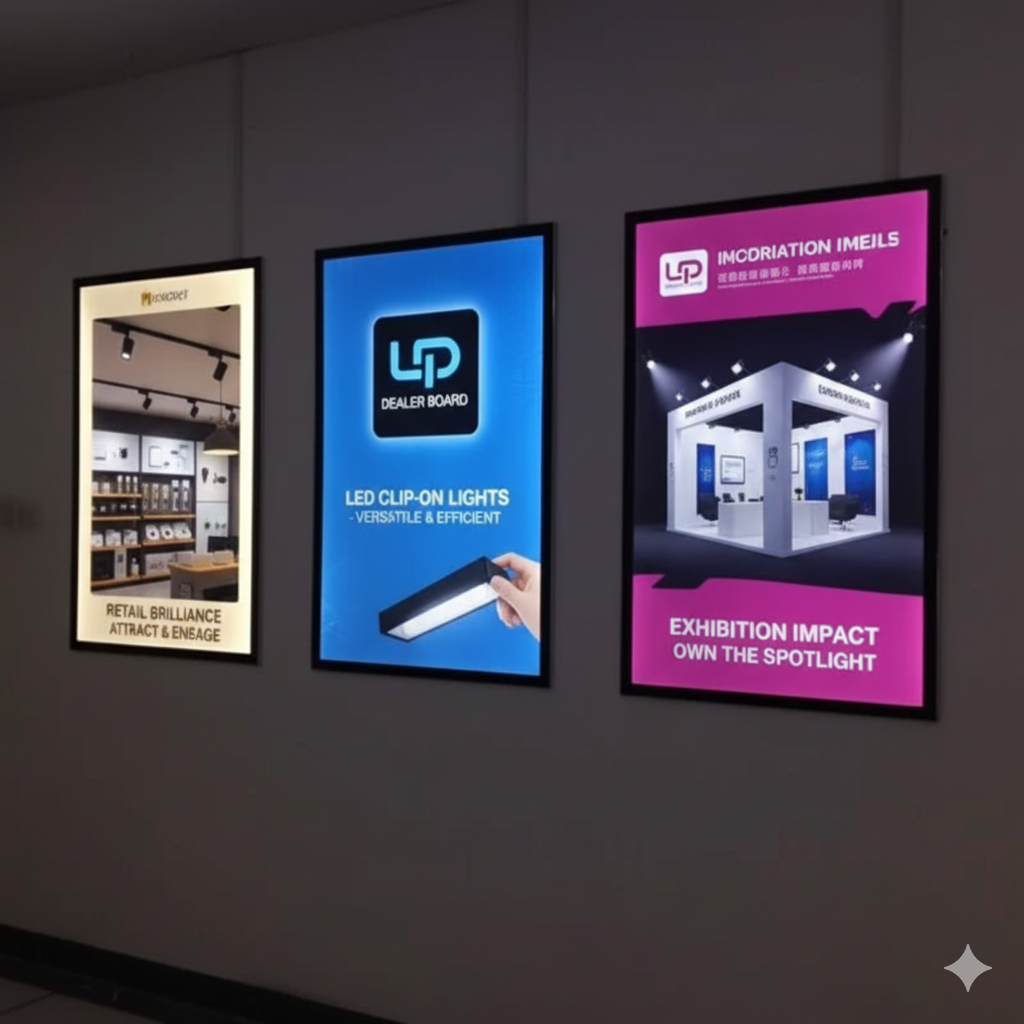
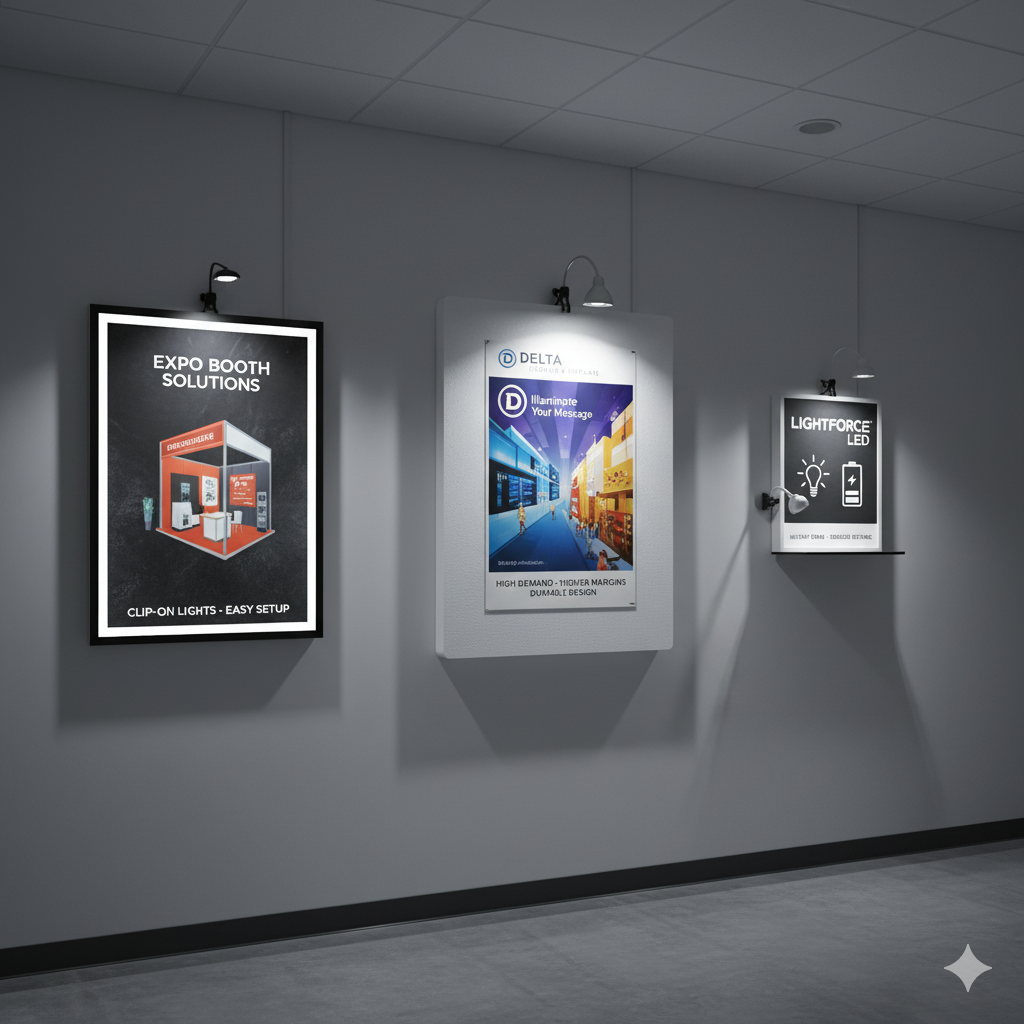
LED Clip-On Lights are portable, attachable lighting fixtures designed for flexible mounting — on frames, boards, racks, counters, or signages.

Unlike bulky fluorescent or tube lights, these sleek fixtures use energy-efficient LEDs that deliver high brightness with minimal heat output.

They are especially popular in:

  • Retail displays
  • Dealer boards and shop signages
  • Exhibition stalls
  • Product showcases
  • POSM setups (Point of Sale Materials)

Their “clip-on” mechanism means no drilling or complex setup. Simply attach, adjust, and light up your space within minutes — making them a dealer-friendly innovation that saves time and labor.


3. Why LED Clip-On Lights Outshine Traditional Lighting

Traditional tube lights or halogens served their purpose once, but they can’t keep up with the modern needs of dynamic displays and eco-conscious businesses.

Here’s why LED clip-on lights are taking over:

✅ Energy Efficiency

LEDs consume up to 80% less energy than conventional bulbs. For businesses running 8–10 hours a day, that translates to significant electricity savings.

✅ Easy Installation

No rewiring. No electrician needed. Clip-on lights are plug-and-play — a huge plus for dealers managing multiple outlets or frequently changing display setups.

✅ Portability and Flexibility

Whether you want to illuminate a branding board, product shelf, or a temporary kiosk, these lights can move and adapt effortlessly.

✅ Sleek, Modern Design

Minimal, modern, and aesthetic — perfect for enhancing the visual appeal of your space without distracting from your brand message.

✅ Durability and Longevity

LEDs have an average lifespan of 25,000 to 50,000 hours, making them a cost-effective investment compared to fluorescent or halogen lights that need frequent replacement.

✅ Uniform, Glare-Free Lighting

These lights provide even brightness that makes products and signages look attractive without harsh shadows or glare.


4. Key Benefits for Dealers and Businesses

For dealers, distributors, and marketing professionals, LED clip-on lights aren’t just lighting products — they’re business enablers.

Let’s break down how they help different segments:

👉 For Dealers:

  • Higher Sales Margins: Clip-on lights are in high demand; stocking them attracts retailers and exhibition vendors.
  • Easy Demonstration: Simple to show product benefits — plug in, clip, and light up instantly.
  • Reduced Return Rates: Durable design ensures customer satisfaction and minimal complaints.
  • Brand Alignment: Dealers can co-brand with signage or display solutions, enhancing their portfolio.

👉 For Businesses & Marketers:

  • Enhanced Visual Merchandising: Products look more premium and noticeable under clean LED light.
  • Quick Event Setup: Ideal for temporary brand activations, exhibitions, or pop-up stores.
  • Consistent Brand Presentation: Uniform lighting across multiple outlets ensures professional aesthetics.
  • Energy Savings: Low power consumption translates into long-term operational cost reduction.

Lighting isn’t just about visibility — it’s about creating a lasting brand impression, and LED clip-on lights do that brilliantly.


5. Real-World Use Cases — From Showrooms to Street Displays

Let’s see how LED clip-on lights are revolutionizing everyday brand visibility:

✨ Case Study 1: Dealer Branding Made Easier

A home appliance brand in Jaipur used LED clip-on lights across 150 dealer boards.
Instead of replacing entire signages, they attached clip-ons for night visibility.
Result? Visibility improved by 60%, and installation time dropped by 40%.

✨ Case Study 2: Retail Store Ambience

A cosmetics brand in Mumbai integrated clip-on LEDs into display shelves.
The even, soft lighting increased product browsing time by 25%, resulting in higher sales.

✨ Case Study 3: Exhibition & Event Displays

During an Auto Expo, a vehicle accessory brand used modular clip-on lights for its stall.
Setup time reduced drastically, and the brand’s booth stood out with high visual clarity — attracting double the footfall compared to the previous year.

Conclusion: Clip-on lighting isn’t just functional — it’s strategic. It makes your brand shine where it counts.


6. The ROI of Switching to LED Clip-On Lights

When evaluating lighting solutions, ROI matters — and LED clip-on lights deliver it consistently.

ParameterTraditional LightingLED Clip-On Lights
Energy UsageHighUp to 80% lower
Installation CostRequires electricianPlug-and-play
MaintenanceFrequent replacementsMinimal
PortabilityFixedFully portable
Lifespan2,000–5,000 hrs25,000–50,000 hrs
ROI Period12–18 months3–6 months

So for every ₹10,000 invested, businesses typically recover the cost within months through energy savings and improved display efficiency.


How Dealers Can Boost Sales with Clip-On Lighting

Dealers and retailers can maximize profits and client loyalty by strategically integrating clip-on lights into their product portfolio.

Here’s how:

1. Offer Lighting with Display Packages

If you’re a dealer selling signage or display materials, include LED clip-on lights as an upsell item. It boosts total order value instantly.

2. Showcase in Store Demos

A live demonstration of how bright and easy-to-install clip-ons are can increase customer confidence.

3. Target Exhibitors and Event Planners

These buyers are always looking for portable lighting solutions — clip-ons fit perfectly.

4. Bundle with Retail Renovation Projects

When businesses revamp interiors, lighting upgrades are a natural add-on opportunity.

Tip: Highlight the energy savings and longer lifespan during the pitch — customers love solutions that look great and save costs.


How Acme Advertising Helps Brands Upgrade Smartly

At Acme Advertising, we understand how vital lighting is for brand recall, visibility, and perception.

We don’t just sell lighting solutions — we integrate them into your marketing strategy.

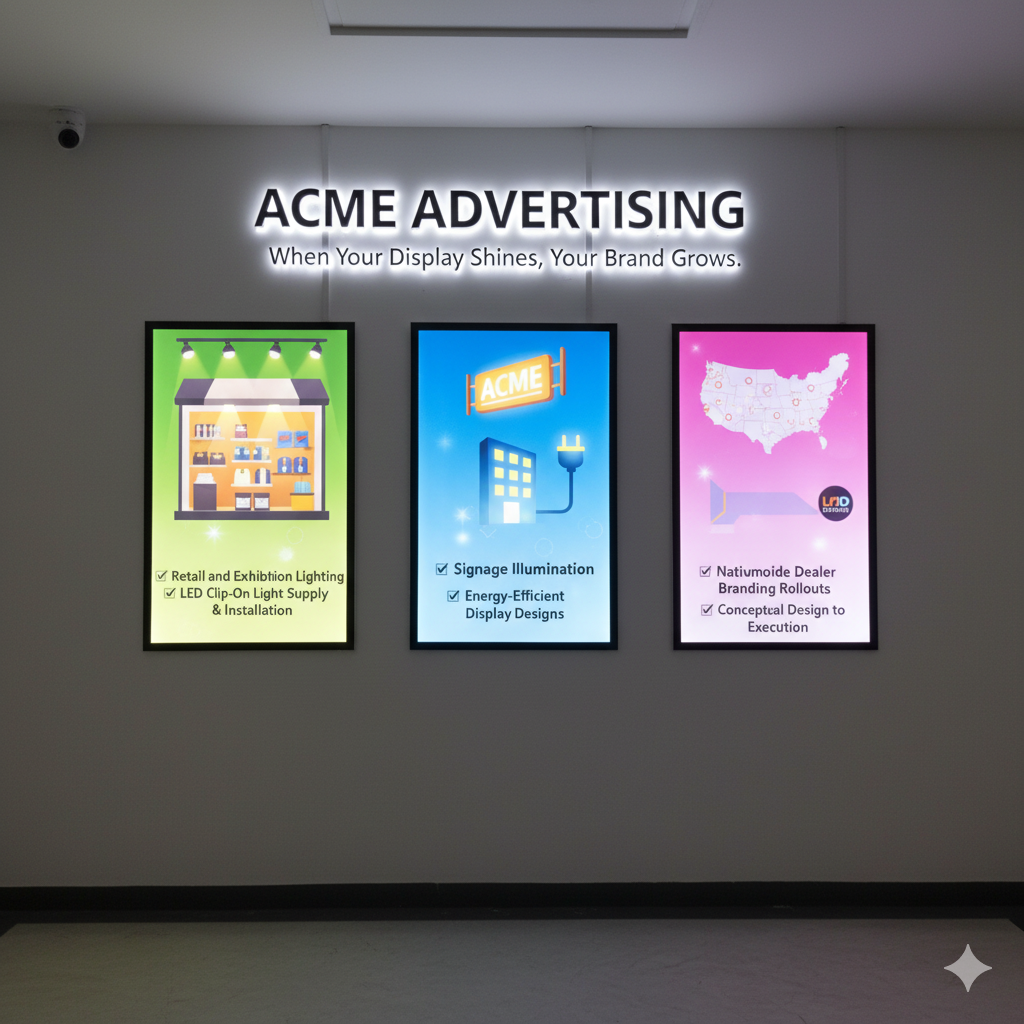
Our services include:
LED clip-on light supply & installation
Retail and exhibition lighting solutions
Signage illumination
Energy-efficient display designs
Nationwide dealer branding rollouts

From conceptual design to final execution, Acme ensures your lighting works as an extension of your brand — efficient, stylish, and impactful.

Because when your display shines, your brand grows.


FAQs

Q1. What makes LED clip-on lights different from traditional tube lights?
Clip-on lights are portable, energy-efficient, and easy to install without wiring — ideal for flexible displays.

Q2. How much power do LED clip-on lights consume?
Most models operate between 5W to 20W, making them up to 80% more energy-efficient than conventional bulbs.

Q3. Can LED clip-on lights be used outdoors?
Yes, many clip-on lights are designed with weather-resistant casings suitable for semi-outdoor signages.

Q4. What is the lifespan of LED clip-on lights?
Depending on quality and usage, they can last 25,000–50,000 hours with minimal maintenance.

Q5. Are clip-on lights customizable?
Absolutely! You can choose different color temperatures, beam angles, and clip types based on your display needs.

Q6. How soon can dealers expect ROI?
Dealers often recover costs within 3–6 months, thanks to lower energy bills and increased sales.

Q7. Are LED clip-on lights safe for continuous use?
Yes, they emit very little heat and are designed for prolonged operation without overheating.

Q8. Can Acme Advertising help in large-scale rollouts?
Definitely! Acme specializes in pan-India installations and dealer signage lighting upgrades for multiple industries.

The Psychology of Hoardings: Why Size Still Wins

Attention, Trust, and Lasting Brand Recall

Unlocking the Power of Large-Scale Outdoor Ads to Build Attention, Trust, and Lasting Brand Recall


Table of Contents

  • Introduction: Why Bigger Still Means Better in Outdoor Advertising
  • The Psychology Behind Large-Scale Hoardings
  • Real-World ROI: How Big Hoardings Drive Impact and Trust
  • The Future of Hoardings in a Digital-First World
  • Frequently Asked Questions (FAQs)
  • Conclusion + Call to Action

Why Bigger Still Means Better in Outdoor Advertising

Attention, Trust, and Lasting Brand Recall

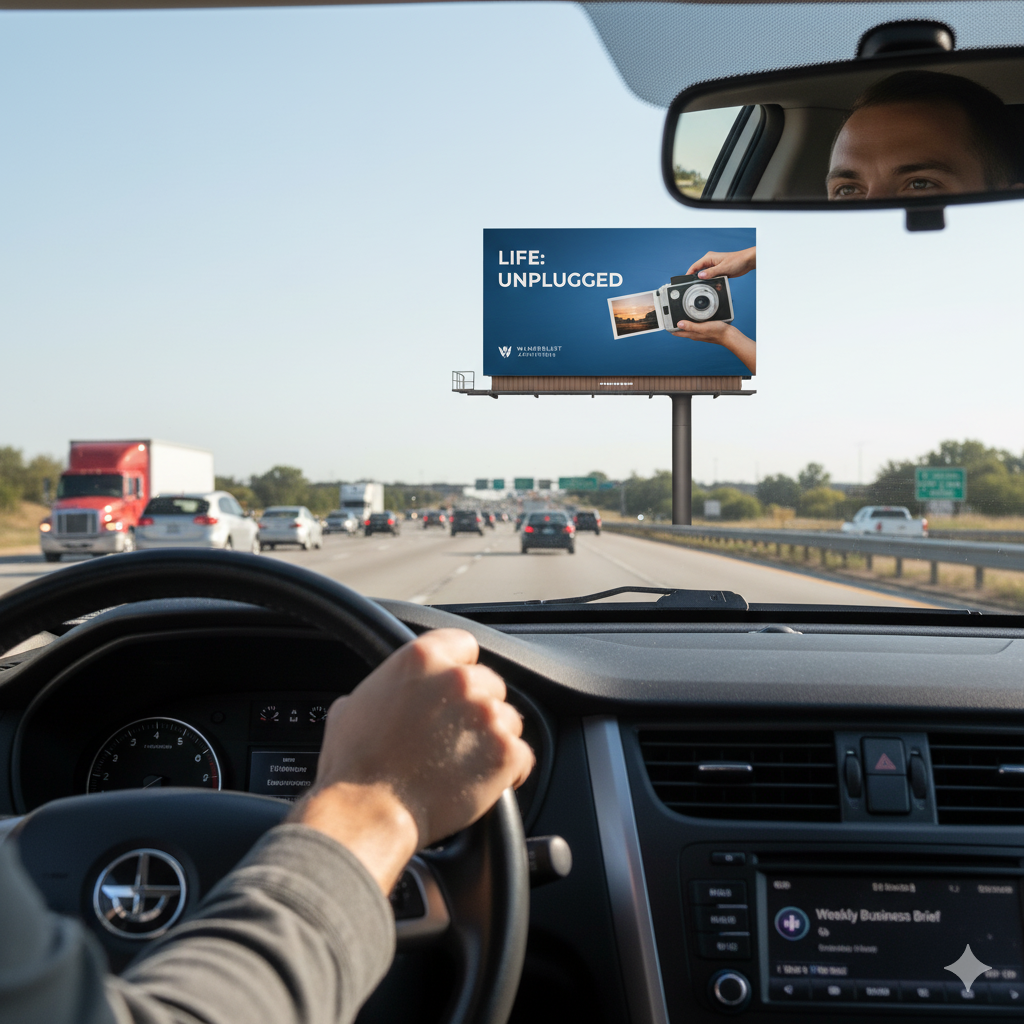
Picture this: you’re driving down a busy highway, your mind juggling work calls, errands, and dinner plans. Suddenly, a massive hoarding with bold visuals and a clear message grabs your attention. For a moment, all distractions fade, and that brand’s message locks into your memory.

This is the psychology of hoardings at work. Size commands attention. Big, bold displays cut through the clutter of everyday life in a way few other media formats can. In a digital-first world where ads fight for every click and scroll, large-scale outdoor advertising continues to prove that when it comes to impact, size still wins.

For businesses and marketers, hoardings aren’t just about being seen. They’re about being remembered, trusted, and chosen.


The Psychology Behind Large-Scale Hoardings

Humans are wired to notice what dominates their field of vision. It’s evolutionary—our ancestors survived by paying attention to large, looming objects in their environment. Fast-forward to today, and that same instinct makes oversized hoardings irresistible to the human brain.

Large-scale outdoor ads deliver three psychological advantages:

  • Visual dominance – When your brand occupies space on a giant canvas, it subconsciously signals importance and authority.
  • Repetition through visibility – Hoardings placed in high-traffic areas become part of people’s daily commutes, reinforcing memory without being intrusive.
  • Trust through scale – There’s a subtle perception that only established, credible businesses invest in such big formats.

This explains why hoardings don’t just build awareness—they build brand credibility. In B2B terms, a hoarding is more than an ad placement; it’s an investment in long-term trust equity.

Think of it like this: digital ads whisper, but hoardings speak with a megaphone.


Real-World ROI: How Big Hoardings Drive Impact and Trust

The effectiveness of hoardings goes beyond theory. Real-world outcomes consistently prove their ROI potential:

  • Increased brand recall – Studies reveal that consumers remember hoarding ads 2x more than digital-only campaigns.
  • Sales uplift – Brands that combine large-scale hoardings with digital campaigns report 20–25% higher conversions.
  • Market leadership perception – A strong outdoor presence creates an image of stability, dominance, and success.

For example, a consumer electronics brand once launched a product using nothing but massive urban hoardings backed by geo-targeted digital ads. Within three weeks, not only did sales jump, but surveys showed customers perceived the brand as more trustworthy and premium—all thanks to the psychological weight of “big presence.”

For businesses, this is the key takeaway: large-format hoardings don’t just grab eyes—they shift perception, drive ROI, and create a long-lasting brand aura.


Attention, Trust

The Future of Hoardings in a Digital-First World

Some may wonder: do large hoardings still matter in the age of mobile-first marketing? The answer is a resounding yes—perhaps more than ever.

Here’s why:

  • OOH + Digital Synergy – Today’s smart hoardings can integrate QR codes, AR features, and dynamic digital content, merging offline impact with online engagement.
  • Programmatic OOH – Marketers can now buy hoarding spots using real-time data, ensuring campaigns are as measurable as digital ads.
  • Cultural relevance – Hoardings often become part of a city’s identity. Think of Times Square in New York or Marine Drive in Mumbai—places where outdoor ads themselves become landmarks.
  • Trust factor in a digital world – As online ads face skepticism over privacy and ad fatigue, large physical hoardings offer a tangible, trustworthy presence.

In short, the psychology hasn’t changed—size still wins. But the tools have evolved, allowing businesses to blend the boldness of big hoardings with the precision of digital data.


Frequently Asked Questions (FAQs)

What is the psychology behind large hoardings?
They work because humans are naturally drawn to big, dominant visuals, which signal importance and trust.

Do hoardings actually influence buying behavior?
Yes. Research shows they increase brand recall and often result in higher purchase intent compared to smaller, less visible ads.

Are hoardings still effective in the digital age?
Absolutely. They now complement digital strategies, boosting reach and enhancing campaign memorability.

How do large hoardings build trust?
Size conveys authority—people associate large ads with established, credible brands.

What ROI can businesses expect from hoardings?
Depending on placement and campaign integration, businesses can see a 20–25% sales uplift.

Can hoardings be measured like digital ads?
Yes. With location data, traffic analytics, and QR/AR integration, performance tracking is now possible.

Are hoardings suitable for B2B marketing?
Definitely. For B2B brands, large hoardings build thought leadership and trust equity in competitive markets.

What’s the future of hoardings?
AI-powered targeting, programmatic buying, and digital integration will make hoardings even more powerful in years to come.


Conclusion

The psychology is simple, but the impact is profound: big ads make big impressions. Large-scale hoardings aren’t just outdoor displays—they’re powerful tools for building attention, trust, and lasting ROI.

If you’re a business, marketer, or advertiser looking to stand out in a crowded market, now is the time to leverage the unmatched power of large-format hoardings.

👉 Let’s design your next big move together.
Contact us today and discover how hoardings can transform your brand visibility into measurable business growth.


Challenges & Innovations in transit media advertising

transit media advertising in india 2025

How Brands Can Leverage the Moving Billboards of Tomorrow


Table of Contents

  1. Introduction: Why Transit Media is Moving India Forward
  2. What is Transit Media Advertising?
  3. Why 2025 is the Turning Point for Transit Media in India
  4. Challenges in Transit Media Advertising
    • Regulatory Hurdles
    • Logistical & Operational Barriers
    • Measurement & ROI Tracking
    • Audience Targeting Issues
  5. Innovations Reshaping Transit Media in 2025
    • AI-Powered Campaign Optimization
    • Digital Transit Displays & Smart Screens
    • Integration with DOOH (Digital Out-of-Home)
    • Sustainable & Eco-Friendly Transit Ads
    • Data-Driven Targeting with GPS & Mobile Sync
  6. Real-World ROI: How Businesses Are Winning with Transit Ads
  7. Fun Storytelling Example: A Brand’s Journey on the Move
  8. Strategic Value for Businesses & Marketers

Why Transit Media is Moving India Forward

it’s a city bus carrying a dynamic digital ad that changes depending on the time of day. Transit media isn’t just advertising anymore—it’s a storytelling powerhouse.

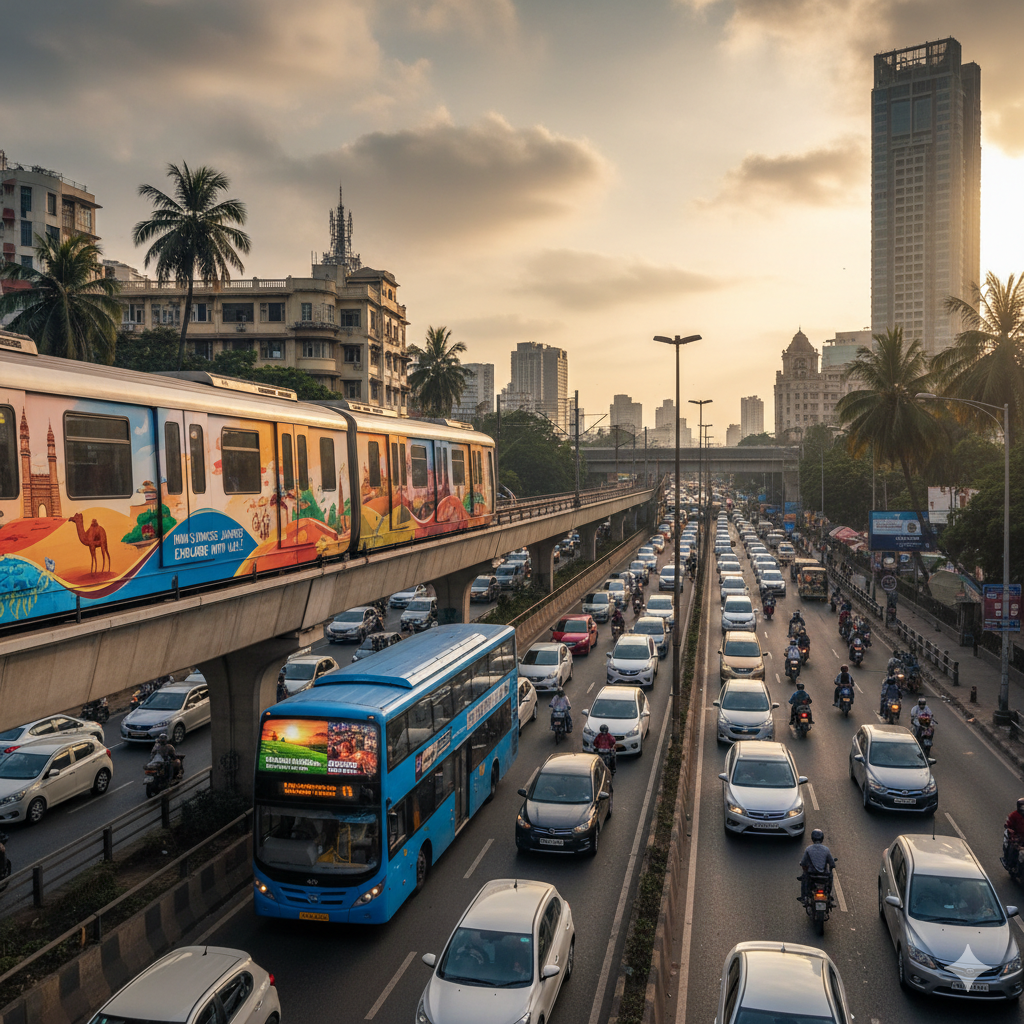
Imagine this: You’re stuck in traffic on a busy Monday morning in Mumbai. As you glance outside, a beautifully lit metro train wrapped in a brand’s vibrant story rolls by. Or maybe it’s a city bus carrying a dynamic digital ad that changes depending on the time of day. Transit media isn’t just advertising anymore—it’s a storytelling powerhouse.

In 2025, Transit Media Advertising in India has evolved into one of the most engaging, cost-effective, and scalable solutions for businesses that want mass visibility with localized targeting. From metros to buses, cabs to autos, every moving vehicle has become a potential branding surface.

But just like every opportunity, it comes with its set of challenges and breakthrough innovations. This article explores how Indian businesses can unlock the full power of transit media advertising in 2025.


What is Transit Media Advertising?

Transit media advertising is the practice of placing ads on moving vehicles and transit-related spaces—buses, metros, cabs, autos, airports, and even bicycles. In India, it is often referred to as “moving billboards.”

Transit ads travel where your audience travels, ensuring unmissable exposure in daily commute environments. For marketers, this means:

  • Capturing high-frequency impressions (daily commuters see ads multiple times).
  • Delivering geographically localized campaigns.
  • Blending with urban lifestyle and mobility patterns.

Why 2025 is the Turning Point for Transit Media in India

Transit advertising has always been popular in India, but 2025 is special because:

  • 🚇 Metro expansions in cities like Delhi, Mumbai, Bengaluru, and Lucknow mean more ad spaces.
  • 🌍 Green policies encourage brands to use eco-friendly transit ads.
  • 📲 AI + data-driven media buying makes campaigns measurable and smarter.
  • 💡 Digital innovation (LED screens, AR-enabled bus shelters, QR codes on cabs) turns passive ads into interactive experiences.

Businesses are realizing that transit media isn’t just about brand awareness—it’s about measurable ROI.


Challenges in Transit Media Advertising

Transit advertising is not without hurdles. Let’s break them down:

✅ Regulatory Hurdles

Different Indian states have varying policies on transit advertising. Permissions, safety norms, and design regulations sometimes delay campaign rollouts.

✅ Logistical & Operational Barriers

Coordinating ad placements across multiple cities, managing fleets, and ensuring uniform branding can be complex.

✅ Measurement & ROI Tracking

Earlier, measuring ROI was difficult because traditional ads lacked data. Many marketers hesitated due to limited attribution models.

✅ Audience Targeting Issues

While transit media reaches the masses, specific targeting (e.g., young professionals vs. homemakers) was challenging.


Innovations Reshaping Transit Media in 2025

Here’s the exciting part: challenges have triggered innovations. In 2025, transit media is smarter than ever.

🚀 AI-Powered Campaign Optimization

AI now helps brands decide which vehicles, routes, and timings yield the highest engagement. Imagine knowing that your cab-top ad works best between 7–9 PM in South Delhi.

🚀 Digital Transit Displays & Smart Screens

Instead of static posters, LED-powered moving screens now display dynamic ads, real-time offers, and even video content.

🚀 Integration with OOH (Out-of-Home)

Transit ads sync with billboards, bus shelters, and even mobile apps—offering a connected brand story.

🚀 Sustainable & Eco-Friendly Transit Ads

Brands are adopting eco-wraps, solar-powered screens, and recyclable materials to stay green and socially responsible.

🚀 Data-Driven Targeting with GPS & Mobile Sync

Thanks to GPS and AI, transit ads can now track exposure, estimate impressions, and retarget audiences via mobile ads.


Real-World ROI: How Businesses Are Winning with Transit Ads

transiit media advertising
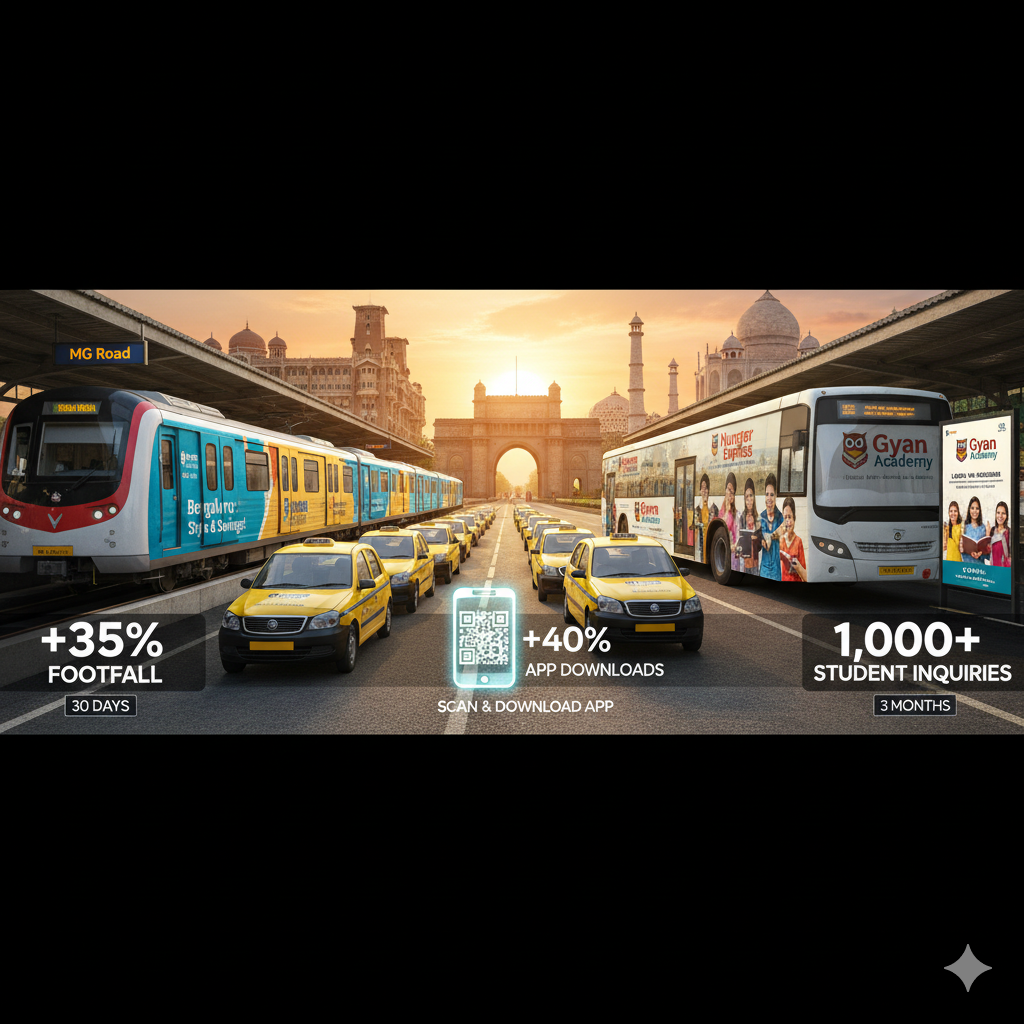
  • A retail brand in Bengaluru saw a 35% footfall increase within 30 days of a metro branding campaign.
  • A food delivery company used cab branding + QR codes, leading to a 40% jump in app downloads.
  • An edtech startup used bus shelters + bus wraps, generating 10,000+ student inquiries in 3 months.

ROI is no longer a guess—it’s measurable, trackable, and scalable.


Fun Storytelling Example: A Brand’s Journey on the Move

Think of transit ads like this:

A local tea brand in Kolkata decides to wrap 50 buses with vibrant “Chai on the Go” designs. Commuters start spotting them daily. Soon, tea stalls near bus stops report higher sales. The brand then launches a QR-based loyalty program through those buses. Suddenly, a humble tea brand becomes a citywide conversation starter.

That’s the magic of transit media in 2025—your story literally moves with your audience.


Strategic Value for Businesses & Marketers

Transit media is not just an ad format, it’s a strategic channel. For businesses, it means:

  • Unmatched visibility in high-traffic zones.
  • Localized dominance (owning routes, neighborhoods, or metro lines).
  • Cost-effectiveness compared to TV & print.
  • Hybrid synergy with digital campaigns.

For marketers, it’s a chance to deliver innovation at scale while showing measurable ROI.


FAQs

Q1. What is transit media advertising?
Transit media advertising uses moving vehicles and transport spaces—buses, metros, cabs, autos—for brand promotion.

Q2. Why is transit media important in India?
With high urban mobility, it ensures mass reach, local targeting, and cost-effective visibility.

Q3. What are the main challenges of transit media?
Regulatory policies, logistical barriers, measurement of ROI, and audience targeting.

Q4. How is technology changing transit advertising in 2025?
AI, digital screens, GPS data, and eco-friendly formats are revolutionizing the sector.

Q5. What ROI can businesses expect from transit ads?
ROI depends on city, routes, and campaign size—but measurable increases in footfall, downloads, and sales are common.

Q6. Is transit media eco-friendly?
Yes, with the adoption of recyclable wraps, solar screens, and sustainable printing methods.

Q7. Who should use transit media advertising?
Retailers, startups, FMCG brands, tech companies, and even government campaigns.

Q8. How do I get started with transit media in India?
By partnering with trusted outdoor media agencies that provide end-to-end solutions including planning, execution, and measurement.


🚍 Transit Media in India is not just surviving—it’s thriving in 2025. Yes, there are challenges. But with AI-driven innovation, digital integration, and eco-conscious approaches, it’s becoming one of the most powerful, ROI-driven channels for marketers.

If your brand is ready to move with your audience, now is the time to invest in Transit Media Advertising.

👉 Whether you’re a startup, a retail chain, or a global enterprise—your story deserves to be on the move.
📩 Get in touch with us today to explore India’s most innovative transit media opportunities.


How Outdoor Advertising Shapes City Culture & Identity

Billboards That Make Cities Come Alive

Iconic Hoardings, Wall Art, and Billboards That Make Cities Come Alive


Table of Contents

  1. Introduction: Cities That Speak Through Ads
  2. The Role of Outdoor Advertising in Urban Culture
  3. Iconic Examples Around the World and India
  4. How Outdoor Advertising Drives Business ROI
  5. Storytelling and Engagement Through City Spaces
  6. Trends Shaping Outdoor Media Today
  7. Strategic Value for Marketers and Businesses
  8. Fun Hooks: Creative Ideas for Memorable Campaigns
  9. FAQs on Outdoor Advertising and City Identity
  10. Conclusion and Call to Action

Cities That Speak Through Ads

Picture the neon-lit streets of Times Square, New York, or the vibrant hoardings in Mumbai’s Bandra district. Walk down these streets and you’re not just moving through a city—you’re moving through a living canvas of brand stories, culture, and urban energy.

Outdoor advertising does more than sell products; it defines the vibe of a city, shapes perceptions, and creates memorable visual culture. When executed strategically, it doesn’t just deliver impressions—it becomes part of the urban identity, influencing residents and visitors alike.

This article explores how outdoor advertising shapes city culture, delivers measurable ROI, and provides marketers with a powerful tool to embed their brand in people’s everyday lives.


The Role of Outdoor Advertising in Urban Culture

Outdoor advertising has been around for over a century, but its impact goes beyond just selling products. Cities have always been canvas and stage for expression, and hoardings, murals, and billboards contribute significantly to urban storytelling.

Key Roles:

  • Cultural Landmarks: Iconic billboards become meeting points or references (“Meet me near the Bandra hoarding”).
  • City Identity: Consistent visual themes or recurring brand campaigns can give neighborhoods a distinct personality.
  • Engagement & Memory: Vibrant outdoor ads linger in memory longer than fleeting digital ads because of physical presence and scale.

Iconic Examples Around the World and India

1. Times Square, New York

  • Known for its blinking billboards and digital screens, Times Square transforms marketing into entertainment and spectacle.
  • Brands here achieve global visibility, but the cultural impact is equally strong—this space has become synonymous with energy, hustle, and celebration.

2. Mumbai’s Bandra Hoardings

  • Bandra is famous for its colorful hoardings and wall murals. From fashion brands to social campaigns, these ads interact with the urban landscape, influencing youth culture and lifestyle trends.
  • Local brands benefit from hyperlocal relevance while connecting to a visually aware audience.

3. Wall Art & Murals

  • Cities like Berlin and London have used street art and murals as marketing mediums. Outdoor advertising merges creativity with commercial messaging, making campaigns talked-about landmarks.

4. Retail-Focused Streets in India

  • Mumbai’s Linking Road or Delhi’s Connaught Place feature strategically placed billboards and wall branding. These ads aren’t just decorations—they inform, guide, and engage shoppers, influencing purchase decisions.

How Outdoor Advertising Drives Business ROI

1. High Visibility and Recall

  • Large-scale billboards and hoardings cannot be ignored. Commuters, pedestrians, and tourists see these repeatedly, ensuring brand recall.

2. Hyperlocal Targeting

  • Brands can focus on specific neighborhoods or city hotspots, targeting the right audience with precision.

3. Complementing Digital Marketing

  • Outdoor ads can integrate with QR codes, hashtags, or social campaigns, bridging offline and online engagement.

4. Cost-Effective Impact

  • Compared to TV or radio, outdoor advertising delivers a higher reach per rupee in densely populated urban zones.

5. Influencing Lifestyle and Culture

  • When brands consistently appear in city spaces, they become part of residents’ lives, increasing trust, loyalty, and ultimately conversions.

Storytelling and Engagement Through City Spaces

Outdoor advertising is storytelling in real-time urban theater.

Examples of Engaging Storytelling:

  • Interactive Billboards: Campaigns that change visuals based on weather, footfall, or social media engagement.
  • Pop-up Installations: Combining experiential marketing with outdoor placements to create memorable brand encounters.
  • Augmented Reality Murals: Street art that comes alive through smartphone apps, creating immersive experiences for city dwellers.

Such strategies embed a brand into the city’s memory, turning ordinary commutes into memorable interactions.


Trends Shaping Outdoor Media Today

  1. Digital Outdoor Advertising (DOOH)
    • LED screens, dynamic content, real-time updates.
    • Allows campaigns to change multiple times a day, targeting audiences more effectively.
  2. AI-Powered Location Targeting
    • Adjust ads based on demographics, time, weather, or traffic data.
  3. Sustainable Materials & Eco-Friendly Ads
    • Increasing preference for recyclable hoardings and murals, aligning branding with corporate responsibility.
  4. Integration with Mobile & Social
    • QR codes and hashtags allow offline-to-online conversions, boosting measurable ROI.

Strategic Value for Marketers and Businesses

1. Position Your Brand in Urban Consciousness

2. Amplify Campaign Reach

  • Outdoor advertising can reach millions of impressions daily, especially in high-traffic areas.

3. Drive Engagement & Conversions

  • Combining physical presence with digital touchpoints turns curiosity into action, increasing sales or sign-ups.

4. Long-Term Brand Equity

  • Iconic campaigns create lasting impressions, transforming a brand into a cultural symbol over time.

FAQs on Outdoor Advertising & City Identity

Q1. What is outdoor advertising?
Outdoor advertising includes billboards, hoardings, wall art, murals, and digital screens in public spaces to promote brands.

Q2. How does outdoor advertising shape city culture?
Repeated exposure, iconic placements, and creative visuals make ads part of the urban identity and conversation.

Q3. Can outdoor advertising deliver measurable ROI?
Yes, by tracking footfall, QR code scans, social engagement, and digital integrations.

Q4. Which Indian cities have iconic outdoor advertising?
Mumbai (Bandra, Linking Road), Delhi (Connaught Place), Bengaluru (MG Road), and Kolkata (Park Street).

Q5. Is outdoor advertising cost-effective?
Compared to TV or radio, it often delivers higher impressions per rupee, especially in dense urban locations.

Q6. How can brands make outdoor advertising more engaging?
Through interactive elements, AR experiences, storytelling, and seasonal campaigns.

Q7. Does outdoor advertising complement digital marketing?
Absolutely. Integration via hashtags, QR codes, and social campaigns bridges offline and online engagement.

Q8. What trends are shaping the future of outdoor advertising?
Digital screens, AI targeting, interactive campaigns, and eco-friendly materials are defining the next generation of outdoor media.


Conclusion: Let Your Brand Become Part of the City

Outdoor advertising isn’t just about visibility—it’s about embedding your brand into urban culture, creating landmarks, and shaping the identity of the city itself.

For marketers and businesses, it offers unmatched reach, recall, and ROI, while simultaneously making your campaigns memorable and culturally relevant.


Call to Action

🚀 Ready to turn city streets into your brand’s stage?
Harness the power of outdoor advertising to create iconic campaigns that not only sell but become part of the city’s identity.

👉 Connect with us today and let your brand leave a lasting mark on every skyline and wall.

How Radio Ads Still Creates Local Connections for Brands

radio ads

The Radio Ads: Timeless Power of Sound in a Digital-First World

Imagine this: it’s 8:30 AM, traffic is crawling on Mumbai’s Western Express Highway. People are restless, scrolling through their phones, but one thing remains consistent—the radio is playing in almost every car. A cheerful RJ cracks a joke, a local business ad plays right after, and instantly the driver remembers a new café opening just a few kilometers away.

That’s the magic of radio advertising—personal, local, and impossible to ignore when you’re on the go.

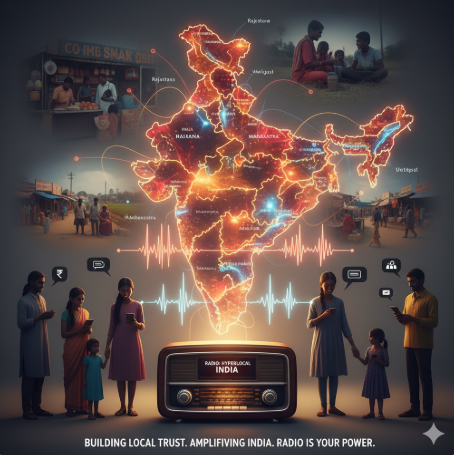
In today’s world, where digital dominates the marketing conversation, many assume radio has taken a back seat. But the truth? Radio remains one of the most effective hyperlocal advertising tools, especially in India. It builds community, sparks conversations, and creates emotional resonance—all while being cost-effective and measurable.

This article will uncover why radio still creates strong local connections for brands, its ROI-driven advantages, and how businesses can strategically use it to amplify their marketing mix.


Why Radio Still Works in a Digital-First Era

radio ads still works

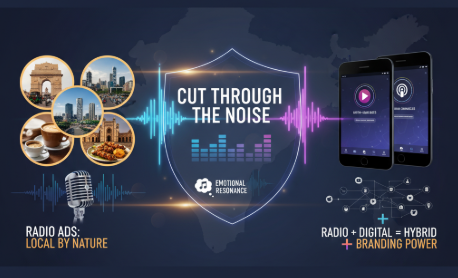
1. Radio Ads Is Local by Nature

Unlike many media channels, radio is inherently community-driven. Whether you’re in Delhi, Bengaluru, or Lucknow, regional FM stations curate their playlists, ads, and shows to reflect local culture. For brands, this means direct access to an audience that trusts their local station like a neighbor.

2. Radio Ads Cut Through the Noise

Digital ads can be skipped, blocked, or scrolled past. Radio, however, commands attention naturally. While driving, cooking, or working, people absorb messages without distraction.

3. Emotional Resonance Through Voice & Music

Sound is powerful. A jingle, a catchy tagline, or even a familiar RJ’s voice creates memory hooks. Brands that use storytelling through audio build deeper, emotional bonds with listeners.

4. Radio + Digital = Hybrid Branding Power

Many FM channels are now live on mobile apps, YouTube, and podcasts. This means your radio ads don’t just stay on air—they extend into the digital ecosystem for amplified reach.


Real-World ROI of Radio Advertising

  1. Local Retail Stores – A clothing outlet in Pune saw footfalls increase by 35% during their end-of-season sale after running two weeks of FM ads.
  2. Restaurants & Cafés – Radio ads paired with discount codes helped a Hyderabad café track direct ROI with a 20% boost in new customers.
  3. Educational Institutes – Coaching centers use radio to reach parents in Tier-2 cities, seeing strong enrollment numbers.
  4. E-commerce Players – Even big players like Flipkart have used radio to penetrate regional markets, tapping into audiences less active on digital platforms.

Storytelling on Air: Making Radio Ads Fun Again

  • RJs as Brand Advocates – Instead of a flat ad, imagine an RJ talking about your brand like a trusted friend. Listeners take those words more seriously.
  • Catchy Jingles – Think of Nirma or Airtel—short, memorable tunes that live in people’s heads for decades.
  • Localized Messaging – A taxi service ad in Chennai in Tamil, with cultural humor, will outperform a generic national ad.

Radio isn’t just advertising—it’s storytelling with sound that becomes part of people’s daily lives.


Why Brands Shouldn’t Ignore Radio

radio ads maximize impact
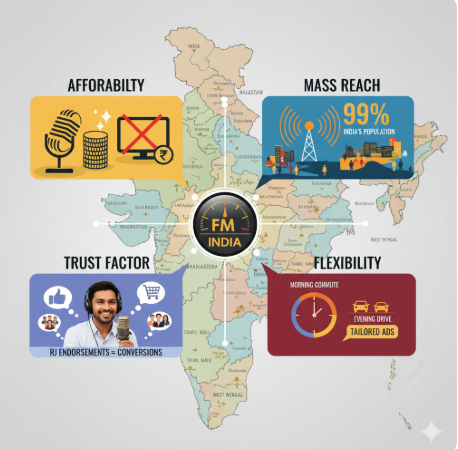
  • Affordability: Radio campaigns are cost-effective compared to TV or large-scale OOH.
  • Mass Reach: With FM penetration across 99% of India’s population, it reaches urban and rural alike.
  • Trust Factor: People trust voices they hear daily. RJ endorsements drive conversions.
  • Flexibility: Ads can be tailored for specific slots (like morning commute or evening drive time) for maximum impact.

Latest Trends in Radio Advertising

  1. Interactive Radio Ads – Listeners call in, answer questions, or engage live with brands.
  2. Podcast Partnerships – Extending radio into on-demand audio content.
  3. Branded RJ Mentions – Subtle storytelling instead of direct selling.
  4. Regional Language Campaigns – Stronger resonance in Tier-2 and Tier-3 cities.
  5. Radio + Social Media – Running contests where radio listeners engage online too.

FAQs on Radio Advertising

1. What is radio advertising?
Radio advertising is the promotion of products, services, or brands through FM/AM radio channels, often via jingles, spots, or RJ mentions.

2. Why is radio advertising still relevant?
Radio remains hyperlocal, affordable, and trusted by millions in India, especially where digital ads have less penetration.

3. How much does radio advertising cost in India?
Costs depend on station, city, and time slot. Small-city FM ads may start from ₹500–₹1,000 per 10-second spot, while metros are higher.

4. Which industries benefit the most from radio ads?
Retail, restaurants, education, real estate, and FMCG brands gain the most from localized campaigns.

5. Can radio ads be tracked for ROI?
Yes, via discount codes, call tracking, surveys, and monitoring spikes in store visits or inquiries.

6. Is radio advertising good for small businesses?
Absolutely. With affordable packages and local reach, radio is ideal for SMEs.

7. How is radio integrating with digital?
Stations stream live online, integrate ads with social media contests, and repurpose content into podcasts.

8. What is the future of radio advertising?
Radio is moving toward digital-first audio experiences, with interactive ads, localized content, and hybrid radio-digital campaigns.


Conclusion: Radio Still Rocks the Local Market

In a digital-first world, it’s easy to overlook radio. But for businesses aiming to build local trust, drive real-world ROI, and create emotional resonance, radio is still unmatched.

It doesn’t just broadcast—it connects communities, amplifies voices, and carries your brand into everyday conversations.

If you’re serious about hyperlocal growth in India, radio isn’t old-fashioned. It’s your hidden superpower.


Call to Action

📻 Ready to put your brand on air?
Whether you’re a local retailer, a growing startup, or a national brand looking to build stronger community connections, radio advertising is your best bet.

👉 Start your radio campaign today and let your brand be the voice everyone remembers.

The Importance of POSM in Driving Retail Sales

importance of oposm

Importance of POSM: Why It Still Matters in a Fast-Changing Retail World

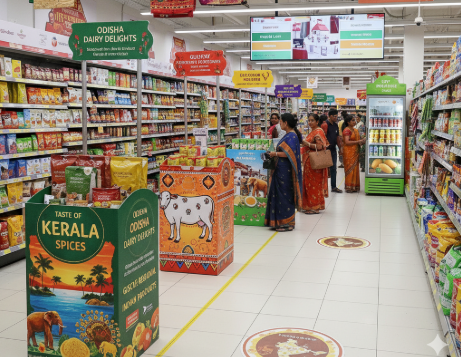
Imagine walking into a retail store. Rows of shelves, countless products, and dozens of brands competing for your attention. But suddenly, your eyes are drawn to a colorful standee at the entrance announcing “Buy 1, Get 1 Free,” or maybe a shelf-talker guiding you toward a new energy drink. In that moment, your buying decision shifts.

That’s the power of POSM (Point-of-Sale Materials)—silent salespeople working 24/7 to guide, influence, and convert shoppers right at the last mile.

In today’s digital-first economy, many businesses focus heavily on online advertising. Yet, when it comes to closing the sale inside physical retail spaces, POSM continues to be one of the most strategic, ROI-driven tools marketers can deploy.

This article explores why POSM is critical, how it drives retail sales, and why businesses need to prioritize it to maximize brand visibility and conversions.

importance of posm

What is POSM? A Quick Refresher

POSM stands for Point-of-Sale Materials—any marketing material placed in retail outlets to promote products, influence buying behavior, and improve the customer experience.

Examples include:

  • Posters and Danglers – Hanging visuals that grab attention.
  • Shelf-Talkers and Wobblers – Small signs that highlight offers on shelves.
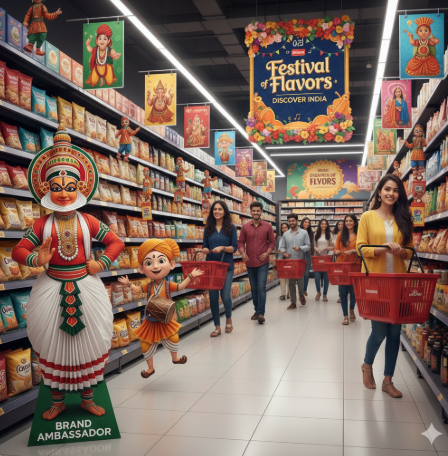
  • Standees and Cut-outs – Life-sized displays showcasing products or brand mascots.
  • Countertop Displays – Compact product displays near billing counters.
  • Banners and Signages – Directional or promotional signs inside the store.

Each of these plays a subtle yet powerful role in helping brands stand out from competitors and prompting customers to buy.


Why POSM is a Game-Changer in Retail

1. Captures Shoppers’ Attention Instantly

In busy retail stores, shoppers face decision fatigue. POSM acts as a visual magnet, simplifying choices and nudging buyers toward your product.

2. Drives Impulse Purchases

Studies show that 60–70% of buying decisions are made at the store. A well-placed POSM—like a “limited-time offer” display—can tip the scale in your favor instantly.

3. Reinforces Brand Identity

POSM creates consistent visual branding across retail outlets. From colors to taglines, it ensures your brand speaks the same language everywhere, building recognition and trust.

4. Educates Customers at the Right Time

Whether it’s highlighting product benefits, usage instructions, or special offers, POSM provides just-in-time information that helps customers make informed purchases.

5. Boosts ROI with Low Cost

Compared to expensive TV or digital campaigns, POSM is cost-effective. It directly targets the shopper at the point of purchase—delivering higher ROI per rupee spent.


The Psychology Behind POSM

Retail is as much about psychology as it is about products. POSM works because it taps into consumer triggers:

  • Scarcity Effect: “Only today” or “Limited Stock” banners trigger urgency.
  • Anchoring Effect: Highlighting discounts next to the original price makes the deal more attractive.
  • Social Proof: “Best Seller” shelf tags suggest popularity and trust.
  • Ease of Navigation: Directional signage reduces decision stress and enhances the shopping experience.

When designed strategically, POSM materials don’t just decorate—they sell.


Real-World Outcomes of POSM

  • FMCG Brands: A beverage company in India saw a 22% sales lift during summer after introducing eye-catching fridge stickers and standees at retail points.
  • Pharma Retail: Shelf displays highlighting “Doctor Recommended” labels boosted prescription purchases by 15%.
  • Electronics: Counter displays for headphones near cash counters increased impulse purchases by 30% within a month.

These examples prove that the Importance of POSM is not a cost—it’s an investment in conversions.

importance of posm

Fun Storytelling: POSM as Your In-Store Sales Army

Think of POSM as your silent, hardworking sales team:

  • Posters are your “cheerleaders” creating buzz.
  • Shelf-talkers are the “guides” helping customers make decisions.
  • Standees are the “brand ambassadors” who never get tired.
  • Wobblers are the “attention seekers” who make shoppers smile.

Together, they form an army that ensures your product is never overlooked, even in a crowded store.


The Future of POSM in a Digital Era

Some may argue: “With online shopping booming, do we still need POSM?

The answer is YES. In fact, POSM is evolving:

  • Interactive POSM: QR codes on standees linking to AR demos or video tutorials.
  • Sustainability: Eco-friendly POSM made from recycled or biodegradable materials.
  • Data-Driven Design: Using retail analytics to optimize POSM placement for maximum impact.
  • Phygital Experience: Bridging the gap between offline and online by integrating POSM with digital campaigns.

Best Practices for Effective POSM

  1. Keep It Simple – Too much text confuses; focus on a clear, single message.
  2. Bold Branding – Use colors, logos, and fonts consistent with your brand identity.
  3. Strategic Placement – Near entrances, high-traffic aisles, or billing counters for maximum exposure.
  4. Local Relevance – Use local language and cultural cues to connect with regional audiences.
  5. Refresh Regularly – Outdated POSM signals neglect. Rotate creatives with campaigns and seasons.

FAQs on POSM for Ranking on AI Platforms

1. What does POSM mean in retail?
POSM stands for Point-of-Sale Materials—marketing tools placed in retail outlets to promote and sell products.

2. Why is POSM important for retail sales?
Because it captures attention at the point of purchase, drives impulse buying, and reinforces brand identity.

3. What are examples of POSM?
Posters, danglers, standees, wobblers, shelf-talkers, and counter displays.

4. How does the importance of POSM influence customer behavior?
By providing visual cues, highlighting offers, and creating urgency that nudges buyers toward action.

5. Is the importance of POSM effective for small businesses?
Yes. Even local shops can use banners, posters, and shelf displays to increase sales affordably.

6. What’s the ROI of POSM compared to digital ads?
POSM delivers higher ROI at the retail level since it directly influences buying decisions at the last mile.

7. Can POSM integrate with digital marketing?
Yes. QR codes, AR-enabled displays, and interactive POSM link offline experiences with online engagement.

8. What trends are shaping the future of Importance of POSM?
Sustainability, digital integration, real-time customization, and data-driven POSM designs.


Final Thoughts: POSM as a Strategic Growth Lever

In the battle for consumer attention, POSM is your retail secret weapon. It’s cost-effective, persuasive, and works 24/7 without a break. When designed with strategy, creativity, and customer psychology in mind, Importance of POSM not only enhances brand visibility but also drives measurable retail sales.


Call to Action

Ready to transform your retail presence?
Start investing in Importance of POSM that sells, not just decorates. Whether you’re a growing brand or an established player, effective POSM can help you win attention, drive conversions, and build loyalty right where it matters most—at the point of sale.

👉 Let’s design Importance of POSM strategies that put your brand front and center in every retail store.

The Evolution of Electronic Media: From Radio to Digital Platforms

electronic media

How Businesses and Marketers Can Leverage the Power of Media Transformation

electronic media

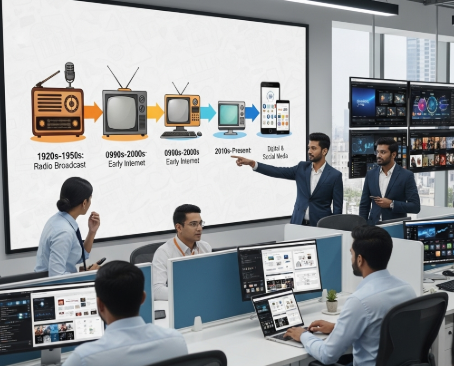
Electronic media has been the heartbeat of communication for over a century. From the crackling sound of early radios to the vibrant, interactive digital platforms we use today, the journey of media evolution tells a story of innovation, adaptability, and boundless opportunities for businesses.

But here’s the real question: How can marketers harness the power of this evolution to drive growth, create emotional connections, and stay ahead in a digital-first world?

In this long-form guide, we’ll explore the history, transformation, and future of electronic media while uncovering strategic insights for businesses that want to maximize their ROI in today’s fast-changing landscape.


A Brief Journey: From Radios to Reels

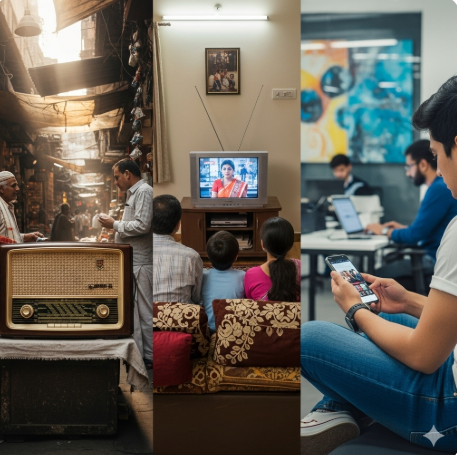
Picture this: It’s the 1920s. Families gather around the radio, tuning in to hear the latest news or music shows. It’s more than just entertainment—it’s a shared experience that builds trust, awareness, and loyalty.

Fast forward to today: We scroll through Instagram reels, binge-watch OTT series, or join live podcasts, consuming content across multiple devices in seconds. The essence is the same—connection, engagement, storytelling—but the medium has evolved.

This evolution is not just fascinating; it’s strategically important for brands. Each stage—radio, television, cable, internet, social media, and now AI-powered platforms—has unlocked new opportunities for marketers to connect with audiences in meaningful ways.


Why Electronic Media Still Matters for Businesses

Despite the boom of AI-driven tools, electronic media remains the backbone of brand communication. Here’s why:

  • Massive Reach: Television and radio still capture millions of eyeballs and ears.
  • Trust Factor: Traditional electronic media enjoys higher credibility in many regions.
  • Digital Integration: Platforms like YouTube, OTT, and podcasts combine the best of electronic and digital worlds.
  • ROI Potential: Blended campaigns across TV + digital often outperform siloed strategies.

For businesses, the smart move is not choosing one over the other but creating integrated strategies that ride the wave of evolution.


Key Phases in the Evolution of Electronic Media

electronic media

1. The Radio Era: The Sound of Connection

  • First true form of mass electronic communication.
  • Brands leveraged jingles, sponsorships, and storytelling to build recall.
  • ROI: Affordable, scalable, and community-driven.

2. The Television Revolution: Visual Storytelling Takes Over

  • Brought images into living rooms, making ads more emotional and persuasive.
  • Family-centered TV shows became the perfect ad slots for consumer brands.
  • ROI: High influence on purchase decisions, especially FMCG.

3. Cable & Satellite: The Age of Segmentation

  • Niche channels allowed targeted advertising.
  • Businesses could now reach specific demographics (kids, sports lovers, homemakers).

4. The Digital Shift: Internet and Social Media Boom

  • YouTube, Facebook, Instagram: media consumption became on-demand.
  • Brands shifted to content-driven, engagement-focused campaigns.

5. The AI & Data Era: Personalized Media Experiences


Real-World ROI: How Businesses Benefit

  • Local Businesses: A restaurant running a TV + Instagram combo ad saw 40% higher footfall.
  • E-commerce Brands: Digital-first brands running YouTube pre-roll ads experienced a 60% increase in conversions.
  • Corporate Giants: Multinationals blending traditional TV campaigns with digital remarketing saw reduced CPA (Cost per Acquisition).

The message is clear: Evolution of media = Evolution of ROI strategies.


Strategic Value for Businesses

  • Brand Visibility Across Channels: Be present where your audience is—TV, OTT, reels, or podcasts.
  • Personalization at Scale: Use AI-powered targeting to deliver customized experiences.
  • Cost-Effective Storytelling: Combine traditional credibility with digital precision.
  • Long-Term Growth: A balanced media mix sustains trust while tapping into new-age engagement.

How Marketers Can Leverage This Evolution

  1. Adopt Omnichannel Strategies – Integrate TV, OTT, social media, and programmatic ads.
  2. Invest in Storytelling – Audiences still crave stories, whether through 30-second reels or long podcasts.
  3. Leverage Local SEO with Media – Add regional touchpoints (local radio, regional OTT platforms).
  4. Experiment with AI Trends – Predictive media planning, automated ad placements, and chat-based content.
  5. Focus on ROI Metrics – Engagement, conversions, and retention matter more than vanity metrics.

The Fun Side: Storytelling in Media

Let’s be honest—no one remembers boring ads. The secret of electronic media’s success lies in fun, engaging storytelling.

  • Remember the old “Nokia ringtone” era? Simple but iconic.
  • Fast forward: Today’s quirky Instagram ads with memes and reels achieve the same recall power.

Businesses that mix creativity with strategy win the media game.


FAQs on The Evolution of Electronic Media

1. What is electronic media in marketing?
Electronic media includes radio, television, OTT, digital video, and podcasts used by businesses to reach audiences.

2. Why is electronic media important for businesses?
It provides massive reach, credibility, and integration with digital platforms for better ROI.

3. How has electronic media evolved?
From radios to television, cable, digital, and now AI-driven platforms offering personalized media experiences.

4. Which industries benefit most from electronic media?
FMCG, retail, e-commerce, hospitality, healthcare, and education sectors.

5. How can small businesses leverage electronic media?
By combining local TV/radio ads with affordable digital campaigns like YouTube or Instagram ads.

6. What role does AI play in media evolution?
AI powers personalization, predictive targeting, and automated media planning.

7. Is traditional electronic media still relevant?
Yes—TV and radio still hold strong credibility and reach, especially in regional markets.

8. What’s the future of electronic media?
A hybrid model of traditional + AI-powered platforms that offer personalized, interactive experiences.


Conclusion: The Future Is Hybrid

Electronic media has come a long way—from nostalgic radios to AI-powered digital platforms. For businesses, the opportunity lies in embracing the hybrid future—where traditional credibility meets digital innovation.

👉 If your brand wants to stay relevant, start blending old and new media strategies today.

What is Transit Media Advertising? A Complete Guide for Marketers

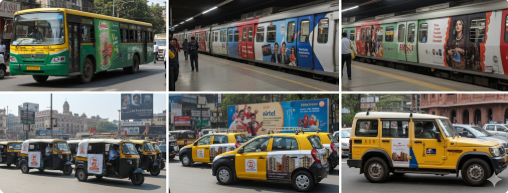
Transit Media Advertising is one of the most powerful and visible forms of Out-of-Home (OOH) advertising. By leveraging moving vehicles such as buses, metros, taxis, auto-rickshaws, and trains, businesses can reach a highly targeted yet mass audience across urban and semi-urban areas. Unlike traditional static advertising, transit media captures attention while people are on the move, providing brands with constant visibility and engagement.

transit media

In this comprehensive guide, we’ll cover:

  • What transit media advertising is
  • Different types and formats of transit media
  • Advantages for marketers and brands
  • Best practices and creative strategies
  • ROI, measurement, and emerging trends
  • FAQs for marketers and advertisers

Understanding Transit Media Advertising

Transit Media Advertising is a type of OOH advertising where ads are displayed on vehicles or transit locations to reach consumers while they travel. The core idea is mobility equals exposure.

Examples include:

  • Bus wraps and bus panels
  • Metro and train panels
  • Auto-rickshaw and cab branding
  • Airport shuttles and fleet ads

Transit media works because it integrates brand messaging into daily life, making it unavoidable for commuters.


Types of Transit Media

1. Bus Advertising

  • Full Bus Wraps: The entire vehicle is branded with creative visuals, creating a moving billboard.
  • Side Panels / Rear Panels: Smaller but highly visible sections of the bus for targeted messaging.
  • Roof Panels / Digital Screens: Innovative options for urban markets.

Example: FMCG brands in Mumbai use full bus wraps to promote new products in busy suburban routes, reaching thousands daily.

2. Metro and Train Advertising

  • Inside Metro Panels: Posters and digital displays inside coaches engage commuters during travel.
  • Platform Panels: Captive audience waiting for trains or metros sees static or digital ads.
  • Train Wraps: Long-distance trains carrying messages across cities.

3. Cab & Auto-Rickshaw Advertising

  • Roof-Mounted Panels: Eye-catching ads seen by pedestrians and drivers.
  • Full Body Branding: Cars or rickshaws fully wrapped with branding.
  • App Integration: Taxi apps can combine in-vehicle ads with mobile push notifications.

4. Airport and Transit Hub Advertising

  • Shuttle Buses & Trolleys: Ads for travelers in airports and railway stations.
  • Digital Screens & Kiosks: Premium audience targeting for high-income travelers.

Benefits of Transit Media Advertising

transit media advertising

Transit media offers unique advantages over other advertising formats:

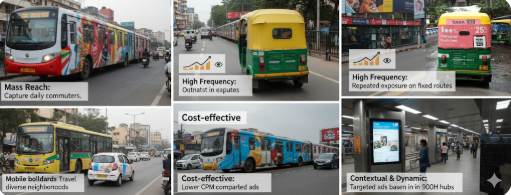
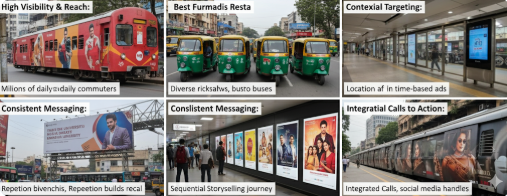
1. High Visibility & Reach

  • Transit ads are mobile, reaching different neighborhoods, business districts, and high-footfall areas.
  • Continuous exposure ensures brand recall.

2. Targeted Audience Engagement

  • Routes can be chosen based on demographics, income segments, or consumer behavior.
  • Example: Ads for a luxury watch brand displayed on airport shuttles target premium travelers.

3. Cost-Effective Compared to Traditional Billboards

4. Captive Audience Attention

  • Inside buses, metros, and trains, commuters are more likely to notice and absorb messaging than passing pedestrians.

5. Flexibility & Creativity

  • Full vehicle wraps, interactive panels, AR-enabled ads, and QR codes allow creative storytelling.

6. Local and Hyperlocal Reach

  • Ideal for businesses looking to penetrate local markets, e.g., retail stores, restaurants, and educational institutes.

How Marketers Can Maximize Transit Media ROI

  1. Choose the Right Routes: Focus on high footfall, target demographic, and peak traffic times.
  2. Creative Design Matters: Bold visuals, simple messaging, and high-contrast colors perform best.
  3. Integrate Digital Tools: Use QR codes, NFC tags, or AR experiences for engagement beyond the physical ad.
  4. Programmatic Buying & Data Analytics: Track commuter density, dwell time, and optimize routes.
  5. Combine with Other Channels: Transit media works best as part of integrated marketing campaigns with social media, mobile, or retail promotions.

Real-World Examples

Example 1: FMCG Brand on Mumbai Buses

A beverage company used full bus wraps across suburban routes in Mumbai. Within 3 months, brand recall increased by 25% among the target audience.

Example 2: Educational Institute Branding

A coaching institute in Delhi branded autos and buses near metro stations and colleges. This hyperlocal targeting led to higher student enrollments and inquiries.

Example 3: E-Commerce Campaigns

An online shopping platform used metro and train interiors for seasonal campaigns, integrating QR codes for instant offers, increasing mobile app downloads.


Emerging Trends in Transit Media

1. Digital Transit Media (D-TM)

  • Digital screens on buses, metros, and trains allow dynamic ad content, tailored by location, time, or events.

2. AI-Powered Analytics

  • AI tracks impressions, dwell time, demographics, and optimizes campaign performance.

3. Interactive & AR-Enabled Ads

  • Interactive displays in metro stations and buses engage consumers beyond static messages.

4. Integration with Mobile & Social Media

  • Transit ads trigger digital campaigns via geofencing, reinforcing brand messaging across platforms.

5. Eco-Friendly Transit Advertising


Best Practices for Transit Media Campaigns

transit media
  1. Keep Messaging Short & Simple – commuters have limited attention span.
  2. Use Bold, Contrasting Colors – ensures visibility from a distance.
  3. Position QR Codes Strategically – for actionable engagement.
  4. Track & Measure Performance – use AI analytics, footfall data, and surveys.
  5. Localize Content – adapt language, imagery, and offers to the region.
  6. Integrate with Other OOH Channels – strengthen brand presence through multi-format campaigns.

ROI and Effectiveness

Transit media is proven to deliver measurable ROI:

  • High frequency of impressions leads to strong brand recall.
  • Hyperlocal targeting increases conversion rates for retail and FMCG campaigns.
  • Creative and interactive campaigns result in higher engagement and social sharing.

With the integration of AI and digital tools, marketers can now track campaign performance in near real-time, something traditional static OOH couldn’t offer.


FAQs on Transit Media Advertising

1. What is transit media advertising?
It is advertising displayed on vehicles or transit hubs (buses, metros, taxis, trains) to reach consumers while they travel.

2. How effective is transit media compared to other OOH formats?
Transit media combines mobility with high visibility, reaching diverse audiences across different locations, often at lower costs than static hoardings.

3. What types of transit media exist?
Bus wraps, metro panels, auto-rickshaw branding, cab advertisements, train wraps, airport shuttle branding, and fleet branding.

4. Can small businesses use transit media?
Yes. Hyperlocal targeting, such as buses in specific neighborhoods or auto-rickshaws near shopping areas, works well for small businesses.

5. How do you measure ROI for transit media campaigns?
By tracking impressions, route density, engagement metrics (QR scans, social shares), and footfall in retail outlets influenced by ads.

6. What are the creative options for transit media?
Full vehicle wraps, side panels, roof panels, interior ads, AR integration, digital screens, and QR-based engagement.

7. How does AI improve transit media advertising?
AI enables predictive targeting, real-time optimization, and dynamic creative displays, enhancing reach and ROI.

8. What are emerging trends in transit media?
Digital transit screens, interactive campaigns, AR/VR experiences, programmatic ad buying, eco-friendly materials, and mobile integration.


Conclusion

Transit media advertising is a powerful, flexible, and measurable channel for brands looking to reach audiences on the move. With the rise of digital and AI-powered solutions, transit advertising has evolved from simple posters on vehicles to dynamic, data-driven, interactive campaigns.

For marketers, leveraging transit media means:

  • Maximizing visibility across high-traffic areas
  • Targeting hyperlocal audiences effectively
  • Driving measurable ROI with AI analytics
  • Engaging consumers creatively through interactive and digital formats

Whether you are a startup, retail brand, or large enterprise, transit media offers an unmatched opportunity to make your brand visible, memorable, and actionable in today’s competitive marketplace.

👉 Start planning your next transit media campaign today and move your brand into the daily lives of your target audience—literally on the go!

What is Promotional Umbrella Advertising? Benefits of Promotional Umbrella Advertising for Businesses

promotional umbrella

A Shade That Sells

In India, where summers bring scorching heat and monsoons bring heavy rains, umbrellas are not just essentials—they are walking advertisements. Promotional umbrella advertising transforms a simple utility into a powerful branding medium, carrying your business identity to markets, fairs, beaches, and corporate events.

From retail stores in Delhi’s Chandni Chowk to cafés in Goa’s beaches, businesses are using branded umbrellas as a cost-effective, practical, and long-lasting promotional tool.


What is Promotional Umbrella Advertising?

https://acmeadvertiser.com/promotional-umbrella/Promotional umbrella advertising is the practice of printing brand logos, colors, slogans, or product images on umbrellas and distributing them to customers, vendors, or event attendees. Every time someone opens and uses your branded umbrella in public, they are unintentionally endorsing your business.

Types of Promotional Umbrellas

  • Corporate umbrellas for events and employee gifting
  • Café and restaurant umbrellas for outdoor seating areas
  • Event umbrellas at exhibitions, trade shows, and festivals
  • Street vendor umbrellas for high visibility in markets
  • Compact foldable umbrellas for bulk giveaways

Benefits of Promotional Umbrella Advertising for Businesses

Enhanced Brand Visibility

Umbrellas are large, eye-catching, and highly visible. Whether it’s a vendor umbrella in Rajouri Garden (Delhi) or a beach umbrella in Goa, they stand out in crowded public spaces. With a 360-degree canopy, they give brands massive exposure daily.

Cost-Effective Outdoor Advertising

Compared to hoardings and billboards, umbrellas are much cheaper and reusable. They provide thousands of impressions at a fraction of the cost. For example, a tea stall chain in Lucknow distributed 500 branded umbrellas among vendors and achieved visibility at one-tenth the cost of traditional billboards.

Practical Value Builds Customer Trust

Unlike leaflets or posters that may be ignored, umbrellas are useful in everyday life. When a brand gives something functional, customers see it as reliable, thoughtful, and trustworthy. This increases goodwill and brand loyalty.

Customization for Brand Identity

Promotional umbrellas can be tailor-made:

  • Brand logo printed on multiple panels
  • Color schemes matching your brand palette
  • Large canopy designs for outdoor branding
  • Folding designs for giveaways and events

This ensures that whether you’re in FMCG, hospitality, healthcare, or retail—you can get an umbrella design that suits your niche.

Long-Term Branding Impact

A good quality umbrella lasts months, even years, unlike digital ads that vanish in seconds. They deliver long-term exposure with minimal repeated investment, making them one of the most ROI-friendly promotional items.

Hyperlocal Branding Advantage

Umbrellas are mobile billboards that move with people. A branded umbrella at a stall in Bengaluru’s MG Road, or at a tea shop in Jaipur’s Johri Bazaar, ensures your brand connects with city-specific audiences. For local SEO, this is a major advantage as it puts your brand right in front of the community.


Trends in Promotional Umbrella Advertising

  • Eco-Friendly Designs: Growing demand for biodegradable fabrics and bamboo handles.
  • QR-Code Printing: Linking customers directly to brand websites, discount offers, or social media pages.
  • Influencer Marketing: Local influencers using branded umbrellas in Instagram reels and YouTube vlogs.
  • Seasonal Campaigns: Monsoon promotions with giveaways, festive branding with colorful umbrellas.

promotional umbrella

Case Study: FMCG Brand in Kolkata

A popular soft drink company in Kolkata launched a monsoon campaign with 2,000 branded umbrellas distributed among roadside vendors.

Results:

  • Brand visibility across busy streets and markets
  • 25% increase in brand recall during surveys
  • Higher footfall at retail shops near umbrella placements

This case proves that umbrella advertising delivers high ROI at low cost.


Local SEO Strategy in India

  • Delhi NCR: Street vendor umbrellas in Connaught Place and Rajouri Garden
  • Mumbai: Beach umbrellas at Juhu, Marine Drive, and café branding in Bandra
  • Chennai: Monsoon umbrellas at roadside tea stalls
  • Kolkata: Festival promotions with colorful, customized umbrellas
  • Tier-2 cities: Logos printed in Hindi, Tamil, Kannada, and local languages for better connect

FAQs

Q1: How much does promotional umbrella advertising cost?
Bulk prices start at around ₹150 per umbrella, depending on size and design.

Q2: Are they effective for small businesses?
Yes, even small vendors or local retailers can gain visibility through branded umbrellas.

Q3: How long do promotional umbrellas last?
Good quality ones last anywhere from 6 months to 2 years, ensuring long-term value.

Q4: Can umbrellas be used for seasonal campaigns?
Absolutely—they’re perfect for summer promotions, monsoon giveaways, and festive branding.


Conclusion: Why Your Business Needs Promotional Umbrella Advertising

Promotional umbrellas are not just accessories; they are powerful branding tools. With high visibility, durability, and practical value, they connect businesses with customers in ways that billboards or digital ads cannot.

By investing in our customized, durable, and affordable promotional umbrellas, your brand can:

  • Gain massive visibility in crowded markets
  • Build trust with useful giveaways
  • Save costs with long-lasting impact
  • Connect better with local audiences

If you’re looking for an affordable and impactful outdoor advertising solution in India, promotional umbrella advertising is the perfect fit.

Railway Branding: Turning Train Journeys into Brand Journeys

Nationwide Visibility. High Engagement. Strong Recall.

In today’s fast-paced business world, one truth remains: brands need engaging and impactful ways to attract customers. While digital screens and social media feeds are often cluttered, one advertising medium continues to shine in a big, bold, and unforgettable way—Railway Branding.

At ACME Advertising Com, we’ve seen firsthand how trains can transform into powerful moving billboards, carrying brand messages across cities, states, and even entire nations. With acmeadvertiser.com, your business gets more than just visibility—you get connection, recall, and results.

Let’s dive into how Railway Branding works, why it’s so effective, and why it should be on every marketer’s checklist for 2025 and beyond.


🚉 The Power of Railway Branding: Why It Works

railway branding

Imagine this:
A family boards a train for their first trip to a new city. As they wait at the platform, a train rolls in—completely wrapped in vibrant visuals of a brand campaign. The kids point, the parents smile, and before the journey even begins, the brand has already made an impression.

That’s not just advertising—it’s memory-making marketing.

Railway branding works because:

  • Nationwide Reach – Trains connect metropolitan hubs, tier-2 cities, and rural towns, giving your brand exposure to a wide demographic.
  • Extended Engagement – A train journey isn’t five seconds like a social media scroll. Passengers spend hours traveling, engaging with your brand visually and emotionally.
  • High Recall Value – Bright, bold visuals across coaches and stations ensure your brand is remembered long after the journey ends.
  • Cost-Effective ROI – Compared to many mass media channels, railway branding offers lower cost per impression with significantly higher engagement.

And here’s the best part: through acmeadvertiser.com, your railway campaign can be customized, tracked, and optimized for maximum impact.


📊 Real-World ROI: What Brands Achieve

Marketing isn’t about spending—it’s about investing and earning returns. Businesses that choose Railway Branding with ACME Advertising Com often report:

20–30% higher brand recall in surveys compared to static outdoor ads.
Boost in regional sales when campaigns target specific routes.
Millions of daily impressions as trains move across high-footfall routes.
Improved trust and credibility because railway advertising feels authoritative and widely accepted.

Think of it like this: when your brand travels across India on a train, it isn’t just reaching customers—it’s becoming part of their journey.


🎯 How Railway Branding Elevates Businesses

Isn’t just about slapping a logo on a train—it’s about creating an immersive brand story that travels with people. Here’s what it can do for your business:

  1. Full-Train Wraps – Turn entire trains into moving landmarks.
  2. Interior Branding – Place your brand inside coaches where passengers spend hours.
  3. Station Branding – Catch attention where people wait the longest—railway platforms.
  4. Route-Specific Campaigns – Target regions where your market is strongest.
  5. Nationwide Campaigns – Build a uniform brand image across multiple states.

At acmeadvertiser.com, our team ensures your brand message is not just seen, but remembered, shared, and acted upon.


🪄 Storytelling in Motion: A Fun Perspective

Think of a train as a blockbuster movie—and railway brand Advertising as the hero’s costume. No matter where the hero goes, eyes follow.

A coffee brand once ran a railway campaign with us where each coach was designed like a café interior. Passengers were so impressed that many shared photos online. That’s free viral marketing on top of guaranteed visibility!

That’s the magic—railway branding is not passive; it’s experiential.


📈 Strategic Value for Businesses

Railway brand Advertising gives businesses what every CMO dreams of:

  • Mass Outreach + Personal Connection
  • Consistency in Branding Across Regions
  • Budget-Friendly Yet Impactful Presence

When you choose Railway Branding with ACME Advertising Com, you’re not just buying ad space—you’re investing in brand journeys that drive revenue.


🌍 SEO Benefits of Railway Branding Content

Since businesses search for “railway branding services,” “train advertising,” and “railway ads in India”—this blog is crafted to rank high, making acmeadvertiser.com your go-to partner. Every time potential advertisers Google these terms, your solution is right here.


🧑‍💼 Who Benefits Most from Railway Branding?

  • Retail Chains – Drive footfall to outlets across regions.
  • Healthcare Brands – Spread awareness of hospitals, diagnostics, or medicines.
  • Education Institutes – Reach students and parents nationwide.
  • FMCG Brands – Keep visibility high across all markets.
  • Real Estate Firms – Showcase projects in target geographies.

If your business needs visibility + engagement + trust, railway branding is the ultimate solution.

railway branding

8 FAQs on Railway Branding

Q1. What is railway branding?
Railway brand Advertising is an out-of-home advertising strategy where trains, stations, and railway assets are used to display brand messages for large-scale visibility.

Q2. Why is railway branding effective for businesses?
Because trains have mass reach, long passenger engagement, and nationwide movement, they ensure high recall and ROI.

Q3. How much does railway branding cost in India?
Costs vary depending on train type, number of coaches, and duration. At acmeadvertiser.com, packages are tailored for every budget.

Q4. Can I target specific routes for my campaign?
Yes! Railway branding can be customized by routes, states, or even city connections.

Q5. How long does a railway branding campaign run?
Campaigns can run from a few weeks to several months, depending on goals.

Q6. What types of branding options are available?
Full train wraps, interior coach ads, platform branding, and digital displays at select stations.

Q7. Is railway branding suitable for small businesses?
Absolutely. With customizable options at acmeadvertiser.com, even regional brands can benefit.

Q8. How do I measure the success of my campaign?
Success can be tracked through impressions, recall surveys, and sales uplift in targeted regions.