

India’s streets tell a story of constant movement. Every morning, office commuters head towards metro stations, students walk through busy market roads, shoppers explore commercial areas, and travellers move along major city routes. For brands, these everyday journeys create valuable opportunities to connect with people outside their homes. Pole kiosk advertising helps businesses make the most of these opportunities by placing advertisements along roads, footpaths, commercial streets, and other suitable public locations.
Billboard Company
outdoor media
ACME Advertising Co. helps businesses explore outdoor advertising opportunities across India through location-focused planning, printing, branding, and campaign execution. With 18+ years of industry experience, the company understands that outdoor advertising is not simply about displaying a message. It is about choosing the right location, understanding the people who pass through it, and creating advertisements that remain visible during their everyday journeys.
For businesses looking to improve local awareness, support a product launch, promote a retail outlet, or strengthen their presence across multiple cities, pole kiosks can become a useful part of an integrated outdoor advertising strategy. Pole Kiosk Advertising Agency in India.
Why Pole Kiosk Advertising Is Becoming Valuable for Indian Businesses
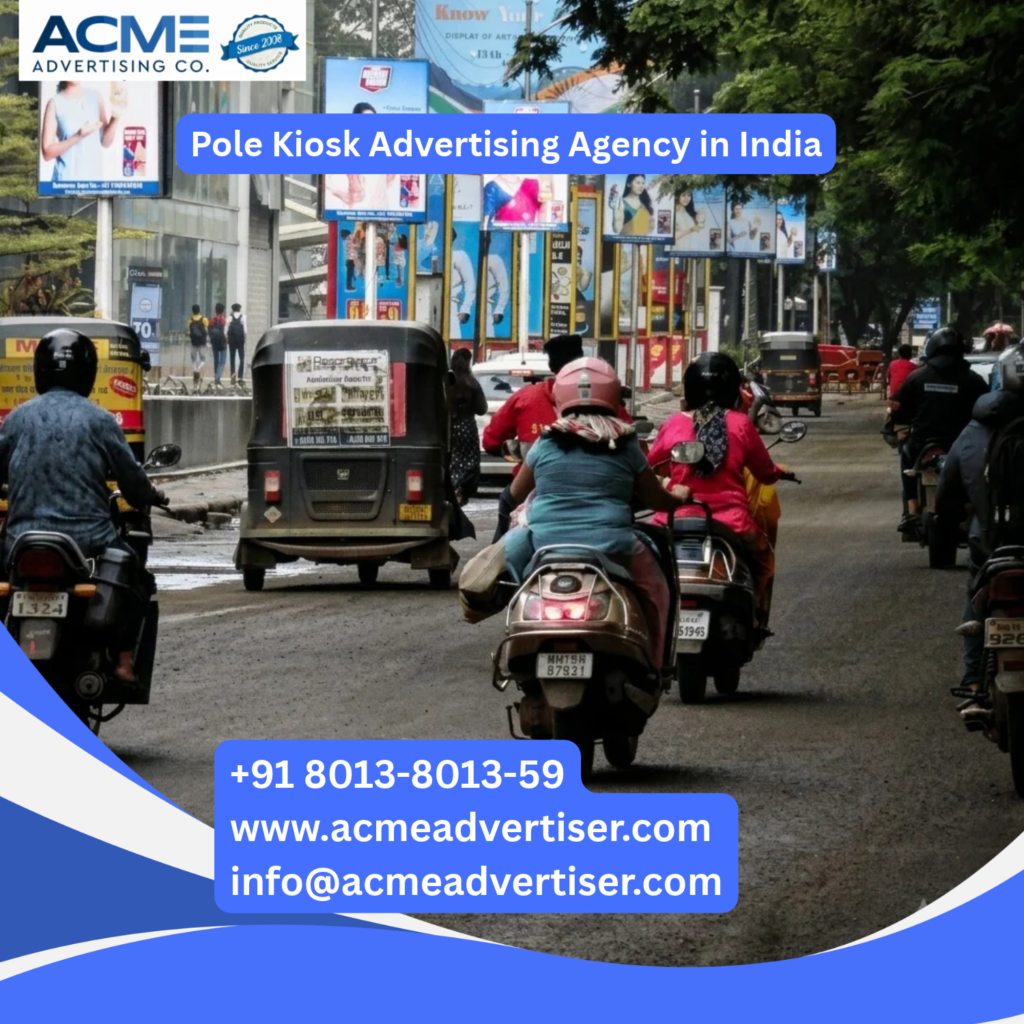
Indian cities experience continuous movement throughout the day. Residential neighbourhoods connect with shopping markets, office districts, educational institutions, transport hubs, and entertainment areas. This creates different opportunities for brands to reach audiences depending on where they travel and what they do.
Pole kiosk advertising uses suitable street-side poles and designated advertising structures to display promotional messages in these public environments. Depending on the available advertising inventory, campaign permissions, and local regulations, brands can select locations that match their target audience.
For example, a new clothing store may benefit from visibility near shopping streets, while a coaching institute may prefer locations around educational areas. A real estate developer might focus on roads connecting residential neighbourhoods with commercial centres.
The main advantage is contextual visibility. Instead of communicating with everyone in the same way, businesses can select locations where their message is more relevant to the people passing by. Pole Kiosk Advertising Agency in India.
How ACME Advertising Co. Helps Brands Plan Pole Kiosk Campaigns
A successful outdoor campaign begins long before the advertisement appears on a street. Businesses need to identify their objectives, understand their audience, select appropriate locations, prepare creative material, and coordinate execution.
ACME Advertising Co. supports outdoor media and retail branding requirements for businesses across India. Its approach focuses on matching campaign objectives with suitable advertising opportunities.
The planning process begins by understanding what a business wants to achieve. Some brands want to introduce a new product, others want to increase footfall at a nearby store, and some want to establish a consistent presence across several neighbourhoods.
Once the objective is clear, the next step is identifying suitable routes and advertising locations. The campaign can then be planned around available inventory, expected audience movement, advertising duration, creative requirements, and budget.
Printing and execution also matter. An advertisement must be readable, visually appealing, and appropriate for its surroundings. A clear message, suitable typography, recognisable branding, and a strong visual hierarchy help people understand the advertisement even when they see it for only a few seconds. Pole Kiosk Advertising Agency in India.
Which Locations Are Best for Pole Kiosk Advertising in India?
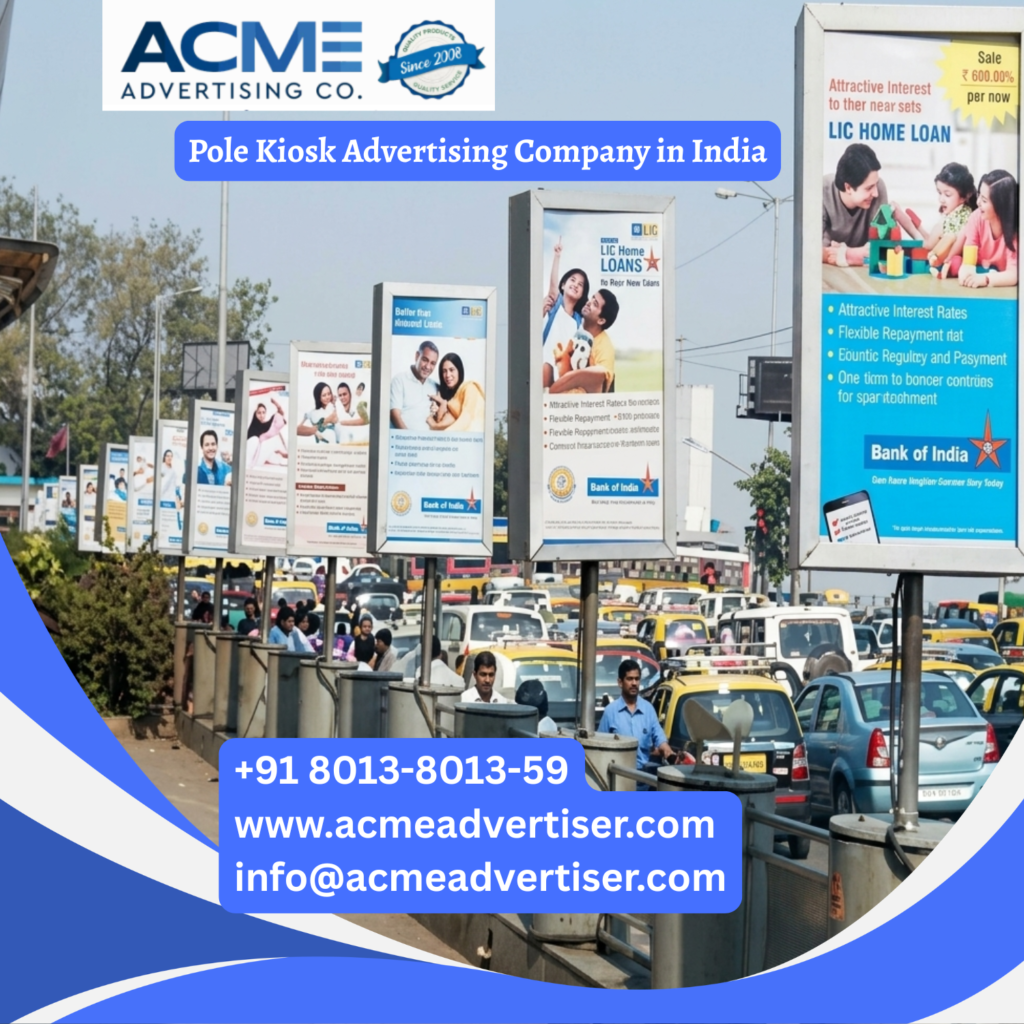
Location selection can make a substantial difference to an outdoor campaign. A kiosk positioned along a busy road may generate visibility, but a location that attracts the right audience can be more valuable than one that simply experiences heavy traffic.
The most suitable locations depend on the advertising objective, local permissions, available media inventory, and the people a brand wants to reach.
Busy Commercial Streets and Shopping Markets: Commercial streets and shopping markets are useful locations for brands that want to connect with shoppers. People visit these areas to purchase clothing, electronics, groceries, jewellery, household products, and other everyday items.
Retailers can use pole kiosk advertising to build familiarity before customers reach their stores. A campaign may promote a seasonal sale, a new showroom, a product collection, or a special offer.
In markets with several competing businesses, consistent advertising can also help a brand remain visible within the surrounding commercial environment.
Metro Approaches and Public Transport Routes: Metro stations and public transport corridors attract commuters travelling between residential and commercial areas. Suitable advertising locations near station approaches, connecting roads, and designated pedestrian routes may provide opportunities to reach working professionals, students, and regular travellers.
These locations can be particularly useful for services that appeal to urban commuters, including banking, education, telecommunications, consumer products, and nearby retail businesses.
However, brands should distinguish between advertising near a transport facility and advertising inside it. The available formats, permissions, and costs may differ.
Corporate Districts and Office Areas: Business districts experience concentrated movement during working hours, particularly on weekdays. Office employees, business visitors, service professionals, and delivery personnel regularly travel through these areas.
Brands promoting professional services, financial products, business technology, restaurants, or convenience services may consider suitable advertising locations around office districts.
Campaign timing should reflect the audience’s movement patterns. A location that performs well during weekday commuting hours may have a different audience profile on weekends.
Residential Neighbourhoods and Local Connecting Roads: Residential areas offer opportunities to reach people during their regular journeys to schools, grocery stores, healthcare facilities, parks, and nearby markets.
These locations may be particularly relevant for neighbourhood businesses, housing projects, diagnostic centres, coaching institutes, supermarkets, and consumer brands.
For local businesses, the objective is often to build recognition within a defined geographical area rather than generate awareness across an entire city.
Selecting kiosks along relevant connecting roads can help support that objective, provided the locations are available and authorised for advertising.
High-Traffic Junctions and Major Road Corridors: Major junctions and connecting roads often bring together traffic from different neighbourhoods. They can be useful for campaigns seeking broader local visibility.
Nevertheless, traffic volume alone should not determine the choice of location. Vehicle speed, viewing distance, surrounding obstructions, pedestrian movement, and the time available to read the message all influence advertising effectiveness.
A simple creative with a short headline may perform better in a fast-moving traffic environment than an advertisement containing several lines of text.
Educational Institutions and Youth-Focused Areas: Areas surrounding colleges, universities, coaching centres, and student accommodation can be relevant for education providers, technology brands, fashion retailers, food businesses, and other youth-oriented services.
The advertising message should match the audience’s needs and the campaign objective. An educational institution may communicate course admissions, while a nearby restaurant may highlight affordable meal options.
Advertising in these areas must also comply with applicable local rules and restrictions.
Entertainment Zones and Weekend Destinations: Shopping complexes, entertainment districts, cinemas, restaurants, and popular leisure destinations can attract different audiences during evenings and weekends.
Brands promoting dining, entertainment, fashion, personal care, and consumer products may consider suitable locations around these destinations.
Campaign planners should review weekday and weekend movement separately. A location that experiences moderate traffic in the morning may become more active during evening shopping hours. Pole Kiosk Advertising Agency in India.
Which Indian Cities Offer Opportunities for Pole Kiosk Advertising?
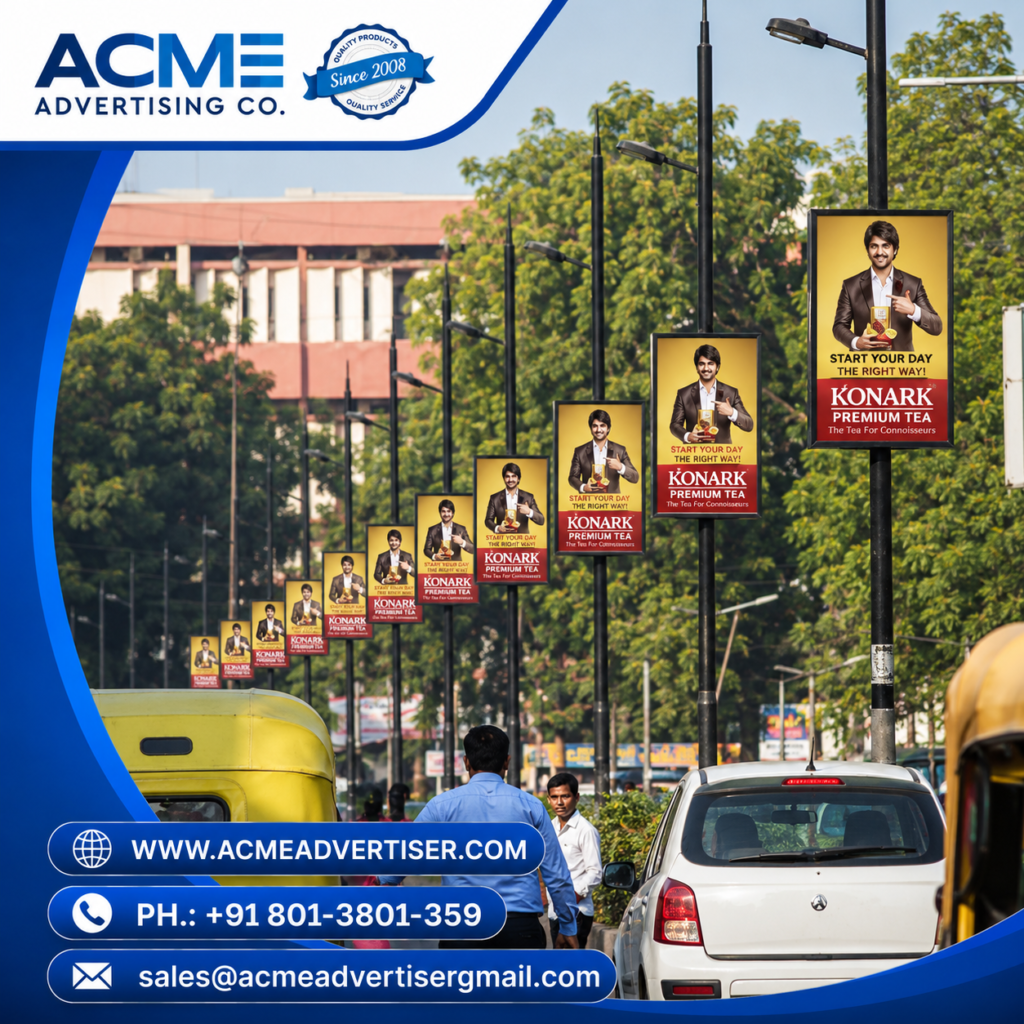
Pole kiosk advertising opportunities vary by city, road network, local regulations, and the availability of approved advertising structures. Businesses should evaluate each city individually instead of assuming that the same campaign plan will work everywhere.
In Delhi, suitable opportunities may include commercial districts, local markets, and connecting roads serving office and residential areas.
In Mumbai, planning may focus on appropriate commercial streets, neighbourhood shopping areas, and selected road corridors, depending on available inventory and permissions.
In Bengaluru, businesses may evaluate routes connecting technology districts, educational areas, residential neighbourhoods, and commercial centres.
In Hyderabad, relevant opportunities may include developing residential areas, shopping districts, office corridors, and routes connecting major neighbourhoods.
In Pune, commercial markets, educational areas, and residential connecting roads may suit campaigns aimed at students, professionals, and local consumers.
In Chennai, brands may consider suitable commercial roads, shopping districts, and neighbourhood routes based on their target audience.
In Kolkata, local markets, business districts, and busy connecting roads may offer relevant opportunities for retail and consumer-focused campaigns.
Other cities, including Ahmedabad, Jaipur, Lucknow, Chandigarh, Indore, Kochi, and Surat, may also offer opportunities depending on the media inventory available.
ACME Advertising Co. can help businesses evaluate outdoor advertising requirements across Indian markets. Specific locations, availability, permissions, and rates should be confirmed before finalising a campaign.
How to Select the Right Pole Kiosk Locations for Your Target Audience
Choosing locations becomes easier when the campaign begins with a clear understanding of the intended audience.
A brand targeting office professionals may prioritise suitable business districts and commuter routes. A neighbourhood supermarket may benefit more from nearby residential areas and local shopping streets. A property developer may evaluate routes connecting the project location with relevant residential and commercial hubs.
Before selecting locations, businesses should consider the following factors:
Audience relevance: Do the people using the route match the intended customer profile?
Traffic patterns: Is the location active during the hours that matter to the campaign?
Visibility: Can people see and understand the advertisement without significant obstruction?
Repetition: Will the campaign reach the same relevant audience repeatedly across its duration?
Geographic coverage: Does the selected network cover the neighbourhoods or routes important to the business?
Campaign cost: Does the expected visibility justify the cost of the selected locations?
Permissions: Is the advertising structure authorised and available for the intended period?
These considerations help businesses make informed decisions rather than choosing locations solely because they appear busy. Pole Kiosk Advertising Agency in India.
How Pole Kiosk Advertising Can Support Different Industries

Different industries can use pole kiosk advertising in different ways. The creative message, location strategy, and campaign duration should reflect the business objective.
Retail, Fashion and Lifestyle Brands: Retail brands can use pole kiosks to promote new collections, seasonal offers, store openings, and special shopping events.
A fashion retailer, for instance, may select suitable advertising locations along routes leading towards its store. A simple message highlighting the brand, offer, and nearby shopping destination can help improve recognition.
The campaign can also complement storefront branding, digital marketing, and other outdoor media formats.
Real Estate and Property Developers: Property developers often need to establish awareness within selected geographical areas. Pole kiosk advertising may help introduce a residential project, highlight a location advantage, or support a launch campaign.
The message should remain easy to understand. Project branding, a concise benefit, and a clear call to action can be more useful than trying to communicate every property detail on a small advertising surface.
Businesses should evaluate whether the selected routes connect with audiences who may realistically consider the project.
Education and Training Institutes: Schools, colleges, coaching centres, and professional training institutes can use pole kiosk campaigns to promote admissions, new courses, examination preparation, and open-house events.
Locations near relevant educational areas and residential neighbourhoods may be worth evaluating.
Campaign timing is particularly important. An admission campaign should ideally align with the institution’s enrolment calendar rather than run without a clear deadline or objective.
FMCG and Consumer Product Companies: Fast-moving consumer goods brands often depend on repeated exposure and strong brand recognition. Pole kiosk advertising may complement other outdoor formats when a company wants to maintain visibility across selected neighbourhoods.
A short product message, distinctive packaging imagery, and consistent brand colours can make the creative easier to recognise.
For FMCG campaigns, pole kiosks may work alongside retail branding, billboards, transit media, and promotional activities, depending on the target market and budget.
Healthcare, Banking and Local Services: Hospitals, diagnostic centres, banks, insurance providers, and other service businesses may use pole kiosks to communicate their presence, introduce a service, or improve local awareness.
For example, a diagnostic centre may target suitable roads connecting nearby residential areas with its facility. A bank may use selected locations to support awareness of a branch or service.
All messages should remain accurate, clear, and compliant with applicable advertising requirements. Pole Kiosk Advertising Agency in India.
What Determines the Cost of Pole Kiosk Advertising in India?
There is no single price that applies to every pole kiosk campaign. The total cost depends on the locations selected, the number of advertising structures, campaign duration, printing specifications, installation requirements, and any applicable media or permission charges.
A campaign covering a few locations in one neighbourhood will have a different budget from a multi-location campaign spanning several areas or cities.
The media cost may also vary according to the commercial importance of the location, availability of advertising inventory, and the terms offered by the relevant media owner.
Businesses should request a detailed quotation that separates the principal cost components wherever possible. This makes it easier to compare proposals and understand what is included.
Before approving a campaign, confirm the number of locations, display period, production specifications, installation arrangements, maintenance responsibilities, and applicable taxes or additional charges.
ACME Advertising Co. can help businesses assess their requirements and plan suitable outdoor advertising activities based on their campaign objectives and available budget. Actual rates and location availability should be confirmed through a campaign-specific quotation.
How to Measure ROI from Pole Kiosk Advertising
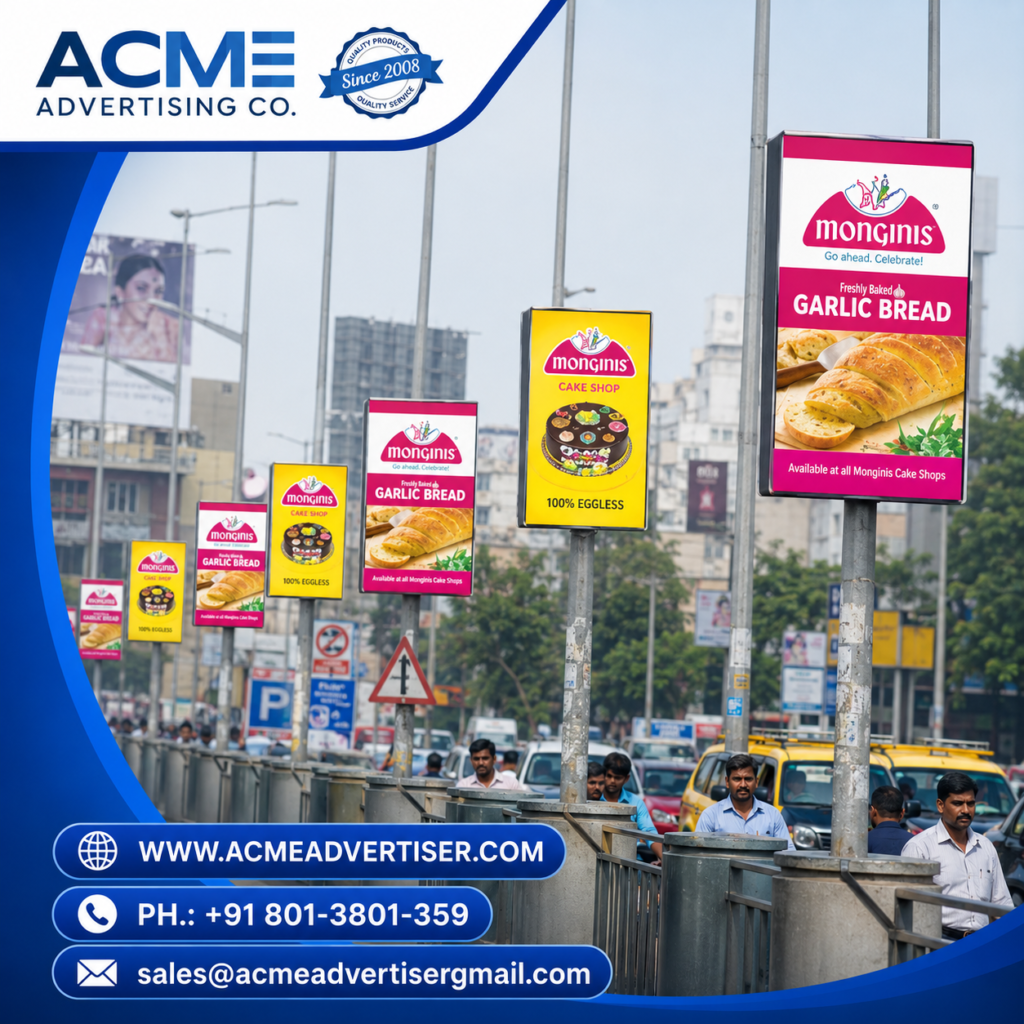
Return on investment is an important consideration when evaluating outdoor advertising. However, measuring the impact of a pole kiosk campaign requires more than counting the number of structures used.
Outdoor advertising often contributes to brand awareness and customer consideration before a purchase happens. Its impact may therefore appear across several indicators rather than through immediate sales alone.
The most appropriate measurement method depends on the campaign objective.
Track Customer Enquiries: Businesses can monitor enquiries received during the campaign and compare them with a relevant period before advertising began.
For better attribution, a brand may use a dedicated telephone number, a campaign-specific landing page, or a unique promotional code where practical.
The business should also record other marketing activities running during the same period. Otherwise, an increase in enquiries cannot automatically be attributed to pole kiosk advertising.
Measure Store Visits and Local Footfall: For retailers and service businesses, changes in store visits can help indicate whether the campaign is supporting local awareness.
Businesses can compare footfall before, during, and after the campaign while accounting for seasonal changes, local events, discounts, and other factors that may influence customer behaviour.
Comparing advertised locations with similar areas that did not receive the campaign can provide additional context when reliable data is available.
Evaluate Brand Awareness: Some campaigns aim to make a brand more recognisable rather than generate immediate purchases.
In these cases, businesses can conduct simple customer surveys, compare brand recall before and after the campaign, or monitor changes in direct searches and branded enquiries.
These indicators are not perfect proof of advertising impact, but they can help build a more complete picture. Pole Kiosk Advertising Agency in India.
Calculate the Financial Return:
When a campaign generates attributable revenue, businesses can estimate the financial return using the contribution earned from those sales rather than looking only at total revenue.
A practical formula is:
Campaign ROI (%) = [(Incremental contribution attributable to the campaign − Total campaign cost) ÷ Total campaign cost] × 100
For example, suppose a business spends ₹1,00,000 on a campaign and estimates that the additional sales attributable to it generate ₹1,40,000 in contribution after relevant variable costs. The estimated ROI would be 40%.
This calculation depends on the accuracy of the attribution and cost estimates. If the additional contribution cannot be reliably attributed to the campaign, the result should be treated as an estimate rather than a guaranteed return. Pole Kiosk Advertising Agency in India.
Common Mistakes Businesses Should Avoid
A poorly planned campaign can spend its budget without delivering meaningful results. Several common mistakes can be avoided through careful preparation.
Choosing locations only because they have heavy traffic can result in poor audience relevance. A location should be evaluated according to who passes through it, whether the advertisement can be seen clearly, and whether it supports the campaign objective.
Using too much text can make an advertisement difficult to understand. People often have limited time to notice a roadside message, so the creative should prioritise the main benefit and brand identity.
Ignoring campaign timing can also reduce effectiveness. A seasonal offer, product launch, or admission campaign should align with the period when the intended audience is most likely to respond.
Finally, failing to record campaign results makes future planning difficult. Businesses should establish measurable objectives before launch and collect relevant data throughout the campaign.
How ACME Advertising Co. Approaches Outdoor Campaign Execution
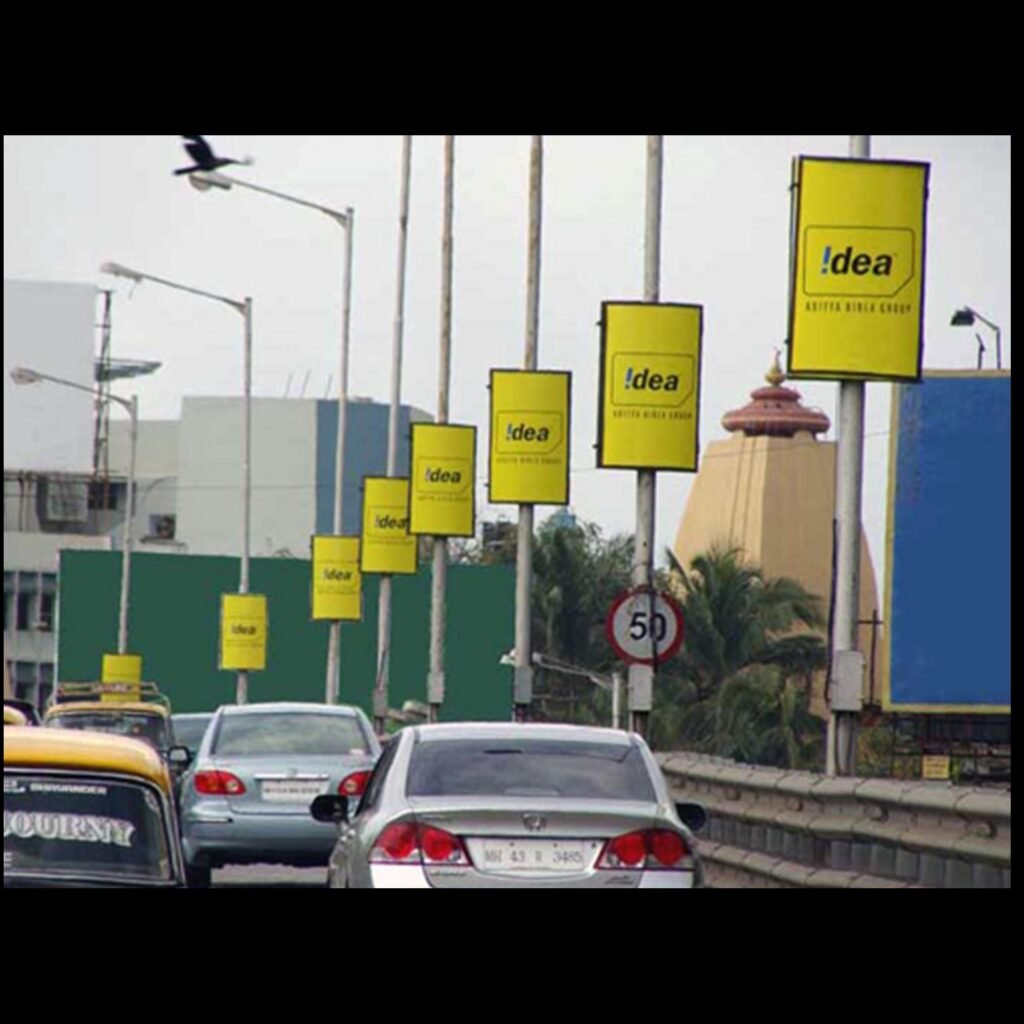
Planning, production, and execution need to work together for an outdoor advertising campaign to run smoothly.
ACME Advertising Co. provides outdoor media and retail branding services, helping businesses coordinate advertising requirements according to their campaign objectives.
Its broader service capabilities include hoardings, billboards, transit advertising, retail shop branding, signages, printing, and other outdoor promotional formats.
For a pole kiosk campaign, the practical priorities include understanding the target audience, evaluating suitable locations, coordinating creative and printing requirements, confirming the availability of advertising structures, and arranging execution according to the agreed plan.
Businesses planning campaigns across multiple markets should also ensure that the creative remains consistent while the location strategy reflects local audience behaviour.
The goal is to create a campaign that is not only visible but also relevant, well-executed, and measurable. Pole Kiosk Advertising Agency in India.
Planning a Pole Kiosk Advertising Campaign for Your Business
The best starting point is to identify what the business wants to achieve. A local retailer may want more people to recognise its store, while a national brand may want to strengthen awareness across selected cities.
Once the objective is clear, the next step is to define the target audience, preferred areas, campaign duration, creative requirements, and budget.
It is equally important to establish how success will be measured. Depending on the objective, the campaign may be evaluated through customer enquiries, store visits, brand awareness, promotional responses, or attributable contribution.
ACME Advertising Co. works with businesses seeking outdoor advertising and retail branding solutions across India. Companies can discuss their campaign requirements, target markets, and preferred locations to explore a suitable approach. Pole Kiosk Advertising Agency in India.
Which locations are suitable for pole kiosk advertising campaigns in India?

Pole kiosk advertising can help brands build visibility along busy roads, market streets, commercial districts, and selected urban corridors. These advertising units are typically mounted on streetlight poles or approved roadside structures, allowing brands to reach people as they travel through familiar daily routes.
The most suitable locations depend on the target audience and campaign objective. Retail brands may prioritise shopping streets and commercial markets, while real estate companies may focus on developing neighbourhoods, residential corridors, and routes connecting people to project locations.
Before selecting a site, advertisers should assess visibility, traffic movement, viewing distance, competing signage, and local permissions. A carefully planned network of approved locations can provide more consistent brand exposure than choosing sites based on traffic volume alone. Pole Kiosk Advertising Agency in India.
How much does pole kiosk advertising cost in India?
The cost of pole kiosk advertising depends on the city, location quality, number of kiosks, campaign duration, printing requirements, and installation arrangements. Prime commercial roads and high-visibility areas may have different rates from neighbourhood roads or developing markets.
For example, a campaign covering a few selected locations may suit a business testing a new market, while a larger network may be useful for a brand seeking visibility across multiple areas. The total quotation should clearly distinguish media rental, printing, installation, maintenance, and applicable permission charges.
There is no single price that applies across India. Advertisers should request a location-wise quotation based on their budget and campaign objectives, while confirming that the proposed sites are authorised for advertising. Pole Kiosk Advertising Agency in India.
How should businesses choose the right pole kiosk locations for their campaign?
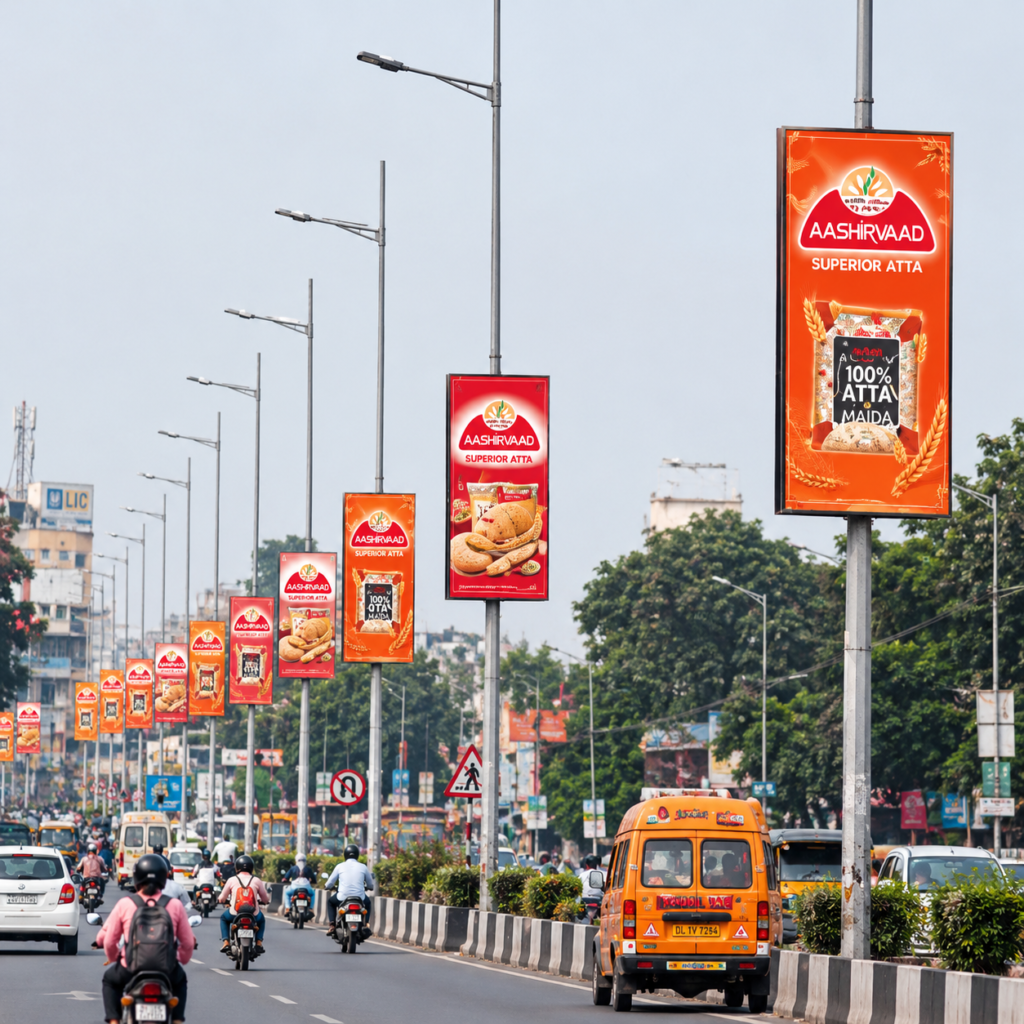
The first step is to understand where the intended audience travels during the day. Office routes, shopping districts, educational zones, residential areas, and major connecting roads may offer different opportunities depending on the product or service being promoted.
Businesses should also consider whether the advertisement can be read easily by passing commuters, whether the artwork is suitable for the available display area, and whether multiple kiosks can create consistent visibility along a route. A focused selection of relevant sites can be more useful than choosing locations solely because they appear busy.
Permissions and local outdoor advertising rules are equally important. Requirements vary between cities, so advertisers should verify the permitted sites, display specifications, and approval conditions with the relevant authority before installation.
How can ACME Advertising Co. help plan a pole kiosk advertising campaign across India?
ACME Advertising Co. helps businesses explore outdoor advertising opportunities according to their target markets, campaign objectives, preferred locations, and budgets. Its wider outdoor media services include hoardings, billboards, unipoles, highway advertising, digital billboards, and pole kiosk campaigns.
A campaign can begin with identifying priority cities and routes, evaluating suitable advertising locations, preparing artwork, and coordinating printing and installation requirements. The proposed plan should also clarify site availability, campaign duration, permissions, maintenance responsibilities, and reporting arrangements.
Businesses planning a local or multi-city campaign can contact ACME Advertising Co. at +91 8013-8013-59 or info@acmeadvertiser.com. Sharing the target cities, approximate budget, campaign dates, and intended audience will help the team understand the requirements and discuss suitable options.
Frequently Asked Questions
1. How can businesses evaluate the ROI of pole kiosk advertising in India?
Businesses can evaluate ROI by comparing the campaign cost with the additional contribution generated by sales that can reasonably be attributed to the advertising. Enquiry tracking, dedicated campaign landing pages, promotional codes, store footfall comparisons, and customer surveys can provide useful supporting information. Since outdoor advertising can influence customers over time, the measurement period should match the campaign objective.
2. Does pole kiosk advertising guarantee an increase in sales?
No. Pole kiosk advertising can help improve visibility and brand awareness, but sales depend on several factors, including product demand, pricing, creative quality, location relevance, competition, and the customer experience. A well-planned campaign can support sales objectives, but businesses should not assume that every additional sale results directly from outdoor advertising.
3. How should a business decide its budget for a pole kiosk campaign?
The budget should reflect the campaign objective, target locations, number of advertising structures, display duration, production costs, installation requirements, and available media inventory. Businesses should compare quotations based on the same campaign specifications rather than comparing prices alone. Starting with a clearly defined target area and measurable objective can help avoid unnecessary spending.
4. Is pole kiosk advertising useful for small and medium-sized businesses?
Yes, it can be useful when the selected locations match the business’s audience and geographical coverage requirements. A local restaurant, coaching institute, retail shop, healthcare provider, or property business may focus on a limited number of relevant locations instead of advertising across an entire city. The value depends on location quality, campaign cost, and the ability to measure meaningful outcomes.
5. How long should a pole kiosk advertising campaign run to measure its effectiveness?
The appropriate duration depends on the objective, media availability, audience movement, and purchasing cycle. A short promotional campaign may be evaluated around a specific offer or event, while a brand-awareness campaign may require a longer period to assess changes in recognition and enquiries. Businesses should define the evaluation period before launch and avoid drawing conclusions from insufficient data.
6. Which locations should businesses prioritise for better advertising returns?
Businesses should prioritise locations where the audience is relevant to their products or services. Retailers may evaluate shopping markets and neighbourhood roads, while education providers may focus on suitable routes near educational areas. High traffic can increase exposure, but audience relevance, visibility, repetition, and campaign cost should also influence the decision.
7. Can pole kiosk advertising be combined with other outdoor advertising formats?
Yes. Pole kiosks can complement billboards, hoardings, bus advertising, retail shop branding, and other suitable outdoor media formats. A coordinated campaign can maintain consistent messaging across multiple customer touchpoints. The combination should be selected according to the audience, campaign objective, and budget rather than adding formats without a clear purpose.
8. How can ACME Advertising Co. help businesses plan pole kiosk advertising?
ACME Advertising Co. helps businesses assess outdoor advertising requirements, identify suitable campaign approaches, coordinate branding and printing needs, and plan execution according to agreed specifications. Location availability, media rates, permissions, and campaign deliverables should be confirmed before the campaign is finalised.
Website: www.acmeadvertiser.in
LinkedIn: ACME Advertising Co