

Metro advertising provides businesses with an effective way to communicate with urban consumers through India’s rapidly developing public transportation networks. As metro rail systems become an important part of daily commuting, stations and trains have emerged as valuable spaces for brands looking to improve their visibility. Metro Advertising in India
From corporate campaigns and retail promotions to product launches and public awareness messages, metro advertising allows businesses to connect with people during regular travel routines. Its effectiveness comes from selecting relevant routes, understanding passenger movement, and using advertising formats that suit the campaign’s purpose.
How Metro Advertising Connects Brands with Urban Audiences
Metro passengers represent a wide range of consumer groups, including office employees, students, business travellers, shoppers, and visitors. Their daily journeys create opportunities for repeated brand exposure across stations and train compartments.
Unlike advertising that depends entirely on a passing glance from road traffic, metro advertising can reach passengers at several points during their journey. A commuter may see a brand message while entering a station, waiting on a platform, boarding a train, or travelling inside a coach.
This environment makes metro advertising relevant for companies that want to establish familiarity among people living, working, and travelling in urban areas.
Major Metro Advertising Formats
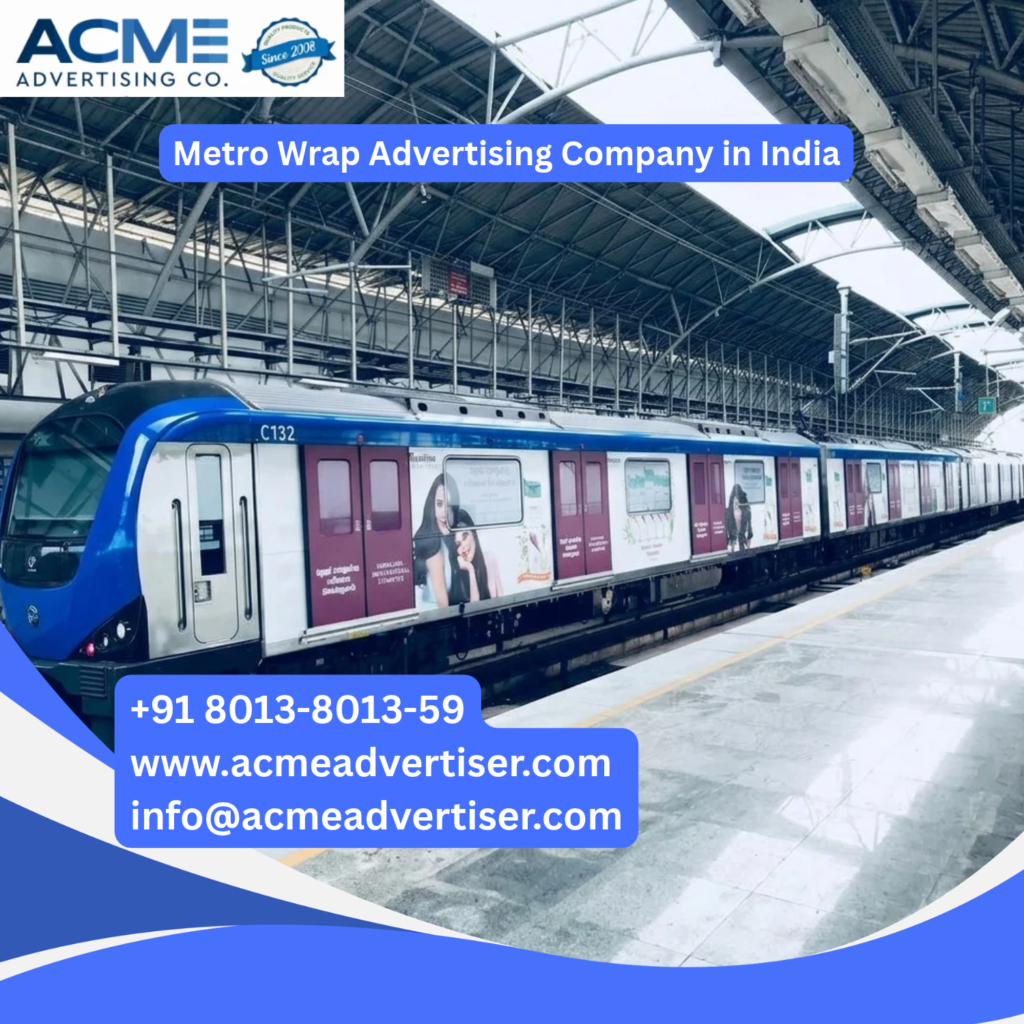
The advertising opportunities available within metro networks vary by city and approved media inventory.
Train Wrap Advertising: Approved exterior surfaces of metro trains can be used for large-format branding. This approach gives campaigns a distinctive presence as trains move through the network.
Coach Interior Advertising: Interior panels and designated spaces inside coaches can carry product advertisements, promotional messages, and brand communication.
Station Media Advertising: Station entrances, concourses, corridors, and other approved areas can accommodate different types of promotional displays.
Platform Advertising: Displays placed in designated platform areas can communicate messages to passengers waiting for trains.
Digital Metro Advertising: Digital screens can present video creatives, promotional announcements, and rotating brand messages according to approved schedules.
Station Domination: Depending on available inventory, a brand may use several approved advertising surfaces within a selected station to create a coordinated visual presence.
Choosing the Right Metro Stations for Advertising
Location selection is one of the most important decisions in a metro advertising campaign. A station’s passenger movement, surrounding neighbourhood, connectivity, and commercial importance can influence its suitability.
Stations near business districts may be relevant for professional services, financial products, and technology brands. Locations connected to shopping areas can suit fashion, retail, and consumer product campaigns. Stations near educational institutions may offer opportunities for universities, training centres, and student-focused services.
Businesses should also consider interchange stations, where passengers change between different lines. Such locations may offer access to varied commuter groups, although the actual value depends on the station’s inventory and audience profile.
Metro Advertising for Retail and Consumer Brands
Retail businesses can use metro advertising to promote store openings, new collections, seasonal campaigns, and special offers. Displays near relevant commercial destinations can help build familiarity before commuters reach nearby shopping areas.
FMCG companies can use repeated visual communication to introduce products and reinforce brand recognition. Consumer electronics businesses may highlight product launches and important features through station displays or digital screens.
For fashion and lifestyle brands, visually engaging creatives can communicate collections and brand identity. The message should remain concise enough to attract attention in a busy transport environment.
The Role of Metro Advertising in Real Estate and Education
Real estate developers can use metro advertising to introduce residential communities, commercial properties, and upcoming projects. Stations connected to relevant residential or employment areas may provide suitable opportunities to reach prospective buyers and investors.
Educational institutions can promote admissions, professional courses, entrance preparation, and skill development programmes. Since metro networks connect several residential and institutional areas, campaigns can be planned around the locations where the intended audience is likely to travel.
The selection of stations should be based on the target audience rather than simply choosing the busiest location.
Developing Creative Content for Metro Campaigns

Metro advertising creatives must work within a fast-moving environment. Passengers often have limited time to view an advertisement, so the most important information should be immediately noticeable.
A clear headline, recognisable logo, relevant visual, and short supporting message can make a campaign easier to understand. Excessive text, complicated layouts, and small typography can reduce readability.
The design should also consider the physical placement. A digital screen may support motion graphics and short video content, while a static panel needs a strong composition that remains effective throughout the campaign.
For train and station branding, artwork should follow the technical dimensions and design specifications approved for the selected advertising surface.
Metro Advertising Costs and Campaign Planning
The cost of metro advertising varies according to the city, route, station, media format, number of advertising surfaces, and campaign duration. High-demand locations and premium branding formats may require a different investment from individual panel or screen placements.
Production requirements can also affect the overall campaign budget. Train wraps, customised station branding, printed displays, and digital creatives may involve different design, fabrication, installation, and maintenance expenses.
Before confirming a campaign, businesses should understand the media rental, production charges, installation arrangements, display period, and applicable approval costs. A detailed quotation makes it easier to compare available options and plan expenditure.
Permissions and Safety Considerations
Advertising within metro premises must follow the relevant metro authority’s rules and approved advertising arrangements. These may specify the permitted locations, display dimensions, material standards, content restrictions, installation methods, and campaign schedules.
Advertising structures must not obstruct passenger movement, emergency access, safety information, or operational areas. Special approval may be required for certain types of train branding, digital displays, and customised installations.
The applicable requirements differ across metro networks, so businesses should verify the conditions for each selected city and advertising format before production.
Measuring the Performance of Metro Advertising
Campaign performance should be evaluated according to the objective established at the beginning. A brand awareness campaign may monitor changes in branded searches, website visits, or audience recall, while a promotional campaign may track enquiries, store visits, and sales trends.
Businesses can also compare campaign performance across different stations and formats. This can help identify which placements are more relevant to the intended audience and where future advertising budgets may be better allocated.
Metro advertising is most effective when it is treated as part of a planned marketing strategy rather than simply a display placement. Audience understanding, creative quality, location selection, and performance evaluation all contribute to a stronger campaign.
How much does metro advertising cost in India, and what factors affect the quotation?
The cost of metro advertising in India depends on the city, selected metro stations, advertising format, campaign duration and number of placements. Options such as train branding, platform panels, station wraps, pillar branding, entry gates and digital screens are priced differently.
Premium stations, interchange points and high-footfall routes may have higher advertising rates because of their commuter movement and visibility. The quotation may also include printing, fabrication, installation, dismantling, maintenance and applicable taxes.
To receive an accurate estimate, share your preferred metro city, advertising format, campaign dates and approximate budget. Request a detailed quotation that separates media rental from production and execution charges.
Can I book advertising space at specific metro stations in India?
Yes, advertisers can request placements at selected metro stations based on their target audience, campaign objectives and available inventory. Stations near commercial districts, shopping centres, educational institutions, business hubs and residential areas can help brands reach relevant commuter groups.
However, the availability of specific advertising spaces depends on the metro authority, authorised media agency and existing bookings. Train branding, platform panels, concourse displays and digital screens may have separate availability schedules.
Share your preferred stations, campaign dates and required advertising formats with the media provider. Ask for a list of available sites along with photographs, specifications and placement details before confirming your selection.
What services and charges are included in a metro advertising package?
A metro advertising package generally includes the rental of selected advertising inventory for the agreed campaign period. Depending on the booking, it may cover train branding, station panels, platform displays, pillar wraps, digital screens or multiple placements across a metro network.
Printing, creative adaptation, fabrication, installation, dismantling and maintenance may be included or charged separately. Digital screen packages may also specify the advertisement duration, playback frequency, operating hours and number of screens.
Before approving the package, ask for a written breakdown of all inclusions and additional charges. Confirm whether the provider will manage installation, permissions, maintenance and campaign execution so that the complete scope of work is clear.
How long does it take to arrange metro advertising in India?
The booking timeline depends on the selected city, advertising format, number of locations and approval requirements. Standard station panels may involve a different execution schedule from train wraps, large-scale station branding or multi-location campaigns.
Advertisers should allow sufficient time for inventory confirmation, quotation approval, artwork submission, creative review, production and installation. Campaigns planned around product launches, festivals or major promotional events should be initiated well in advance to secure preferred locations.
Before confirming the booking, request a tentative execution schedule with the expected installation and campaign start dates. Also clarify how delays caused by approvals, production or unavailable inventory will be managed.
What proof should I request after metro advertisements are installed?
After installation, request clear photographs or videos showing the advertisement at the approved metro station, platform, train or digital display location. The proof should make it possible to identify the selected site and verify that the creative has been installed as agreed.
For campaigns involving several stations or advertising formats, ask for separate installation evidence for each booked placement. You should also confirm the campaign start date, display condition and any reporting arrangements included in the agreement.
Discuss maintenance and replacement procedures before the campaign begins. If a display is damaged, obstructed or removed during the booking period, the provider should clarify the process for resolving the issue and maintaining the agreed advertising visibility.
Frequently Asked Questions (FAQs):
1. How can I book metro advertising space in India for my brand?
You can book metro advertising by selecting your target city, preferred metro stations, train branding options, or available advertising formats. Share your campaign objectives and audience profile with an advertising agency to explore suitable media options and available inventory.
2. Which metro advertising formats are available for campaigns in India?
Depending on the metro network, you can explore station branding, platform panels, entry and exit signage, train wraps, interior train panels, pillar branding, and digital display advertising. The available formats vary by city and metro authority.
3. Can I select specific metro stations for my advertising campaign?
Yes, you can request specific stations based on passenger movement, nearby commercial areas, residential catchments, and your target audience. Confirm site availability, display specifications, and campaign dates before finalizing your media plan.
4. Can I run metro advertising campaigns across multiple Indian cities?
Yes, you can plan campaigns across metro networks in cities such as Delhi, Mumbai, Bengaluru, Hyderabad, Chennai, and Kolkata, subject to available inventory and advertising permissions. Share your preferred cities and campaign duration to explore suitable options.
5. What is included in a metro advertising quotation?
A detailed quotation may include media rental, creative production, printing, installation, campaign duration, and applicable permissions or service charges. Ask for a location-wise cost breakdown to understand the complete campaign expenditure.
6. How long can I book metro advertising space in India?
Booking durations depend on the metro network, advertising format, and site availability. You can discuss short-term promotional campaigns or longer brand visibility campaigns and confirm the minimum booking period before placing an order.
7. Can I customize metro advertisements with my brand logo and campaign message?
Yes, metro advertising creatives can be customized with your brand identity, product images, promotional offers, and campaign messaging. Artwork must follow the relevant metro authority’s specifications and approval guidelines before production and installation.
8. How can I confirm the installation of my metro advertising campaign?
Before confirming your booking, request details of the selected advertising sites, campaign dates, installation schedule, and approval responsibilities. After installation, ask the advertising provider for photographs or other proof showing your campaign at the confirmed locations.
Website: www.acmeadvertiser.in
LinkedIn: Acme Advertising Co