
Auto Advertising in India: Cost-Effective Marketing Strategy
Auto advertising in India is rapidly emerging as one of the most powerful and cost-efficient out-of-home (OOH) marketing tools. By converting everyday vehicles into moving billboards, brands can achieve continuous, high-frequency exposure across crowded cities as well as rapidly growing tier-2 and tier-3 towns.
In a country where traffic congestion, urban mobility, and street-level engagement are part of daily life, auto advertising ensures your brand message is not confined to a single location—it travels, engages, and delivers visibility wherever your audience goes.
If you are planning to explore this dynamic advertising format, here is a comprehensive and actionable guide to launching a successful auto advertising campaign in India.
What Is Auto Advertising in India and Why Is It So Effective?
Auto advertising in India refers to brand promotion through commercial and passenger vehicles, including:
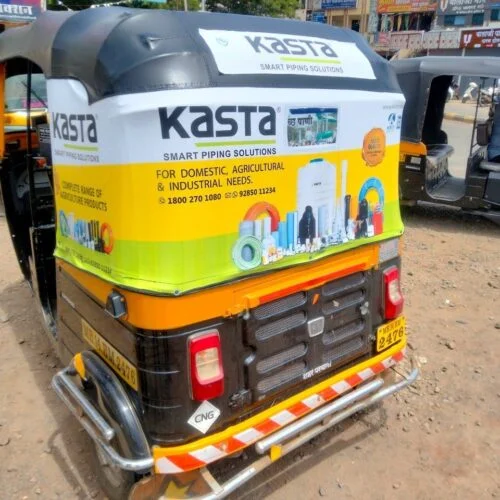
- Auto-rickshaws
- Delivery vans and logistics vehicles
- Trucks and tempos
- Taxi cabs and ride-hailing vehicles (Ola, Uber, etc.)
Unlike static hoardings, vehicle branding offers mobility, repetition, and hyperlocal reach. In high-density traffic zones, a single branded vehicle can generate thousands of impressions per day, making it ideal for:
- Local and regional brand awareness
- Product launches and retail promotions
- Political, educational, and real estate campaigns
- FMCG and service-based businesses
Step 1: Define Clear Campaign Goals and Marketing Objectives
A successful auto advertising campaign begins with well-defined objectives. Before execution, ask yourself:
- Are you aiming to generate local leads or walk-ins?
- Do you want to increase brand recall in a specific city or zone?
- Is the goal to support a new product or service launch?
- Are you promoting a limited-time offer or seasonal campaign?
Clearly defined, measurable goals (reach, leads, footfall, or engagement) help shape everything—from vehicle selection to route planning and performance tracking.
Step 2: Select the Right Vehicle Type for Your Target Audience
Choosing the correct vehicle format is critical to campaign effectiveness:
- Auto-rickshaws
Best suited for hyperlocal and urban campaigns. Ideal for residential areas, markets, metro stations, and commercial streets. - Delivery vans and tempos
Perfect for regional coverage, highways, and industrial zones. They offer larger branding space and longer visibility durations. - Taxi cabs and ride-hailing vehicles
Excellent for premium, corporate, and urban audiences. High exposure during peak office commute hours.
Align the vehicle type with your audience demographics, geography, and brand positioning.
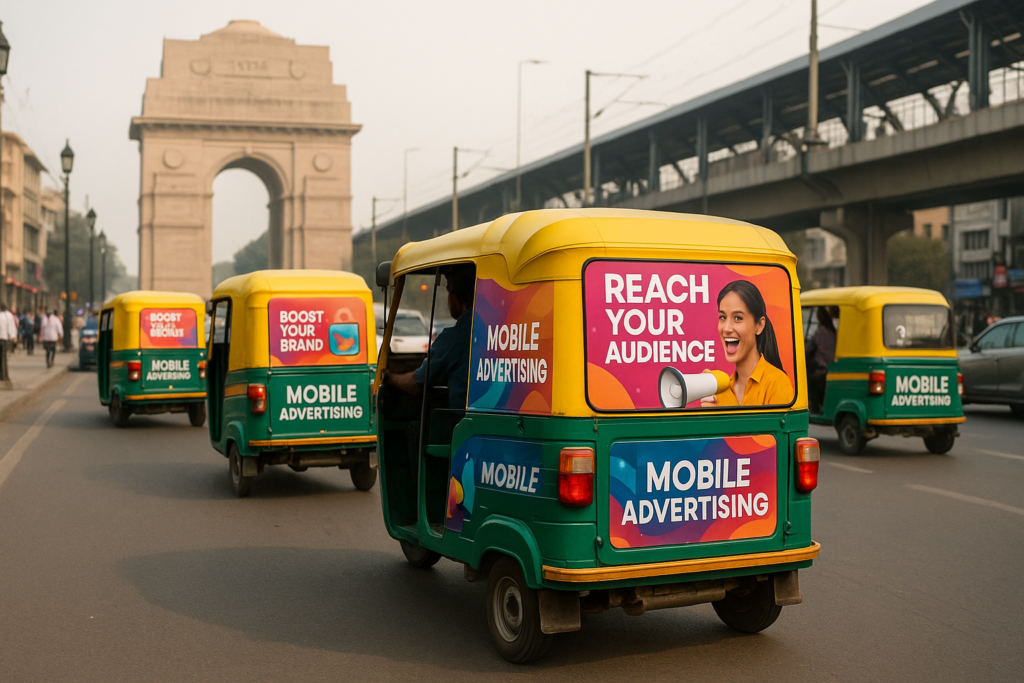
Step 3: Design Visually Strong and Locally Relevant Creatives
Creative execution determines how memorable your campaign will be. High-performing vehicle ads typically include:
- Bold colors and high-contrast visuals
- Minimal but impactful messaging
- Large, readable fonts for on-road visibility
- Local language or bilingual copy for better connection. auto advertising in india
Incorporating regional culture, festivals, or local references significantly improves recall and engagement, especially in diverse Indian markets.
Step 4: Partner with a Professional Auto Advertising in india Agency
Working with an experienced vehicle advertising agency ensures smooth execution and compliance. A reliable partner should offer:
- Access to a verified fleet across multiple locations
- End-to-end campaign management (design, printing, installation)
- Compliance with transport and municipal regulations
- GPS tracking and performance monitoring tools
- Transparent reporting and documentation
An expert agency reduces operational risk and maximizes campaign ROI.
Step 5: Handle Legal Compliance and Contractual Safeguards
Before launch, ensure all legal and operational aspects are covered:
- Clearly defined contract duration and vehicle count
- Guidelines on ad size, placement, and safety compliance
- Responsibility for vehicle upkeep and branding maintenance
- Municipal and transport authority permissions
Proper documentation protects your brand and ensures uninterrupted campaign execution.
Step 6: Optimize Routes for Maximum Visibility and Impact
Route planning plays a major role in exposure quality. Focus on:
- High-footfall markets and shopping hubs
- Business districts and IT corridors
- Metro stations, bus terminals, and railway stations
- Educational institutions and residential clusters
Synchronizing routes with peak traffic hours, weekends, and events significantly increases impression frequency.
Step 7: Use Technology to Measure Reach and ROI
Modern auto advertising campaigns are measurable and data-driven. Enhance performance tracking by using:
- QR codes linked to landing pages or offers
- Dedicated phone numbers or promo codes
- GPS-based vehicle tracking and geo-fencing
- Location-based performance analytics
These tools help quantify engagement and link offline exposure to online conversions. auto advertising in india
Step 8: Monitor Performance and Optimize in Real Time
Once the campaign goes live, continuous monitoring is essential. Collect insights from:
- Sales and inquiry data
- Customer feedback and recall surveys
- Location-wise engagement metrics
Based on performance, you can refine creatives, adjust routes, or scale high-performing zones for better results. auto advertising in india
Step 9: Scale, Expand, and Integrate with Other Marketing Channels
After a successful pilot campaign, scale strategically:
- Increase fleet size and campaign duration
- Expand into new cities or regions
- Align campaigns with festivals, launches, or seasonal demand
- Integrate auto advertising with digital, influencer, and social media campaigns
This multi-channel approach significantly amplifies overall brand impact.
📍 Our Services:
OOH Media | Transit Media | Retail Media | Electronic Media | POSM
📞 +91 8013-8013-59
🌐www.acmeadvertiser.com | www.acmeadvertiser.ae | 📧 sales@acmeadvertiser.com
🔗 LinkedIn: Acme Advertising Co. | Follow Us on Instagram